Skier Hospitalised After Snow Leopard Mauling in Chinese Geopark
A skier has been hospitalised with severe facial injuries after being mauled by a snow leopard in a remote Chinese geopark, in a terrifying incident captured on video. The attack occurred when the female tourist ventured dangerously close to the wild animal in an attempt to take a photograph.
Close Encounter Turns Violent
According to local media reports, the woman had initially noticed the snow leopard from a distance within the Keketuohai UNESCO Global Geopark in northwest China. Despite the inherent risks, she approached within approximately 10 feet of the predator to capture an image. At this proximity, the leopard suddenly lunged forward, biting her in the face and knocking her to the ground.
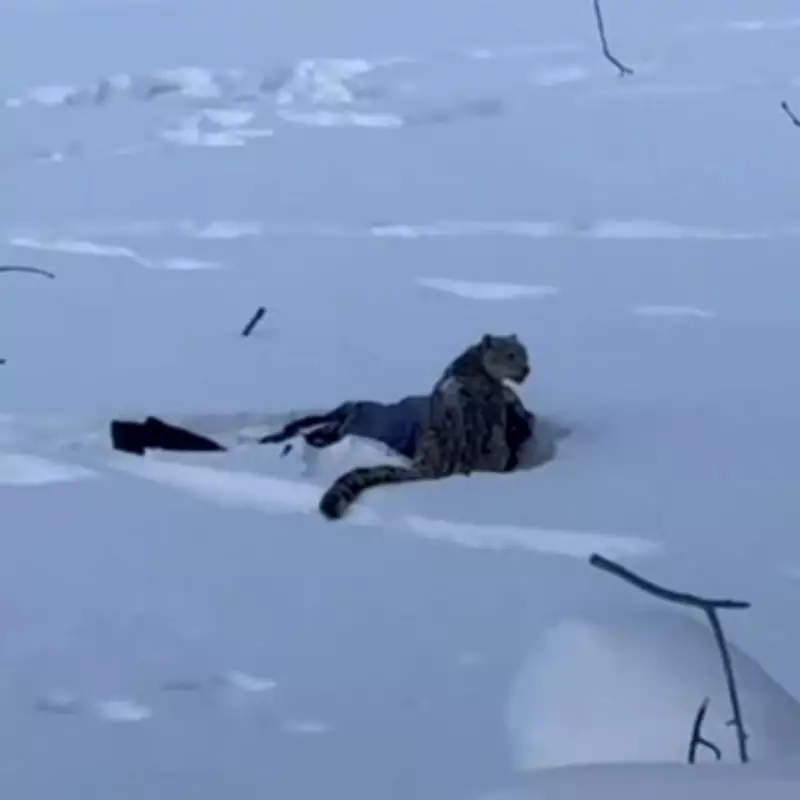
Shocking footage from the scene shows the aftermath of the initial attack, with the woman lying face down in the snow as the snow leopard sits positioned over her head. The animal is seen looking around before eventually moving away when a ski instructor begins waving his poles aggressively toward it. The leopard later retreated to skulk among nearby trees.

Rescue and Response
Bystanders quickly rushed to help the injured tourist, assisting her to her feet as she held her bloodied face in her hands. Authorities confirmed that her protective skiing helmet likely prevented more critical injuries during the mauling. She was transported to a nearby medical facility where she received treatment for severe facial wounds, with her condition reported as stable.
In response to the alarming incident, officials in Fuyun county issued a statement on the same day outlining enhanced safety measures. These include increased patrols throughout the scenic area, reinforcement of existing protective barriers, and intensified public awareness campaigns about wildlife dangers. Authorities have urgently reminded visitors to strictly follow all safety instructions, maintain a safe distance from wild animals, and immediately report any sightings to local management teams.
Rare but Increasing Wildlife Encounters
Snow leopard attacks on humans remain exceptionally rare, according to conservation experts. The Snow Leopard Trust notes that China hosts approximately 60 percent of the global snow leopard population, yet these elusive creatures typically avoid human contact whenever possible. Their naturally shy and reclusive behaviour makes such aggressive encounters particularly unusual.
However, the attack followed earlier warnings issued by area management after fresh snow leopard tracks were detected in the vicinity just days prior. Reports indicate an unusual increase in both snow leopard sightings and track discoveries throughout the region recently. Wildlife experts suggest that heavy snowfall may be forcing the animals to descend from their typical mountain habitats in search of food, bringing them into closer proximity with human recreational areas.
Broader Context of Wildlife Incidents
This disturbing event follows other recent fatal wildlife encounters globally. In a separate incident, a zookeeper in Uzbekistan was mauled and partially consumed by a group of lions after they escaped into a courtyard. The man, identified locally as F. Iriskulov, was reportedly attempting to recapture three lions to impress his girlfriend when the animals suddenly attacked. Zoo workers discovered his remains four hours later, with two lions tranquillised for recapture and a third shot dead.
The snow leopard mauling serves as a stark reminder of the dangers inherent in approaching wild animals, regardless of how docile they may appear. While modern technology enables unprecedented photographic opportunities, safety must remain paramount when encountering wildlife in natural habitats. Tourism authorities worldwide continue to grapple with balancing visitor experiences with essential protective measures for both humans and animals.