Mexico City Launches Heritage Campaign to Reconnect Citizens with Historic Churches
A significant new campaign initiated by Mexico City's Historic Center Trust is calling upon Mexican citizens to rediscover the architectural and religious heritage that forms the very heart of the nation's capital. The initiative seeks to foster a renewed connection with the historic centre through a series of cultural activities and guided visits to more than forty revered churches.
Preserving Living History Amidst Modern Challenges
The campaign highlights iconic structures like La Profesa church in downtown Mexico City, a site that has endured a tumultuous history. Its walls still bear bullet holes from an 1847 uprising, it survived a devastating fire that consumed its wooden floors decades later, and its foundation continues to sink due to unstable ground. "What makes this space important is that it remains alive and continues to be in use," explained art historian Alejandro Hernández, who works with the trust.
Hernández collaborates with a team of experts under the municipal government's Historic Center Trust to preserve and promote the capital's heritage. "We wish for young people to get interested in their own heritage," said Anabelí Contreras, head of outreach at the trust. Her team actively runs campaigns highlighting historical facts, promotes workshops and exhibitions, and publishes a magazine, Kilómetro Cero, showcasing hidden neighbourhood gems.

Delicate Restoration Efforts Following Seismic Damage
Experts are going beyond promotion by undertaking delicate restoration projects. La Profesa was severely damaged by a deadly earthquake in 2017. "After the quake, the valuable art collection inside the sanctuary's gallery suffered the most," Hernández noted. "We haven't been able to reopen that space to the public yet, but we're working on it."
Architect Alejandra Barrón, who oversaw the two-stage restoration, described the process as surgical. Some cracks were so severe one could see into neighbouring buildings. "The entire floor was replaced, the cracks were stitched together, and the plasterwork was carefully restored," she said. The church, founded by Jesuits in 1610 and rebuilt by architect Pedro de Arrieta in 1714, preserves a unique collection of paintings from the 17th to 21st centuries. "It's unusual to find a church that can also serve as a gallery or a museum," Barrón added. "If these paintings were removed from here, they would no longer carry the same meaning."
Community Engagement and Witness to Transformation
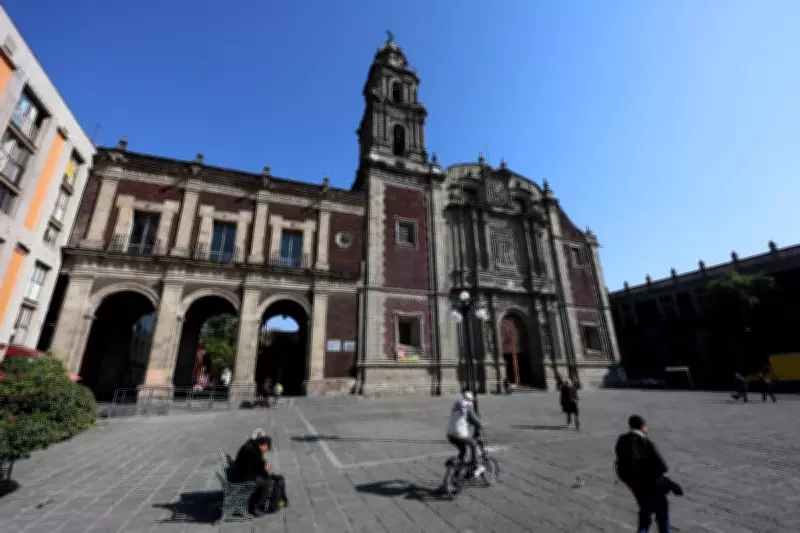
A few metres away stands the Church of Santo Domingo, founded by Dominican friars in the 16th century and also rebuilt by de Arrieta. It bears witness to the capital's transformation, having once been part of a much larger complex. The trust works closely with the local community to preserve such sites.
María Esther Centeno, a decades-long resident offered an apartment after the 1985 quake, learned about the site's history through the trust's work. "When they came to fix this place, we learned about its history," she recalled. "There used to be a dining hall. On that other side were the nuns' cells."
Architect Jesús Martínez, overseeing Santo Domingo's renovations, repaired cracks in a hidden clock, a wall shadowed by the organ, and the bell tower. "To me, this is the most important sanctuary in Mexico's historic centre after the cathedral," Martínez stated, praising its unique, original choir stalls.
Spontaneous Discovery and Cultural Reconnection
The campaign's impact is already visible. On a recent January morning, María Lourdes Flota, visiting from Yucatán, entered Santo Domingo by chance after being drawn to its beauty while walking downtown. "This is my first time here and we decided to come in," she said. "It's so beautiful. I love all the images it preserves."
Through twenty-six planned cultural activities for 2026, including exhibitions celebrating the 700th anniversary of Tenochtitlan's founding, this comprehensive campaign aims to ensure that Mexico City's historic heart continues to beat strongly, connecting past and present for generations to come.