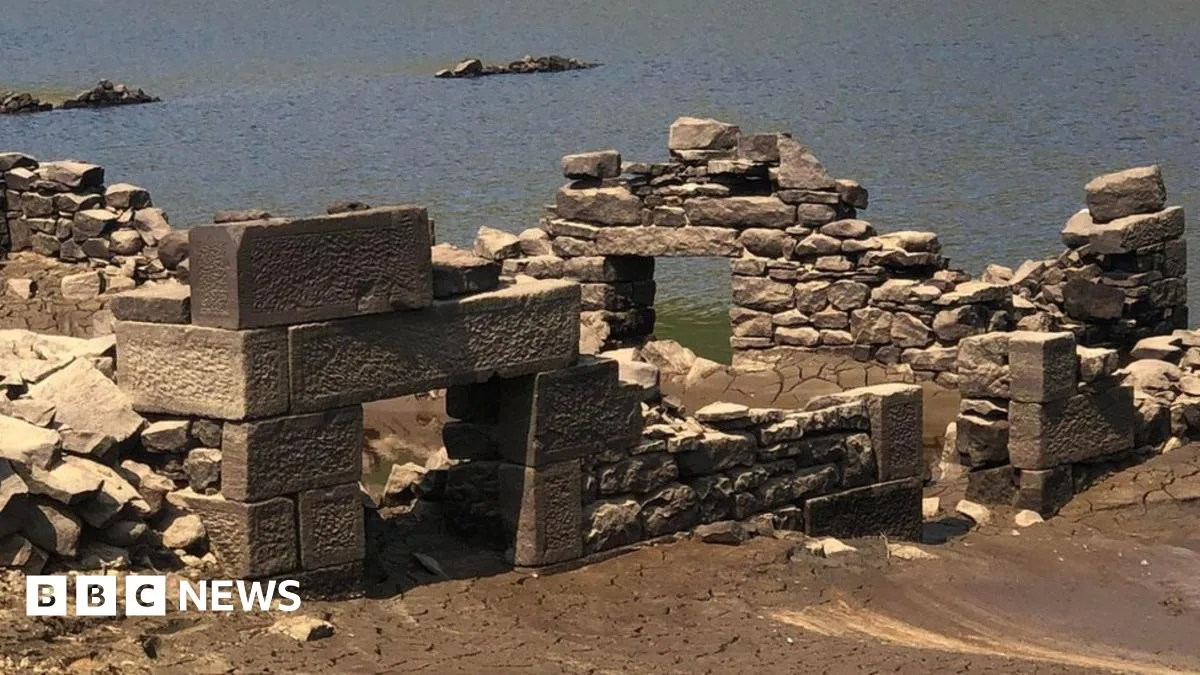
A medieval village submerged by Scar House Reservoir in North Yorkshire's Nidd Valley for nearly a century has reappeared due to falling water levels. The settlement, abandoned when the reservoir was built in the 1920s, was last seen in August 1995 during a prolonged dry spell.
The village was located near the medieval farming community of Lodge and was originally run by a nearby Cistercian abbey. Following the dissolution of the monasteries by King Henry VIII in the mid-16th century, it was sold into private ownership. The settlement appears on 16th-century maps as 'Lodge howses' and was home to around 1,250 people before the reservoir's creation.
Drought conditions in Yorkshire have caused water levels in reservoirs to drop below 50% capacity. At Scar House, the receding waters have exposed building foundations, dry stone walls, and gateposts. The reservoir, situated in the Harrogate district, now supplies drinking water to parts of Yorkshire.

Yorkshire Water, which manages the site, warned that the exposed areas remain dangerous. A spokesperson said: 'People should not be entering our reservoirs to swim, or onto parts that are usually submerged. They are functioning reservoirs and do pose a risk to people entering them, including cold water shock, undercurrents, unseen objects and machinery working under the water.'
The dam wall that created the reservoir contains over a million tonnes of masonry and stands 55 metres (180 feet) high.