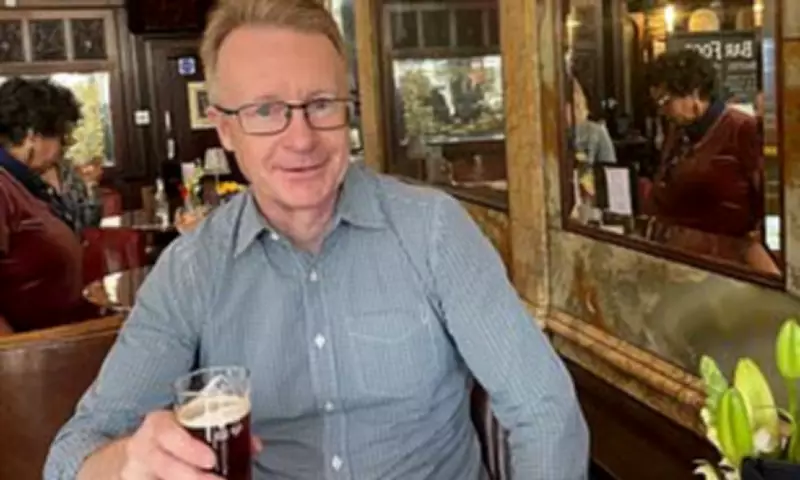
Outside the Viaduct Tavern, across from the Old Bailey, a political rally is in full flow with banging drums and chanting. Inside this venerable old drinking hole, dating from 1869, we are sipping Bombay Sapphire G&Ts, chilled with ice chipped from a block using an ice-pick behind the bar.
'We' comprised 14 tourists, several from the US, a Canadian, a Hungarian, a tourist from India, a pair from Essex, a couple from Aberdeen, a man from Dorset and a few Londoners, myself included. We have signed up to a 'London Small Group Tour of Historical Pubs' run by Liquid History Tours, rated five stars on Tripadvisor (after 9,300-plus reviews) and officially, according to Tripadvisor, the capital's number one tourist experience.
Earlier, before moving onto the Viaduct, we had met by St Paul's Tube station and shuffled via Paternoster Square - where our tall, charming, fast-talking guide Adam had told us how Sir Christopher Wren's masterpiece had miraculously survived World War Two.

This was to be the first of four pubs. The next would be the Cockpit on St Andrew's Hill, followed by Ye Olde Cheshire Cheese on Fleet Street, and the George on the Strand.
We have our drinking boots on, having been advised in our confirmation email to 'please line your stomachs in suitable style before joining the stroll'. This email had also included a geeing up quote from Queen Victoria: 'Give my people plenty of beer, good beer, and cheap beer, and you will have no revolution among them.'
Here, here! Although, the Viaduct is, strictly speaking, an old gin palace, with a lovely ruby red stucco ceiling, paintings of pre-Raphaelite maidens, marble panels, brass chandeliers and a long curving bar. The basement, according to Adam, was formerly a brothel, opium den and jail (for brawlers or those who could not pay bills). We go down to peer at the eerie spot.
Well-refreshed, we move onwards, past the rally, to the Cockpit. This dates from 1787 and is on the site of a property once owned by William Shakespeare that burned down in the 1666 Great Fire of London. Later it was to become a cockfighting venue; spectator balconies remain above the bar. Here, Adam tells us that pub hanging baskets with flowers (which the Cockpit features) were originally introduced to counter the 'foul aroma of many of pub denizens of old', some of whom may have been 'filthy and working in the sewers'. Then the barmaid, Candice, asks if myself and Ben, a work colleague, would like our picture taken standing behind the bar holding the pumps as though on a shift. We take up her kind offer.
Well-refreshed after a pint of Sussex Best, we weave onwards once more to Ye Olde Cheshire Cheese, also rebuilt after the Great Fire. This is simply wonderful with its tangle of hallways and cosy chambers including a splendid wood-panelled front lounge and a basement with barrels at which you could stand, as we do, with pints of Samuel Smith Pure Brewed Organic Lager and imagine Charles Dickens, Mark Twain and Samuel Johnson (former visitors) doing likewise.
Well-refreshed, we relocate to the half-timbered George, established 1723, opposite the Royal Courts of Justice. The George, we learnt, had begun as a coffee house and regulars of yesteryear included Horace Walpole, the Anglo-Irish poet Oliver Goldsmith, Samuel Johnson (again) and many of those who had been let off the hook by judges across the way over the years. We order pints of Regal Red amber ale, a decent brew.
Could we understand why this was officially London's top experience? Absolutely! And: cheers!
Travel Facts
Three-hour tours from £30, drinks extra (tripadvisor.com); liquidhistorytours.com.