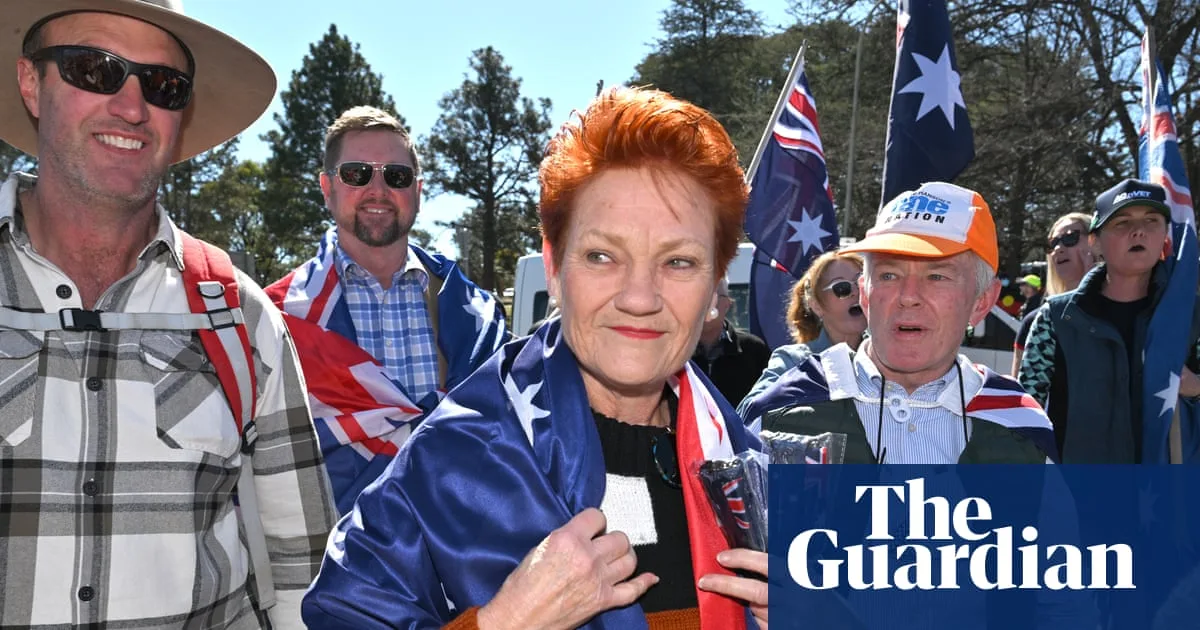
Pauline Hanson's One Nation party is experiencing a surge in support, with its primary vote doubling since the May federal election, according to recent opinion polls. The party's Victorian president, Warren Pickering, told supporters at a meeting in Melbourne's south-east that it is 'inevitable' the party will win lower-house seats in the state, citing growing disillusionment with the Liberal and National parties on issues such as immigration and net zero.
Pickering claimed the Liberal Party is 'making itself redundant' and could become a minor party within five to seven years if it does not change its stance. He asserted that a preference deal with One Nation is 'guaranteed' because the Liberals 'need us'. However, a Victorian Liberal Party spokesperson denied any discussions had taken place.
Nationally, One Nation's support has risen to 13% in the latest Essential poll, ahead of the Greens on 11% and more than double the 6.4% it received at the election. This coincides with a drop in the Coalition vote from 31.8% to 27%. Former Nationals leader Barnaby Joyce described the rise as part of a global 'phenomenon' of far-right populism, though he noted One Nation's support is well short of Reform UK's 31%.
One Nation claims a 60% increase in paid-up members since the election and is establishing local branches, including in Tamworth, in Joyce's electorate. Dr Jill Sheppard, a politics lecturer at the Australian National University, said the party is 'objectively growing in popularity' and is being treated more like a mainstream party, similar to the Greens two decades ago.
However, analysis shows One Nation's support remains concentrated in Queensland (15%), among over-55s, and outside capital cities. It polls only 7% among 18- to 34-year-olds, suggesting its anti-immigration and anti-climate action agenda does not resonate with younger voters. Sheppard said the party does not pose an 'existential' threat to the Coalition due to a lack of donor and institutional support, but it may force the Coalition to reconsider its positioning.
The rise of One Nation has exposed a split within the Liberal Party, with frontbencher Andrew Hastie citing 'fragmentation' of the right-wing vote as a reason to adopt a more nationalist platform, including dumping net zero and cutting immigration. This caused Hastie to quit the frontbench, highlighting internal divisions over the party's direction.