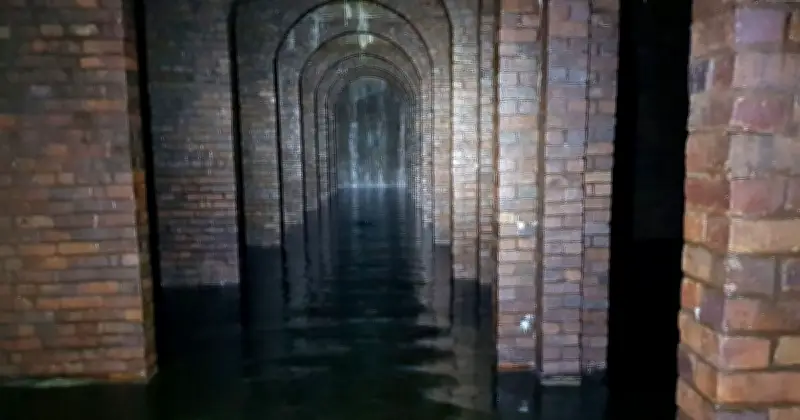
For over a century, visitors to Llandudno's Great Orme have unknowingly walked above a vast hidden chamber: a sunken reservoir known as Y Fach. Built in the 1800s and opened by the Prince of Wales on June 17, 1880, this underground structure features towering brick columns and arched roofs, earning comparisons to an 'underground cathedral.' Now, plans are underway to transform it into a year-round tourist attraction called Llandudno Vaults, after the project secured a £20,000 grant.
A Hidden Victorian Marvel
The reservoir was part of a scheme to end water shortages plaguing the expanding seaside resort. When full, it held 936,000 gallons of water and was 12 feet deep. In 1914, brick arches and a roof were added to blend it into the landscaped surroundings, creating a cavernous space that was later drained and largely forgotten. Its grass roof became a putting green, while access remained limited to a manhole with ladders.
The site has been compared to Istanbul's Basilica Cistern, known as the Sunken Palace, which features similar columns and arched roofs. The Basilica Cistern, built by Roman Emperor Justinian I, covers 10,000 square meters and was used to supply water to the Great Palace.
Plans for Llandudno Vaults
Andy White, managing director of Llandudno Vaults, said: 'For more than a century, thousands of people have walked across Happy Valley without realizing what's beneath their feet. The reservoir is one of north Wales' hidden engineering treasures, and our ambition is to reveal it in a way that respects its history while creating a completely new visitor experience.'
The proposed attraction would combine Victorian engineering, immersive storytelling, and Welsh mythology. A new entrance would be created in Happy Valley. The team expects to submit a planning application later this year and has begun engaging with local businesses and stakeholders.
Conwy county councillor Sharon Doleman commented: 'The Llandudno Vaults project presents an exciting opportunity to unlock a hidden part of the town's heritage and create a truly unique visitor experience. By combining Victorian history and engineering with Welsh culture, mythology and storytelling, it has the potential to become a distinctive year-round attraction that complements Llandudno's existing tourism offer.'
Historical Significance
The reservoir's history dates back to St Tudno, the sixth-century patron saint of Llandudno, who lived as a hermit and survived on spring water. For centuries, spring waters from the area were used by miners and farmers. The town's rapid Victorian-era expansion strained water resources, prompting officials to build surface reservoirs like Y Fach. In 1880, Professor Frankland analyzed the water, calling it 'most excellent for dietetic and all domestic purposes' and 'exceedingly soft.'
The Llandudno Vaults website describes the space: 'Beneath the Great Orme in Llandudno lies Y Fach, a long-forgotten Victorian reservoir built from red brick arches with vaulting so grand it feels like an underground cathedral. For decades this vast hidden chamber has been locked away, its potential unseen.' The project aims to transform it into 'a landmark immersive arts venue, where Welsh myths and creatures are brought vividly to life through storytelling, music, and interactive technology.'