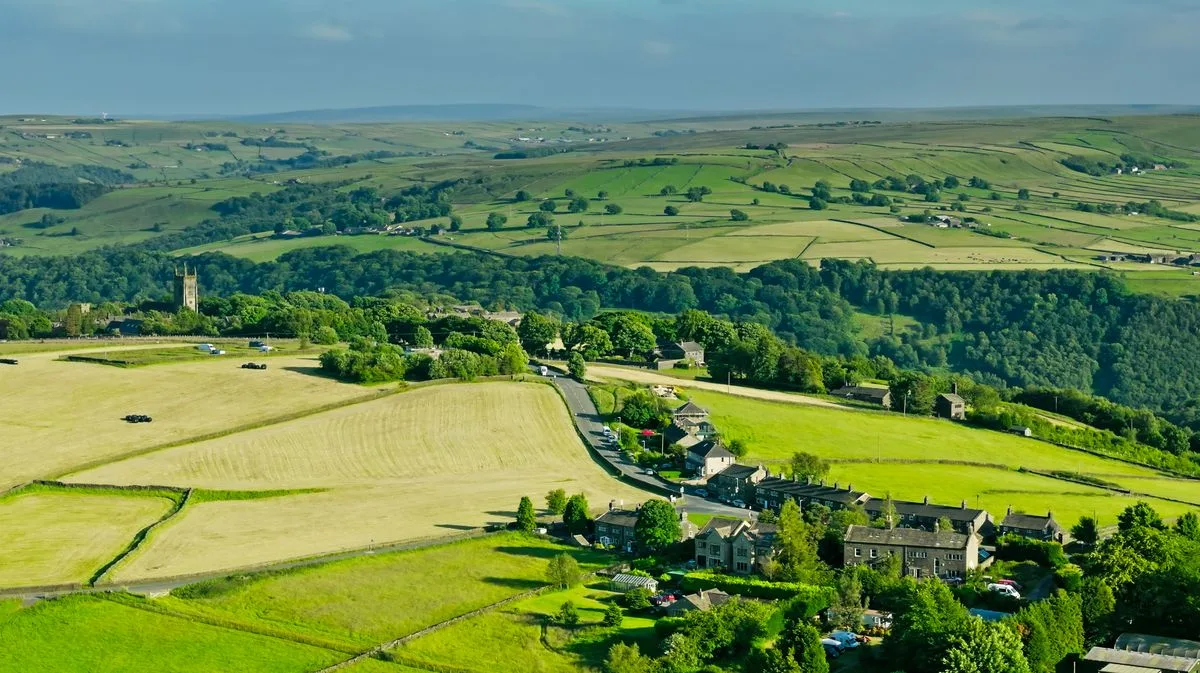
Heptonstall, a beautifully preserved hilltop weaver's village in Yorkshire, offers an ideal day trip with its stunning church, scenic walks and rich history. This quaint village, home to just 1,500 residents, boasts the remnants of a 13th-century church and charming cobbled streets that once witnessed the early stages of the English Civil War in 1643.
In the 1980s, local protests led to the restoration of the original paving slabs when the main road was dug up. The council later replaced the street lamps with late 19th-century cast-iron gas-style structures, adding to the village's timeless charm. Once a hub for loom weaving, many of the old cottages feature wide windows that bathe the interiors in sunlight - a design originally intended to aid the weavers' work.
The village's original church, dedicated to the Archbishop of Canterbury St Thomas Becket, was established around 1260. It underwent numerous repairs over the centuries until a devastating storm in 1847 left only its skeletal structure standing amidst the old graveyard. Literature enthusiasts may be interested to know that Sylvia Plath is buried in this Yorkshire graveyard, far from her homeland. Her husband Ted Hughes resided nearby in Mytholmroyd. Sadly, her headstone was vandalised to remove Hughes' name.
The new church, St Thomas the Apostle, situated in the same churchyard, hosts the annual Pennine Spring Music Festival. This venue is used for workshops, masterclasses and performances, and occasionally the yard serves as an open-air stage. Visitors also recommend the Towngate Tearoom, crowned West Yorkshire's best cafe in 2025 with a stellar 4.9 stars on Trip Advisor, as the ideal spot for a bite after exploring this historic town.