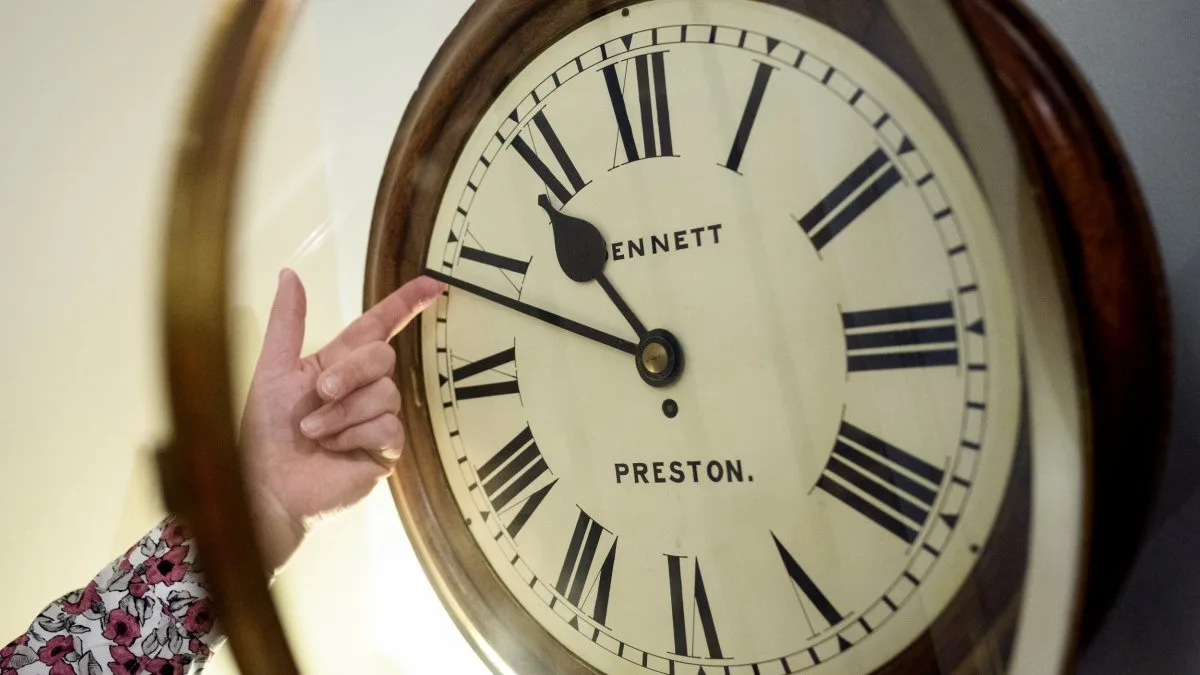
The clocks in the UK will go back at 2am on Sunday 30 October, marking the end of British Summer Time (BST) and the return to Greenwich Mean Time (GMT) until spring. This means that at 2am, the time will revert to 1am, giving most people an extra hour in bed — a welcome bonus for those celebrating Halloween on Saturday night.
The twice-yearly clock change always occurs at the weekend to minimise disruption to schools and businesses. The next change will be on Sunday 26 March 2023, when clocks go forward at 1am to 2am, resulting in an hour of sleep lost. The dates fall on the final Sunday of October and March respectively, a day earlier than in 2021.
The tradition of changing clocks dates back to the early 20th century, championed by builder William Willett, who was frustrated by the “waste” of daylight during summer mornings. British Summer Time was adopted in 1916 to save fuel and money. During World War II, clocks were advanced two hours ahead of GMT, and in 1947 they were brought forward temporarily due to fuel shortages. An experiment between 1968 and 1971 kept clocks one hour ahead of GMT year-round, but the UK later reverted to the current system.
While many welcome the extra hour in autumn, some have called for aligning UK time with other European countries to reduce road accidents. Errol Taylor, former chief executive of the Royal Society for the Prevention of Accidents (RoSPA), noted in 2019 that “the clock change kills people,” citing increased casualty rates during darker evenings. He argued that vulnerable road users like children and cyclists would benefit from a change, though he acknowledged differing views on the matter.