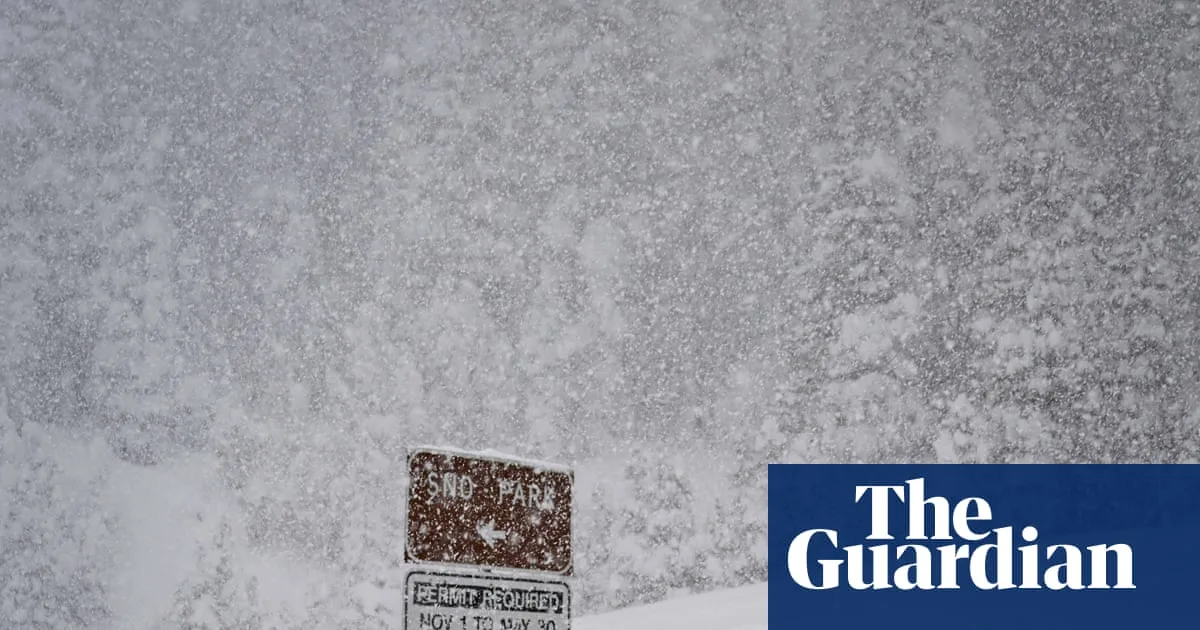
Newly released photographs have laid bare the catastrophic devastation wrought by a horrific avalanche that swept down a mountainside near Lake Tahoe, burying eight mothers alive in one of the deadliest backcountry disasters in California's history.
The Scarred Slope at Castle Peak
The haunting images, released by the Sierra Avalanche Center, reveal the scarred slope at Castle Peak where a powerful 'storm slab' fractured without warning and roared 400 vertical feet down the mountain. These photographs, combined with detailed incident maps and timelines, underscore the sheer, terrifying force of the snowslide that claimed nine lives and sent shockwaves through the tight-knit Sierra community.
The Fatal Morning of February 17
According to the center's comprehensive report, a group of fifteen backcountry skiers was positioned below Perry's Peak at approximately 11:30 AM on February 17 when the avalanche broke loose on a north to northwest-facing slope at 8,260 feet. Classified as 'large' on the danger scale, the slide completely buried twelve members of the party.
Three skiers who miraculously escaped the avalanche's clutches immediately began a desperate, time-critical digging operation. They managed to pull out three people before professional rescuers could reach the remote, treacherous terrain. However, the immense scale of the disaster quickly became tragically apparent.
Rescue Operations Amidst Storm Conditions
Search and rescue teams arrived later on Tuesday afternoon, battling high-intensity storm conditions as daylight rapidly faded. Crews worked relentlessly into the night, excavating eight of the nine deceased victims while evacuating six survivors under their own power to Frog Lake Huts. From there, the survivors were transported for urgent medical care.
After the storm finally subsided, avalanche mitigation operations commenced on February 20. Helicopters operated by the Pacific Gas and Electric Company were deployed, carrying 5,500-pound, 660-gallon water buckets. These buckets were dragged across the slope and used for full-load water drops in multiple areas in a critical effort to stabilize the fragile snowpack and prevent further catastrophic slides.
Only after these extensive mitigation efforts could rescuers safely continue their grim task. Five additional bodies were recovered, and another buried victim was located before nightfall. Rescue operations ultimately concluded on Saturday, February 21, with the retrieval of the final four victims.
Remembering the Victims
The guiding company leading the tour, Blackbird Mountain Guides, confirmed what it described as the 'devastating loss' of three of its highly experienced guides: Andrew Alissandratos, Niki Choo, and Mike Henry.
Tragically, six mothers, part of a close-knit group of friends, were also among the dead:
- Carrie Atkin, 46, who ran a leadership coaching business and had moved her family to the Sierra Nevada to live their 'dream life.'
- Kate Morse, 45, a biotech executive and mother of three.
- Danielle Keatley, 44, who co-ran a natural winemaking business in the Bay Area.
- Kate Vitt, 43, a SiriusXM executive and mother of two, described as having 'verve and zest for life.'
- Caroline Sekar, 45, and Liz Claubaugh, 52, sisters. Sekar was a mother of two from San Francisco, and Claubaugh worked for St. Luke's Health System in Boise, Idaho.
Their families issued a joint statement honoring the women as 'extraordinary,' devoted parents and friends whose bond extended from their families to the mountains they passionately loved. All six were experienced backcountry skiers who knew how to navigate the wilderness of the Sierra Nevada.
A Community in Mourning
The Nevada County Sheriff's Office publicly identified all nine victims as mourners gathered for a solemn vigil in downtown Truckee. Candles flickered in the winter air as grieving loved ones embraced, united in their profound loss.
Of the six survivors, only one has been publicly identified: Jim Hamilton, who was rescued nearly six hours after the avalanche struck. His wife, Beth Hamilton, described the agonizing wait in a heartfelt Facebook post: 'I thought I had lost you forever. The not knowing whether you survived was a pain I cannot put into words.'
Investigations into the Tragedy
The fifteen skiers had begun their three-day trip just as warnings about the intensifying storm were being issued. They had spent the weekend staying along Frog Lake in high country huts accessible only by challenging trails.
Critically, the Sierra Avalanche Center had issued an avalanche watch on the morning of the trip's first day, indicating a high risk of large avalanches. The tour company's website stated the trek was intended for intermediate to expert skiers. The four guides with the group were trained or certified in backcountry skiing and were instructors with the American Institute for Avalanche Research and Education.
What the guides and their tour company knew about the severe warnings and risks from the powerful winter storm, and why they proceeded with the tour, is now a central focus of multiple investigations.
Nevada County Sheriff Shannan Moon confirmed authorities will investigate why the guides proceeded despite the dire forecast. Additionally, California's Division of Occupational Safety and Health, the state agency regulating workplace safety, is investigating to determine if the company violated California law.
Blackbird Mountain Guides stated it has launched its own internal investigation while mourning the profound loss of its three guides. The haunting images of Castle Peak now stand as a somber testament to the deadly power of nature and the profound human cost of this historic disaster.




