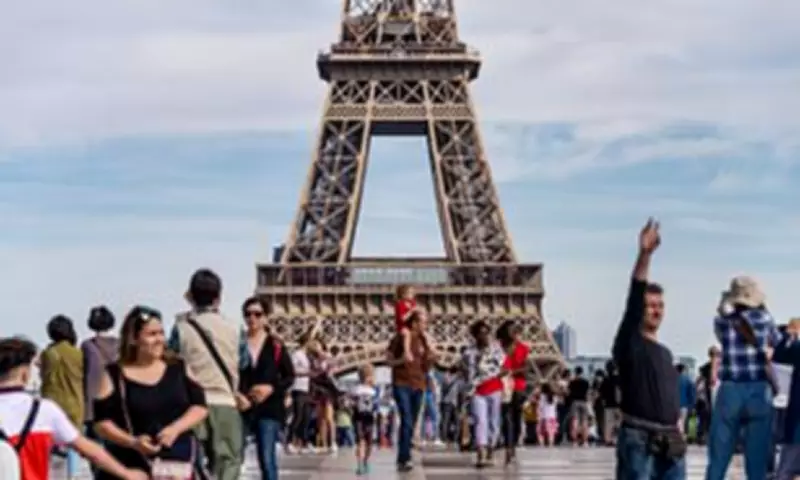
Holidaymakers are sacrificing precious sleep and testing their patience in pursuit of the perfect Instagram photograph while abroad, as new research identifies the world's most impossible photo locations. A study commissioned by Samsung has named ten tourist hotspots where crowds are most likely to spoil the shot, with iconic sites like the Mona Lisa, Buckingham Palace, the Taj Mahal, and the Colosseum among the worst offenders.
The Dawn Patrol: Brits Rising Early for Crowd-Free Shots
The research highlights the extreme lengths to which people will go for that flawless picture. More than a quarter of British travellers, specifically 27 percent, admit to sacrificing their holiday lie-in to arrive early at landmarks. Some dedicated photographers even reach these sites before 6am in a determined effort to beat the inevitable crowds.
This behaviour is most prevalent among Generation Z, with a striking 40 percent of young adults waking at the crack of dawn to secure the ideal shot. In contrast, older generations appear far less willing to make such sacrifices. A significant 59 percent of Generation X state they would never wake up early solely for a photo free of other people.

The Top Ten Most Challenging Photo Locations
Topping the list as the hardest place to capture a clean photograph is Times Square in New York City. The combination of flashing digital billboards, densely packed sidewalks, and a constant, swirling flow of tourists makes a crowd-free picture virtually impossible at any hour of the day or night.
Following closely behind is the Eiffel Tower in Paris. This iconic landmark draws visitors from every corner of the globe, all scrambling and jostling for the perfect angle beneath its iron lattice structure throughout the day.
The full top ten list, as revealed by the Samsung-commissioned research, includes:
- Times Square – New York City, USA
- Eiffel Tower – Paris, France
- Trevi Fountain – Rome, Italy
- The Mona Lisa – Louvre Museum, Paris, France
- Buckingham Palace – London, UK
- Taj Mahal – Agra, India
- The Colosseum – Rome, Italy
- Great Wall of China (Badaling section) – Beijing, China
- Niagara Falls – USA/Canada
- Shibuya Crossing – Tokyo, Japan
Frustration and Digital Editing
Crowds prove to be a major source of irritation for British holidaymakers, with the frustration sometimes severe enough to make them abandon a photo opportunity entirely. Seven in ten travellers report feeling genuinely annoyed when someone inadvertently walks into their shot. Furthermore, one in five admits to having told strangers off for committing such photography faux pas.
While nearly half of respondents can see the humour in an accidental photobomb, many—particularly millennials—state they would prefer to simply edit unwanted people out of their pictures using digital tools rather than contend with the crowds in real time.
Easier Alternatives and Worst-Rated Attractions
At the other end of the spectrum, some famous sites offer slightly better opportunities. Locations like Machu Picchu and viewpoints of the Hollywood Sign are reported to have shorter waits for photos, thanks largely to more available space for visitors to spread out, though they remain busy during peak times.
Separate recent research by luggage storage company Stasher analysed 101 of the world's most iconic landmarks to identify the ten worst-rated tourist attractions based on traveller feedback. Using a comprehensive scoring system that combined Google Reviews ratings, average TikTok engagement, distance from major airports, country safety rankings, and local accommodation quality, the study provided an overall score out of ten for each site.
The Hollywood Walk of Fame in Los Angeles was named the world's worst major tourist attraction, scoring a dismal 2.67 out of 10, proving that celebrity nostalgia does not necessarily guarantee a quality visitor experience. The Dead Sea ranked second-worst with a score of 3.51, hampered by its remote location 66 km from the nearest airport and a concerning safety rating. Istanbul's Grand Bazaar struggled in third place with a score of 3.86, despite its immense cultural and historical significance.

Jacob Wedderburn-Day, founder of Stasher, commented on the findings, noting, 'Famous doesn't always mean worthwhile. Poor transport links, severe overcrowding, or locations that require significant effort to reach all impact whether a destination lives up to the expectations built by decades of photographs and films.'