15 Breathtaking Crowd-Free Walking Spots in Wales Revealed
15 Crowd-Free Walking Spots in Wales Revealed

Wales, a land of striking landscapes, is home to some of the UK's most picturesque coastlines, sweeping valleys, and rugged peaks, along with charming villages and historic sites tucked within. Though small compared to its neighbours, the country boasts an impressive 1,600 miles of coastline, with 20 per cent of its land covered by three National Parks: Snowdonia, the Brecon Beacons, and the Pembrokeshire Coast.

A premier destination for hikers, around four million people visit Snowdonia (Eryri) each year to explore its dramatic valleys and mountain ranges, with some 400,000 tackling the country's highest peak, Snowdon. But for those keen to venture beyond Wales' most popular trails, a new guidebook has handpicked 300 carefully curated walking routes across the country.

In Outstanding Walks Wales, lesser-known locations take the spotlight, from the natural beauty of Anglesey (Ynys Môn) and the Wye Valley (Dyffryn Gwy) to the industrial heritage of Blaenavon (Blaenafon). Beyond its walking routes, the book also highlights castles, towns, and UNESCO World Heritage Sites scattered across Wales. Below is a selection of 15 breathtaking, crowd-free hotspots from the guide to maximise your next trip to Wales.

Wide Pickt banner — collaborative shopping lists app for Telegram, phone mockup with grocery list

1. Borth War Memorial

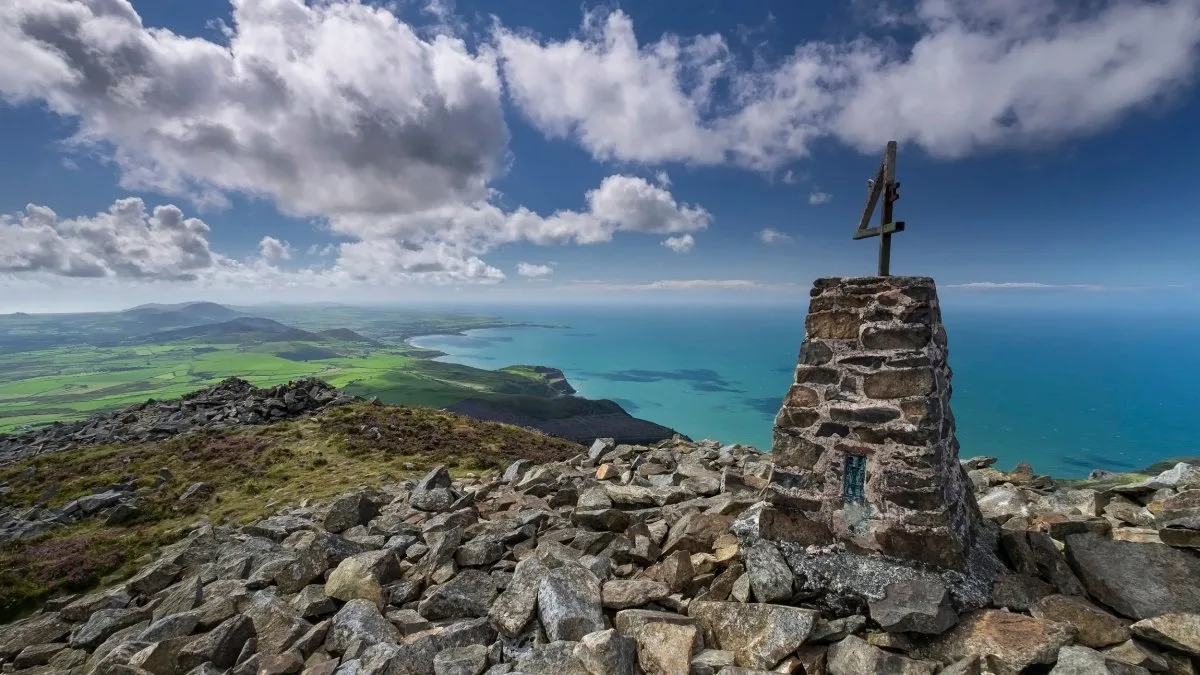
Perched atop a cliff overlooking upper Borth above Craig Yr Wylfa, Borth War Memorial was initially built to commemorate the lives of 23 men from the area who were killed in the First World War, between 1914 and 1918. The monument, which stands six metres high, was designed with a four-stepped base, surmounted by a rough-hewn stone plinth and column with a cross positioned at the top. A second plaque was subsequently added following the Second World War, which saw a further 25 men from Borth killed. In 1983, it was struck by lightning and damaged, before being re-erected by public subscription in 1984.

2. Carreg Cennen Castle

Voted 'the most romantic location in Wales' by Countryfile readers, Carreg Cennen Castle sits on a limestone crag at a height of almost 300 feet above the River Cennen, offering spectacular views of the Carmarthenshire countryside. The medieval castle, which dates back to the 13th century, 'offers a sense of remoteness and drama', which has since helped turn it into a prime wedding destination and filming location, with upcoming filming dates in May. It is also a managed visitor site with a small café, access paths, a working farm, and a gift shop, though it still feels remote. Admission to the castle grounds costs £7.30 for adults, £6.60 for seniors, and £5.10 for children, while disabled persons and their companions can enter free of charge. Access paths pass through a variety of habitats integral for 28 species of mammals and 108 species of birds, including the little Gold Crest, Wales' smallest breeding bird.

3. Conwy Mountain

Conwy Mountain is considered one of the country's most beautiful mountains for walking. Its alternative name is Mynydd y Dref, which means 'The Town's Mountain', aptly named as it sits north-west of the walled town of Conwy. The mountain is the site of an extinct volcano that erupted 450 million years ago. Since then, shifting tectonic plates have forced the volcanic rock upward and tilted it, carving out the dramatic landscape visitors see today. Served by a generous network of paths, including the North Wales Path and the Wales Coast Path, the mountain is known to burst into a shade of soft purple in late summer as bell heather comes into bloom, while gorse, western gorse, and bilberry plants provide striking contrasts of yellow and blue. With a distance of six miles and a summit of 244 metres, the hike takes a total of three hours, though it offers rewarding views of Conwy, the coastline, and Anglesey, as well as Castell Care Seio and the remains of an Iron Age hill fort.

Pickt after-article banner — collaborative shopping lists app with family illustration

4. Cribau & Y Lliwedd from Snowdon (Yr Wyddfa)

Cribau and Y Lliwedd are two separate geographic features that meet on the main ridge line that connects the summit of Wales' tallest mountain, Snowdon (Yr Wyddfa), to Y Lliwedd. These ridges were shaped by glaciers during the last Ice Age, which carved out the sharp edges and valleys seen today. Y Lliwedd, which stands at 898 metres, has a rugged, craggy appearance and was once used for early mountaineering routes, while Cribau is a shorter scrambling ridge that offers a more direct, rocky route up to the high ridge between Snowdon and Y Lliwedd. The area is not developed beyond footpaths, keeping it wild and exposed, although surrounding peaks and lakes make it one of the most dramatic parts of Snowdonia.

5. Cribyn

Formed from old red sandstone, Cribyn is part of the same range as Pen y Fan but sees fewer visitors and appears more rugged than its neighbour due to its narrow ridges. Standing at 795 metres, the mountain is the third highest in the central Beacons and is known for its distinctive, pyramidal shape and a steep ridge called 'The Nose'. The wider area is part of a National Park, with maintained paths but little built infrastructure, while the surrounding landscape is made up of open moorland with sweeping views.

6. Porth yr Ogof

Located in the 'Waterfall Country' of the Brecon Beacons, Porth yr Ogof is a large natural cave formed by the River Mellte cutting through limestone over thousands of years. Boasting the largest cave entrance in Wales, the entry point is wide and low, with water flowing through it depending on conditions. In total, there are 15 entrances to the cave with more than 2.25 kilometres of surveyed passages. Inside, visitors can marvel at the 'White Horse Pool', named for the white calcite mark on the wall that resembles a horse's head. The surrounding woodland and waterfalls create a lush, enclosed setting. Although it is part of a popular walking route, the cave still feels natural rather than heavily developed.

7. Monmouthshire & Brecon Canal

Built in the late 18th century, the canal was originally used to transport coal and iron during the Industrial Revolution. Today it is preserved as a leisure route, popular for walking, cycling, and narrowboat trips, and is widely considered the most scenic waterway in the UK. The canal, which stretches 35 miles and is lined with old locks, bridges, and towpaths that reflect its industrial past, passes through quiet countryside, villages, and wooded stretches along the Brecon Beacons.

8. Pantmaenog Forest & Foel Eryr - Mynydd Preseli Walk

The walk through the privately-owned Pantmaenog Forest to the 1,535-foot summit of Foel Eryr is a classic route, blending managed woodland with the wild, ancient moorland of the Mynydd Preseli (Preseli Hills). The Preseli Hills are geologically significant, as their bluestones were used to build Stonehenge thousands of years ago, while Pantmaenog Forest is a more recent plantation, contrasting with the open moorland of Foel Eryr. Though privately owned, the forest is open to the public for about 12 kilometres and is popular for walking, mountain biking, and horse riding. The summit itself is grassy and windswept, with few signs of development, though it is considered one of the best viewpoints in the park, with views of the entire Pembrokeshire coastline and of the Wicklow Mountains in Ireland on a clear day.

9. Porth Dinllaen

This small coastal area has historic roots as a fishing village and was once considered as a possible ferry port to Ireland. Today it remains largely unchanged, with a handful of cottages and a world-renowned pub by the beach, as well as being known for its 'time-warp'. Protected as part of a heritage coastline, development in this area has been minimal, with only 24 buildings in total. The standout star of the village is Tŷ Coch Inn (Red House), ranked the third best beach bar in the world by Cheapflights.co.uk, beating out many establishments in tropical hotspots. The bay is sandy and sheltered, backed by grassy headlands and one of the largest seagrass meadows in North Wales. The rocky headland is also a popular spot for spotting grey seals, while the cliffs are home to sand martins and cormorants.

10. South Stack Lighthouse

Perched on a tiny islet off Holy Island, South Stack Lighthouse is surrounded by the Irish Sea, towering cliffs, and a world-class nature reserve, earning it a reputation as one of the most dramatic landmarks in Wales. The lighthouse was built in 1809 to warn ships of the dangerous rocks along this stretch of coast and is reached by a long flight of around 400 steps and a narrow bridge. Before the first bridge was built in 1828, the only way across was in a wicker basket hung from a cable. The surrounding cliffs are steep and rugged, forming part of a nature reserve rich in seabirds, including 9,000 nesting guillemots, razorbills, and fulmars in the summer, and an elusive colony of puffins between May and June. Visitors can tour the site, which is now a recognised attraction.

11. Tenby Harbour & Medieval Castle

Tenby Harbour and the ruins of its medieval castle sit on a dramatic, rocky area known as Castle Hill, offering a sandy beach, cliffs, colourful houses, and panoramic views of Carmarthen Bay. The harbour itself has been used for fishing and trade for centuries, though today it is a popular tourist spot with restored buildings and boat trips running from the quay. The castle, founded by the Normans in the 12th century, has lost most of its original structure over time, but several key features remain, such as a solitary stone tower and its main gateway.

12. Cadair Idris

Cadair Idris, based in Snowdonia (Eryri) National Park, was formed by volcanic activity and later shaped by glaciers, giving it its distinctive bowl-shaped peak. It has long been linked to Welsh myths and dark folklore, with legends suggesting that those who fall asleep on the mountain will either awake as a poet or a madman - or possibly never wake again. At 2,930 feet, Cadair Idris is one of the highest mountains in southern Eryri, with routes up to the peak well established but not overly developed, keeping a natural feel. The wider area consists of lakes, forests, and steep valleys that offer breathtaking views from the top.

13. Three Cliffs Bay, Gower

Three Cliffs Bay in Swansea sits within the Gower Area of Outstanding Natural Beauty, meaning it is protected from heavy development. Aside from footpaths and a few nearby ruins, the beach remains largely untouched, with surrounding dunes, river, and cliffs providing a varied landscape. The bay, with its limestone cliffs formed over millions of years and shaped by coastal erosion, is overlooked by an ancient castle and is often named among Britain's best beaches. In 2006, it was crowned the UK's best beach by the BBC, and ranked as one of the Best Beaches in Europe for 2025.

14. Tin Man Sculpture above Llanbedrog Beach

The Tin Man is an iconic modern artwork installed in 2001, standing on a headland above Llanbedrog Beach, facing out to sea. The current figure is the third in a series of landmarks to occupy the spot. The original wooden structure, which would have been 100 years old now, was destroyed around 1980 by vandals in a fire, while the second metal sculpture rusted away in the harsh coastal elements. Because the sculpture is hollow, the wind that blows through it is said to make it 'sing', adding an eeriness to the landmark. And despite being called the Tin Man, the current sculpture is actually made of iron and steel - and was so heavy that it had to be transported by helicopter into position when it was commissioned in 2001.

15. View North along the Clwydian Hills

The Clwydian Hills are an ancient landscape of several hills that run from Llandegla in the south to Prestatyn in the north, with evidence of Iron Age hillforts along the ridge that still shape the skyline today. The area is managed as an Area of Outstanding Natural Beauty, with maintained trails but limited natural features, though its surroundings offer dazzling views of farmland, moorland, and distant coastal views. The mountain range is popular for walking, cycling, horse riding, and picnics. Those who cross into North Wales via the M56 motorway can distinctly spot the Clwydian Hills, which stretch about 20 miles.