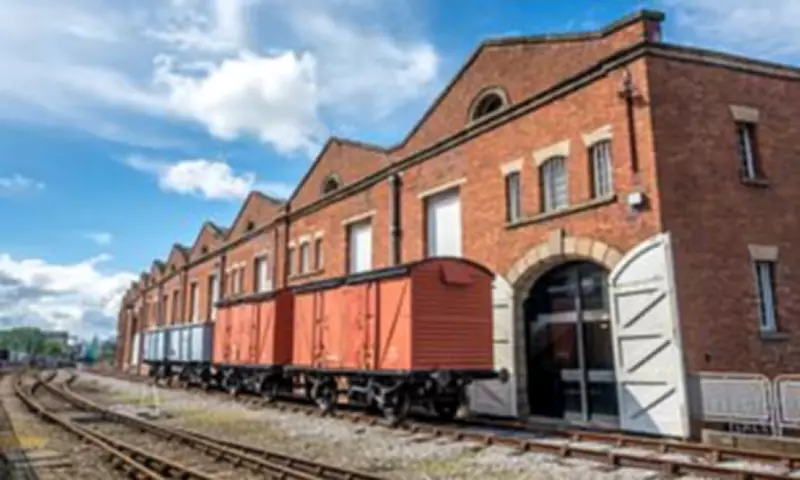
Britain's railway heritage spans centuries, with over 150 heritage railways across the nation showcasing everything from Victorian steam trains to modern electric fleets. This deep cultural connection to trains makes it unsurprising that the country is home to the world's oldest surviving railway station, which remains open for visitors today.
Liverpool Road Station: A Historic Landmark
Liverpool Road Station in Manchester, constructed in September 1830, is officially recognised by Guinness World Records as the planet's oldest surviving terminal railway station. As a fundamental component of the pioneering Liverpool and Manchester Railway, it reshaped the region's entire transport system, enhancing travel and connectivity during a transformative era.
The Birth of Inter-City Rail Travel
The station represented the world's first steam-powered inter-city railway, created to link Liverpool and Manchester during the Industrial Revolution. In its prime, it played a crucial role in shaping Britain's early railway network, serving as a hub for innovation and commerce.

The station itself was a substantial complex that included canal-style warehouses, a brick viaduct, and one of the earliest examples of a modern girder bridge, which carried trains across Water Street in Manchester city centre. Passengers typically arrived by horse-drawn carriage, with first and second-class travellers purchasing their tickets in separate booking halls. Luggage was hoisted onto the roofs of the carriages, and those boarding the train were only permitted to do so once a bell was rung—the same bell that remains on display in the station building today.
Operational History and Closure
After almost 14 years serving passengers, Liverpool Road Station closed in 1844 when the nearby Manchester Victoria station opened in the same year. Despite this, the site remained active as a freight depot for over 130 years. From 1923 until 1948, it operated as a goods yard, and after the nationalisation of Britain's railways in 1948, it came under the control of British Railways. The station finally closed permanently in 1975, marking the end of an era.
Preservation and Modern Legacy
Following its closure in 1975, part of the complex was purchased by Granada Studios, which used one of the warehouses as a section of the Coronation Street television set. The remaining buildings were preserved and later incorporated into the Science and Industry Museum, where the station now holds Grade I listed status. This preservation ensures that future generations can appreciate its historical significance.
Comparative Historical Context
Although Liverpool Road is recognised as the world's oldest terminal railway station, Heighington Station, located between Shildon and Darlington in County Durham, dates from 1826, making it four years older. However, Heighington Station isn't a terminus, and little of the original structure remains for visitors to see, highlighting the unique preservation of Liverpool Road.
Today, Liverpool Road Station stands as a testament to Britain's railway heritage, offering insights into the early days of rail travel and the Industrial Revolution. Its integration into the Science and Industry Museum allows visitors to explore its rich history, from its role in transport innovation to its post-closure adaptations in media and culture.