The UK government has confirmed that Freeview services could be discontinued by 2034, potentially leaving millions of households with no choice but to pay for broadband subscriptions and possibly purchase new television sets, experts have warned.
Current Freeview Usage
Over 13 million households across the UK rely on Freeview, making it the leading television platform for 40% of households with a TV set. The service operates via traditional aerials and is the nation's biggest television service.
Government Confirmation
The Department for Culture, Media and Sport (DCMS) has confirmed the date until which licences have been granted, stating that 'no decision' has been taken regarding what happens beyond that point. In a response to a Parliamentary written question, the DCMS confirmed the cut-off date as 2034, which is fewer than eight years away.

Parliamentary Response
Labour MP Peter Lamb asked the Secretary of State for Culture, Media and Sport, Lisa Nandy, about plans to update terrestrial TV licences. In response, Minister of State Ian Murray confirmed: 'Following the consultation in 2021 on the renewal of digital terrestrial television multiplex licences, Parliament legislated to secure the future of DTT until at least 2034. No decision has yet been made about the future of the DTT platform beyond this point.'
Impact on Viewers
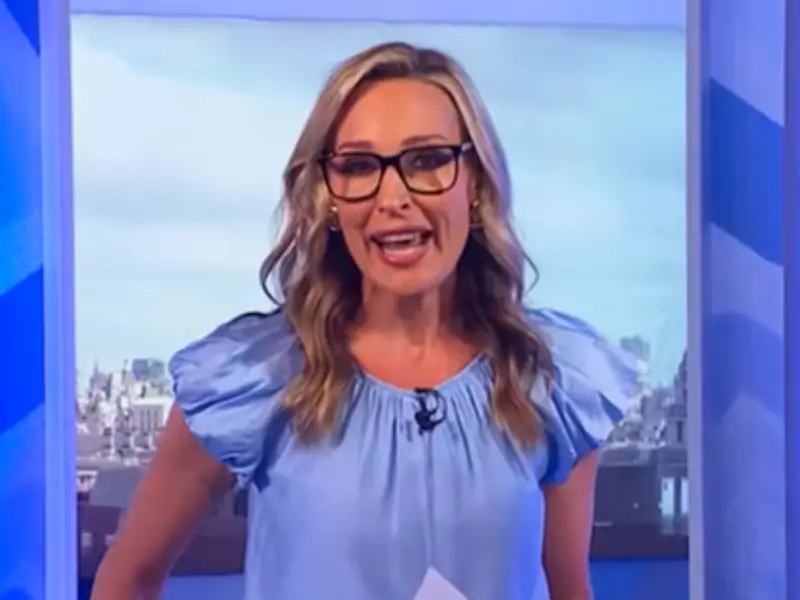
The issue was discussed on Jeremy Vine and Daytime on 5, where presenter Isabel Webster highlighted that millions of viewers could be affected. A petition on change.org has attracted 151,000 signatures from individuals campaigning for Freeview to be preserved. Webster said: 'More than 150,000 people have signed a petition to protect terrestrial TV. It is secure until the early 2030s but after that the licence expires and those who don't have a broadband connection will need to pay for one to keep watching television. For those people, they either need to sign up to a provider, pay a monthly fee, probably around £20 a month. You'd also either need a device to plug in to your TV to adapt it to broadband or you'd need to fork out for a whole new television.'
Currently, 6% of the UK population does not have broadband and relies on an aerial or satellite for watching television. Campaigners argue that a switch to online-only TV would disproportionately affect the elderly, those in rural areas, and low-income families.
Public Reaction
City AM's opinion editor Alys Denby argued that the change is inevitable as people move to streaming. She questioned how many petition signers actually watch terrestrial TV and noted that broadband provides additional benefits beyond TV. Webster countered that 6% represents millions of people without broadband access, many of whom may never choose a subscription and could be left without TV entirely.
Responses on X expressed concern. One user said: 'My uncle is housebound, has learning difficulties and relies on his Freeview TV. He doesn't have broadband because he can't understand it and it will take money from his care. Every penny he receives is used for his care and health needs, he would have to cut something to afford it.' Another commented: '10m people use Freeview, if it goes will have to pay for something you now get for free.' One individual remarked: 'Nobody should have to pay anything on top of the TV licence to watch TV. Doing this essentially forces a higher cost to turn the TV on.'
A viewer observed: 'Never put all your eggs into one basket. Being totally reliant on the internet is not a sensible move.' Another questioned: 'If they make TV only via the web, then what happens when a town of 65,000 folks loses their internet for 13 hours one day? All it takes is a contractor to dig up some cables.'
Future TV Taskforce Statement
A spokesperson for the Future TV Taskforce, a collective comprising public service broadcasters and Everyone TV, commented: 'The Taskforce supports a carefully planned, managed transition from digital terrestrial television to internet-delivered TV and a potential switch-off in the mid-2030s, as part of a broader, UK-wide digital inclusion and transition plan. Done well, this approach can protect universal access to public service broadcasting; support innovation and investment across the TV sector; and deliver long-term benefits for viewers and the UK economy.'

The petition is available to view and sign online.