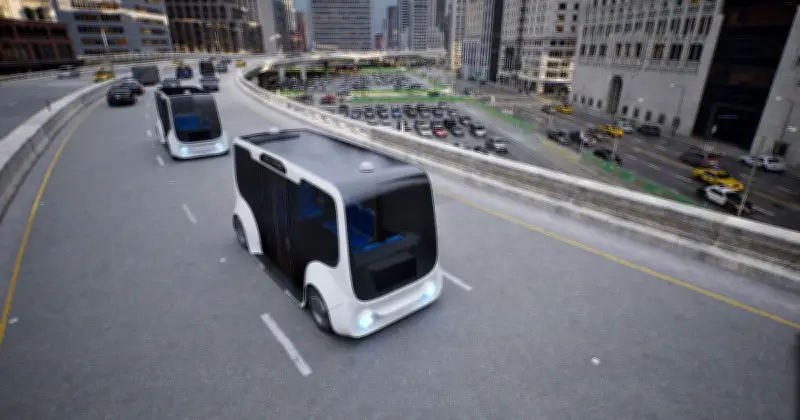
An automated bus service trialled in London has been deemed unsuitable for the city's roads, primarily because its robotic adherence to the Highway Code hampers traffic flow, according to transport experts. The Ohmio vehicle, which operates at 15 mph, made its first visit to London earlier this week, travelling from Barnes High Street to Hammersmith Bridge. The bus has no steering wheel, instead featuring two benches for passengers and accessible options for disabled travellers needing ramp access. Currently, passengers must sit and wear seatbelts, though future plans envision a 14-person capacity without onboard staff.
Transport Authority Rejects Driverless Buses
A spokesperson for the Transport Authority told London Centric: "We have no plans to introduce these vehicles on Hammersmith Bridge and no plans to introduce driverless buses elsewhere on the network." This statement effectively halts the introduction of the automated service, despite its successful test run. The primary issue, as reported by London Centric, is that the autonomous vehicles are "too well-behaved" and insist on following the Highway Code, which is "sometimes incompatible with making rapid progress on the capital’s streets."
Technical and Infrastructure Challenges
The bus is equipped with air conditioning and marks the first test of automated buses on London’s public roads in real conditions, alongside human drivers. Charles Campion, a local architect and member of the Barnes Hammersmith Electric Light Transit group, described the trial as testing the future of transport. He said: "This is the future of transport: autonomous vehicles. It’s the future of taxi transport, of personal transport, but also public transport." Community groups approved of the bus's lighter weight—three tonnes compared to a standard TfL single-decker bus at 15 tonnes—which would fit within Hammersmith Bridge’s weight limits. However, the bridge requires redevelopment to support heavier vehicles, and Campion noted, "There isn’t a business case for the government to fund the rebuilding of Hammersmith Bridge."
Future Prospects and Criticisms
The trial also included self-driving pod vehicles, which follow fixed routes. Campion envisions a fleet of about 10 vehicles, with eight running and one pod crossing the bridge at any time, capable of carrying thousands of passengers daily. However, the Financial Times' Stephen Bush warned that the arrangement might benefit Hammersmith and Barnes residents while inconveniencing drivers from Wandsworth, who would face longer journeys. Despite the technological advancements, the automated bus service is unlikely to be introduced in London anytime soon, as regulatory and infrastructure hurdles remain significant.