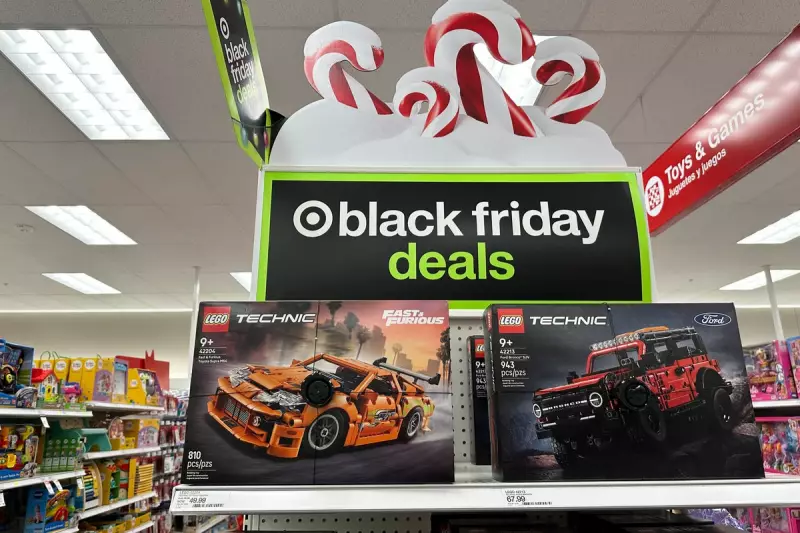
American retailers are poised to discover if Black Friday can still deliver a significant boost, benefiting from a potential 'holiday halo effect' as the crucial shopping period begins. The traditional spectacle of shoppers abandoning Thanksgiving dinners for midnight queues and brawling over discounted televisions has largely become a relic of the past.
The Changing Face of Black Friday
Online shopping and retailers launching their discount campaigns weeks before the Thanksgiving holiday have dramatically subdued the previous fervour. However, the day after Thanksgiving continues to attract enough enthusiasts to maintain its status as the busiest in-store shopping day of the year in the United States, solidifying its position as the unofficial start of the holiday shopping season.
This year's kick-off arrives amidst a challenging economic backdrop. Consumer confidence in the US economy fell this month, according to a Tuesday report from The Conference Board, following the federal government shutdown, weak hiring data, and stubborn inflation. Retail executives note that customers are becoming more discerning, increasingly focused on finding deals, yet still willing to spend for major occasions like the winter holidays, creating a potential halo effect for sales.

"Consumers have been saying the economy is terrible while continuing to spend for years now, so the outlook is probably better than they are telling us," remarked Bill Adams, chief economist at Comerica Bank, regarding shopper sentiment leading into Black Friday. "But business surveys also report consumers are being more sensitive to prices and selective in spending."
Economic Pressures and Pricing Strategies
Earlier in the year, while planning for the holiday season, retail companies grappled with the volatility caused by former President Donald Trump's wide-ranging tariffs on imported goods. Many firms accelerated shipments of certain merchandise before the tariffs took effect or made the decision to absorb some of the import tax costs rather than immediately passing them on to consumers.
Despite these efforts, price increases have been significant. Market research firm Circana reported that 40% of all general merchandise sold in September saw a price increase of at least 5% compared with the first four months of the year. Categories like toys, baby products, housewares, and team sports equipment were among the hardest hit. A striking 83% of toys sold in September saw an increase of at least 5%. This is particularly impactful as industry group The Toy Association states that nearly 80% of toys sold in the US are made in China, a country subjected to especially high tariffs by the Trump administration at various points this year.
Positive Momentum and Online Growth
Despite these headwinds, analysts and mall executives cited solid momentum heading into Black Friday week. At the Mall of America in Bloomington, Minnesota, foot traffic in recent weeks has even surpassed pre-pandemic 2019 levels, according to Jill Renslow, the mall's chief business development and marketing officer.
"We're seeing a very positive start to the holiday season," Renslow said. "The last few Saturdays in November have been very strong."
Online sales growth has also been robust. From November 1 to November 23, consumers spent $79.7 billion online, according to Adobe Analytics. This represents a 7.5% gain from a year earlier and exceeded Adobe's initial growth forecast of 5.3% for the season. Mastercard SpendingPulse, which tracks all payment methods, predicted a more modest 3.6% increase in holiday sales from November 1 through December 24, compared to a 4.1% increase last year.
"Clearly, there’s uncertainty," said Mastercard Chief Economist Michelle Meyer. "Clearly, consumers feel on edge. But at the moment, it doesn’t seem like it’s changing how they are showing up for this season."

For bargain hunters, the timing of discounts is key. Adobe Analytics identified Thanksgiving Day as the best time for online discounts on sporting goods. However, Black Friday will be the prime day for buying TVs, toys, and appliances online. Cyber Monday is expected to offer the deepest discounts on apparel and computers, with apparel discounts predicted to hit 25% off the manufacturer's suggested price.