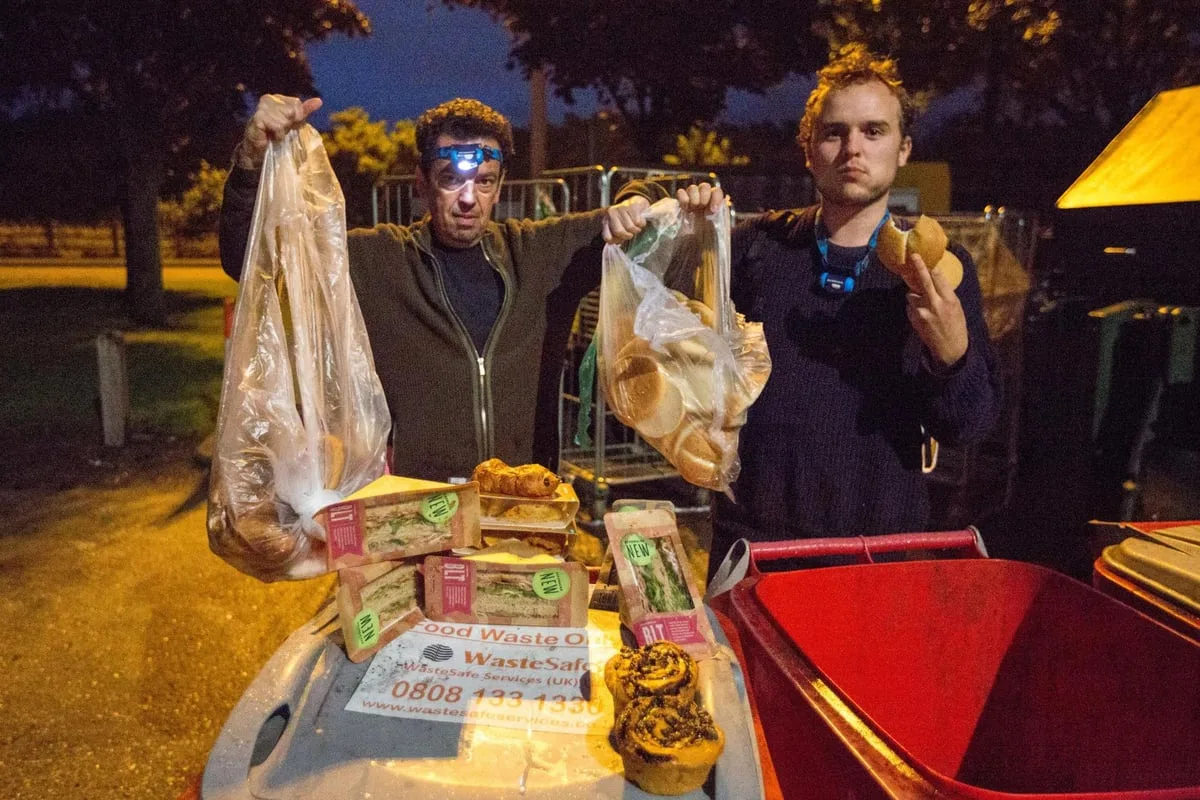
Supermarkets are throwing away £230 million worth of edible food each year while thousands of Londoners struggle to feed their families, a major investigation has revealed. Undercover reporters from the Evening Standard joined food waste campaigners to examine the contents of supermarket bins after closing time.
At a north London convenience store, the team found 23 bags packed with fresh food still within its use-by date, including whole roast chickens, rib-eye steak, sushi, and strawberries. An employee admitted she was instructed to throw out perfectly good food, saying: “It breaks my heart to toss it but that’s what they make me do every night.”
Figures from Wrap, the government-backed charity, show UK supermarkets wasted 235,000 tonnes of food last year, of which around half was perfectly edible. Only about 3 per cent of surplus food was donated to charities.
Campaigners say supermarkets often hide their bins behind high fences to conceal the scale of waste. Tristram Stuart of Feedback said: “They don’t want people to know about their dirty little secret.”
An all-party parliamentary report described the situation as “indefensible” given the number of people going hungry in the UK.