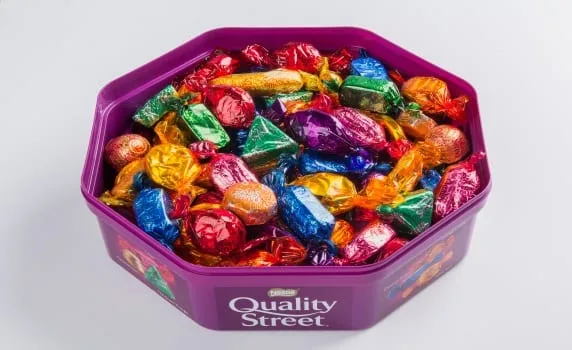
Nestlé has revealed why Quality Street tubs consistently contain fewer green triangles and purple sweets, attributing the imbalance to production formulas that divide sweets into three categories: fruit cremes, chocolates, and toffees and fudge. Each tub is roughly split into thirds by category, meaning the green triangle and purple one—both chocolate-based—are outnumbered by fruit cremes like strawberry delight.
The manufacturer confirmed that green triangles and purple sweets are among the most popular varieties, but the caramel swirl has the broadest appeal. Nestlé denied deliberately limiting popular sweets to drive sales, stating that factors such as weight, nutritional value, and cost must remain consistent across tubs.
“Part of the fun of Christmas is the family discussion about each of our favourites and who gets the last sweet,” a Nestlé spokesman said. He added that some chocolates contain more sugar and fat, so including too many would raise the average nutritional value above acceptable levels. Heavier and more costly sweets also affect the assortment.
This year, Nestlé discontinued the honeycomb crunch, which had replaced the toffee deluxe in 2016. The brand also launched a partnership with John Lewis, allowing customers to create custom tins by selecting their preferred sweets until 23 December 2018.