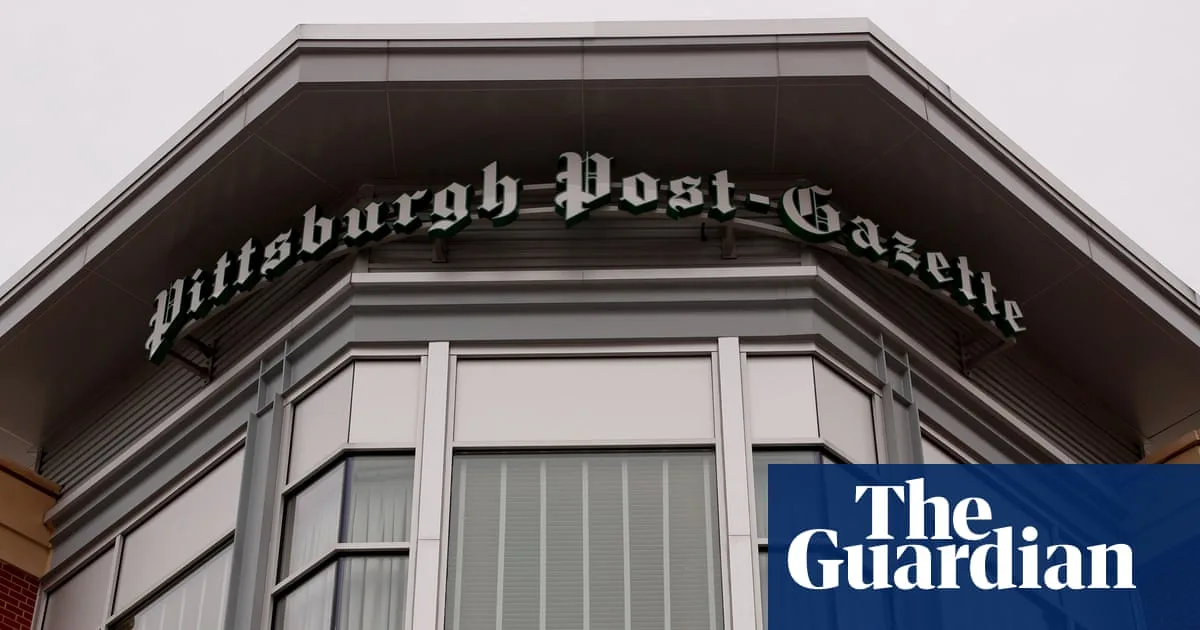
The Pittsburgh Post-Gazette, one of the United States' oldest newspapers, will print its final edition on 3 May 2026, its owners have announced. The decision by Block Communications Inc. marks the end of a publication whose roots stretch back to 1786.
A Legacy Ends Amid Financial Strain
In a statement released on Wednesday 7 January 2026, the Block family confirmed the closure, citing catastrophic financial losses sustained over two decades. The company stated that "continued cash losses at this scale" were no longer sustainable. The paper, which currently prints on Thursdays and Sundays with an average paid circulation of 83,000, has reportedly cost its owners hundreds of millions of dollars.
The announcement was delivered to employees via a pre-recorded video on Zoom, where company officials did not speak live. A phone message seeking further comment left at Block Communications' headquarters in Toledo, Ohio, was not immediately returned.
Labour Strife and a Supreme Court Snub
The shutdown news broke on the same day the U.S. Supreme Court declined an emergency appeal from the paper's publishing company. The appeal sought to halt a National Labor Relations Board order compelling the company to abide by health care coverage policies from an expired union contract.
This caps years of turbulent industrial relations. More than five years ago, the newspaper declared a bargaining impasse with the Newspaper Guild of Pittsburgh and imposed employment terms unilaterally. It was later found to have bargained in bad faith. A three-year strike only ended in November 2025, when a couple dozen union members returned to work.
Andrew Goldstein, president of the Newspaper Guild, lamented the owners' choice. "Instead of simply following the law, the owners chose to punish local journalists and the city of Pittsburgh," he said, praising the paper's long history of award-winning journalism.
From Abolition Advocate to Modern Closure
The Post-Gazette's lineage is profoundly historic. It began as the Pittsburgh Gazette in 1786, a four-page weekly that became a leading voice for the abolition of slavery in the 19th century. After a series of masthead and ownership changes, media magnate Paul Block acquired the paper in 1927, giving it its current name.
The Block family statement expressed pride in the "service the Post-Gazette has provided to Pittsburgh for nearly a century" under their stewardship. Its closure in May will sever a direct link to the earliest days of American publishing, leaving a significant void in the local media landscape of Pennsylvania.