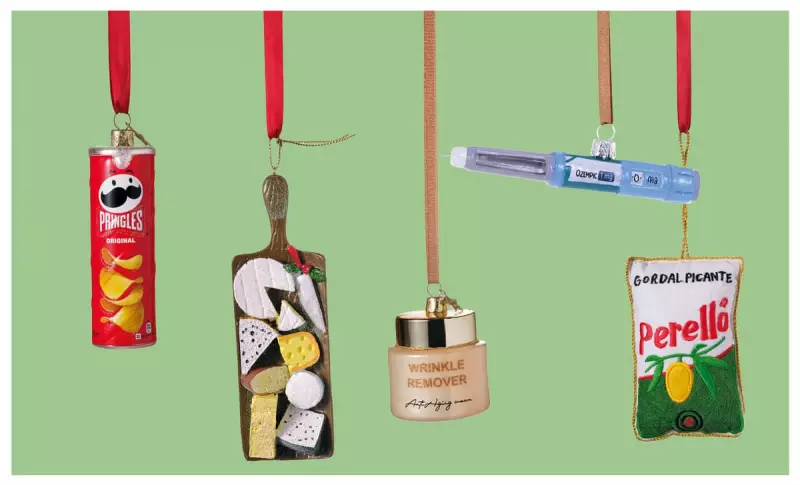
Move over, angels and stars. This festive season, Britain's Christmas trees are being bedecked with a distinctly modern array of ornaments, from glittering Ozempic syringes and Botox needles to miniature air fryers and cans of Pringles. The traditional boxed bauble set is in steep decline, replaced by a booming market for personalised, quirky, and often controversial decorations that reflect contemporary lifestyles and consumer trends.
The Rise of the Novelty Bauble
The shift in taste is dramatic. John Lewis reports that sales of traditional boxed baubles have plummeted by about 60% over the last decade. In their place, loose, themed ornaments are flying off the shelves. "People are just changing what they're looking for on the tree," explains Lisa Cherry, Head of Christmas at John Lewis. The department store now sells baubles shaped like everything from sardines and snooker balls to espresso martinis and miniature Quality Street tins.
The trend reached a peak this November when Glasgow retailer Sarah Gibbons faced a crisis. A shipment of must-have decorations to her Modern Love Store was missing key items, prompting a frantic call to US suppliers. The in-demand ornament? A lightly glittered syringe of the weight-loss drug Ozempic, with customers buying three or four at a time. It's part of a wider phenomenon that includes decorations mimicking credit cards, oat milk, wrinkle cream, and even a weed-smoking Jesus.

Data-Driven Decor and the 'Two-Tree' Household
So, what's fuelling this move away from nutcrackers and candy canes? For major retailers, it's a data-led strategy. John Lewis and Waitrose teams analyse year-round purchasing trends to decide what shapes their baubles will take. This process has given us a blueberry matcha ornament and a pint of stout. The macro theme for 2024 was 'wisdom', focusing on craftsmanship and nostalgia, hence retro baking equipment and a miniature of the record player from their Christmas advert.
Two significant social shifts are also driving sales. Firstly, baubles have become a popular gift item, with people bringing personalised trinkets to dinner parties. This explains why unusual items sell best early in the season, with more traditional styles gaining later. Secondly, the rise of the 'two-tree household' is creating more demand. John Lewis's 2023 tracker found that 27% of Britons had two Christmas trees, a figure Lisa Cherry believes could now be near 50%.
A Tradition of Novelty? From Victorian Cakes to Vondels
While the Ozempic bauble might seem a step too far for some, the history of Christmas decoration has always embraced novelty and food. An 1848 illustration of Queen Victoria's tree described it adorned with real "fancy cakes" and gilt gingerbread. Charles Dickens, writing in 1850, noted trees laden with dolls, real watches, miniature furniture, and even witches.
The modern iteration is spearheaded by brands like Dutch company Vondels, founded by Loesje Donner-Raedts a decade ago. Tired of predictable offerings, she wanted to create ornaments "connected to you instead of connected to everyone." Her team now scouts concept stores and cocktail menus for trends, resulting in baubles shaped like washing machines, golf carts, and tubes of truffle mayonnaise. Vondels' designs are stocked in Fortnum & Mason, Selfridges, Liberty, and Harrods.
The market has become fiercely competitive, with some brands pushing boundaries further. Online store Rockett St George sold out of its pink sex toy ornaments, dubbed "dick-olations" by co-founder Lucy St George. Meanwhile, Selfridges has seen a 47% rise in Christmas Shop sales this year, with over 1,200 different baubles on offer. Their Ozempic ornament sold out completely.
As for what's next, it seems almost anything can be bauble-ified. Waitrose sells a toilet paper ornament, and US wholesaler Cody Foster offers a tinfoil-wrapped baked potato. In an era where eight in ten Britons view Christmas as more secular than religious, the tree has become a canvas for personal identity, humour, and a playful, if commercialised, reflection of the times we live in.