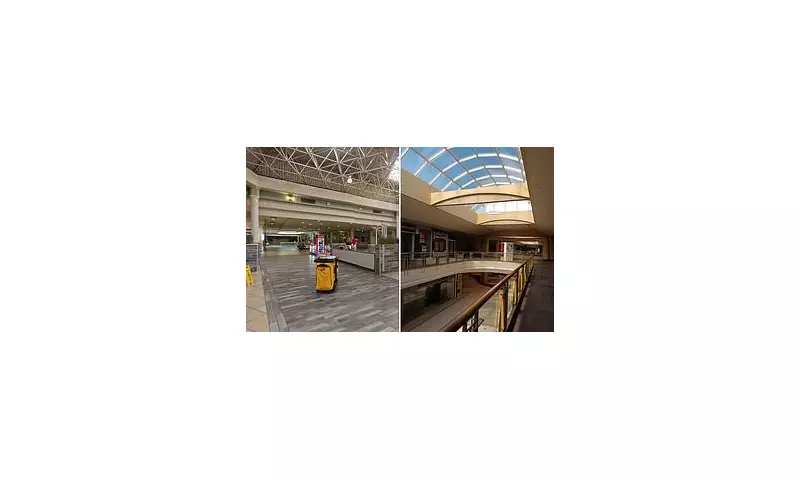
The festive season, traditionally a lifeline for retailers, has brought only more stark evidence of decline for two shopping centres in New Jersey, where deserted corridors and shuttered stores paint a grim picture.
A Tale of Two Failing Malls
According to a report by NJ.com, the expected Christmas hustle and bustle has completely failed to materialise at both the Hamilton Mall in southern New Jersey and the Livingston Mall, situated about 18 miles west of Manhattan. At Hamilton Mall, foot traffic was described as completely anemic, with walkways lined by permanently closed units. The sole sign of life was a Macy's store, where only a handful of customers browsed. A forlorn Santa sat ready for photos by a Christmas tree, with no families in sight.
The scene was eerily similar two hours north at Livingston Mall. Metal security gates covered most shopfronts, footsteps echoed in empty halls, and a pothole-riddled car park served as a potent symbol of better days long past. Laura Botwin revealed the extent of the disrepair, stating her son accidentally drove into a sinkhole in that very car park. "I'm petrified to go to that parking lot because it's so bad," she said.

The Wider Retail Landscape and a Three-Tier Future
Robert Goodman, Hamilton Township's community development director, summed up the local sentiment. "There's a lot of folks who have a lot of fond memories of the mall, but right now they're just mostly disappointed because it's just not the same experience," he noted, adding, "It's not a place where people come to congregate or shop or see their friends."
This struggle is part of a national shift as market share moves relentlessly online, with giants like Amazon reaping the benefits. Even major physical retailers like Walmart and Target have been compelled to prioritise digital sales to compete.
Rutgers University economist Professor James W. Hughes categorises New Jersey's 25 enclosed malls into three tiers. Top-tier centres, like Garden State Plaza in Paramus, still thrive with luxury offerings. Middle-tier malls survive on providing essential goods and services to locals. The bottom tier, however, faces a dire future. "You have this bottom tier, the bottom feeders, which really have no future as regional shopping destinations," Hughes stated. "So the question is, what do you do with them?"
No Easy Fix for the Bottom Feeders
Both Hamilton and Livingston Malls fall squarely into that challenged category. Hamilton Mall has lost dozens of anchors and stores over the past decade, including Sears, JCPenney, and Build-a-Bear. Livingston Mall retains its Macy's and a Barnes & Noble, but has seen an exodus of chains like Sears, Claire's, and Kay Jewelers in recent years.
While some malls in the state are undergoing major renovations to secure their future, no such plans are in place for these two. Their harsh reality is that they are no longer seen as desirable destinations, especially as their condition deteriorates and tenant lists shrink.
The national context underscores the scale of the challenge. Research from Capital One Shopping indicates the US now has around 1,200 malls, a figure that could drop to just 900 by 2028. This represents a catastrophic fall from the approximately 25,000 malls operating in 1986, a decline of 95% in four decades.