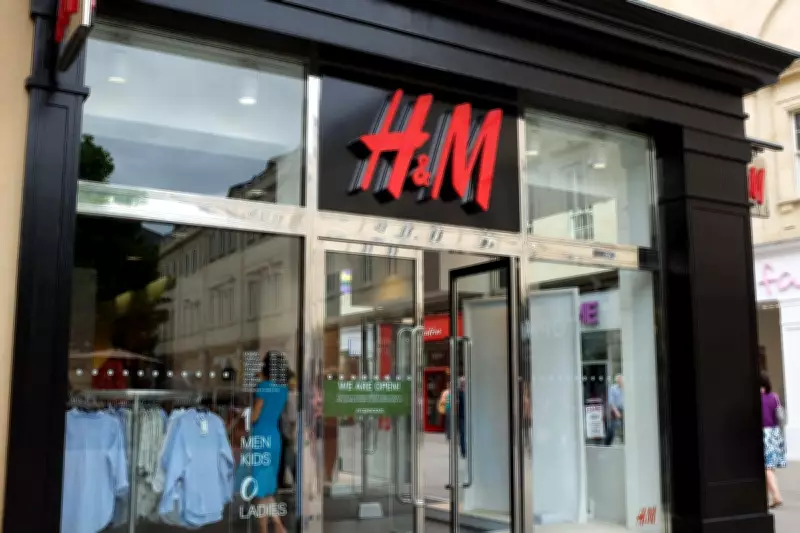
Fashion retail giant H&M has reported a significant rise in annual earnings while simultaneously revealing a recent slowdown in sales, highlighting the complex dynamics currently shaping the global retail landscape.
Annual Performance and Seasonal Challenges
The Swedish fast-fashion group, which ranks as the world's second-largest listed fashion firm, delivered a robust 6% increase in operating profits for the year ending November 30. This translated to earnings of 18.4 billion Swedish krona, equivalent to approximately £1.5 billion. The final quarter proved particularly strong, with profits surging by 38% as the company capitalised on vigorous Black Friday trading activity.
Despite this annual success, H&M has issued a cautious outlook for the winter period. The company anticipates that net sales measured in local currencies will decline by 2% year-on-year during the two months concluding at the end of January. This projected downturn follows a year where sales in local currencies actually increased by 2% across both the full year and the fourth quarter.

Understanding the Sales Contraction
Company officials have attributed the expected winter sales contraction to several interconnected factors. The exceptional performance during Black Friday week at November's end appears to have pulled forward consumer spending, resulting in subdued demand across multiple markets throughout December. This phenomenon reflects changing shopping patterns where major promotional events increasingly concentrate purchasing activity.
Additionally, H&M has identified what it terms a "negative calendar effect" associated with the timing of the Chinese New Year, which is expected to further impact sales performance in February. The company emphasised that it is "closely monitoring developments in global trade and trade restrictions" as part of its ongoing market assessment.
Strategic Adaptations and Digital Transformation
In response to these market challenges, H&M highlighted its strategic flexibility, noting that "with good flexibility in the supply chain and through the pricing of the customer offering, there are opportunities to adapt the business to changed conditions." This adaptive approach appears central to the company's resilience strategy.
The digital transformation of H&M's business continues to progress steadily, with online sales performing strongly throughout the reporting period. Digital channels now account for just over 30% of total sales, indicating a significant and growing proportion of revenue derived from e-commerce platforms.
Physical Footprint and Workforce Adjustments
H&M's physical retail presence underwent notable changes during the financial year. The company concluded the period with 4,101 stores globally, representing a 4% reduction from previous levels. Concurrently, the global workforce contracted by nearly 2%, settling at 94,744 employees.
These store closures, along with numerous shop refurbishment projects, exerted a negative influence on sales during the past year. However, management anticipates that the ongoing overhaul of the store estate will generate a "slightly positive" effect on sales throughout 2026 as modernised outlets enhance customer experience and operational efficiency.
Leadership Perspective and Market Analysis
Chief Executive Daniel Erver commented on the company's performance, stating: "Through a strengthened customer offering, good cost control and improved inventory productivity, we continue to take important steps towards all our long-term targets in a challenging environment." He further noted that "the start of the new year has been marked by continued geopolitical and economic uncertainty," underscoring the importance of organisational efficiency, customer proximity, and operational flexibility.
Industry analysts have responded positively to the annual results while acknowledging ongoing challenges. Robyn Duffy, Consumer Markets Senior Analyst at RSM UK, observed: "H&M's fourth quarter performance marks a clear inflection in profitability, with margin discipline and cost control delivering a meaningful earnings beat despite uneven demand."

Duffy added: "The focus now shifts to 2026, where the test will be whether those margin gains can be protected as sales remain sensitive to consumer confidence, particularly in Europe and the US." This assessment highlights the delicate balance H&M must maintain between profitability preservation and sales growth in markets where consumer sentiment remains volatile.
The contrasting narratives of annual profit growth and seasonal sales decline illustrate the complex reality facing global retailers as they navigate post-pandemic market adjustments, evolving consumer behaviours, and persistent economic uncertainties.