As the US and its allies scramble to reduce dependence on China for rare earth elements—critical for technologies from smartphones to military hardware—Greenland is emerging as a potential new mining frontier. The island's vast mineral deposits remain largely untapped, but the challenges of operating in its remote, harsh environment are significant.
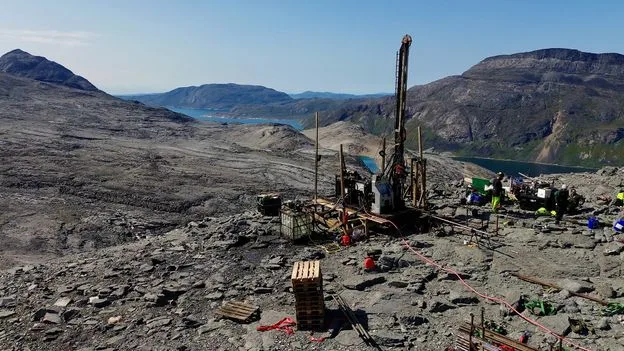
Tony Sage, CEO of Critical Metals, stands on a barren slope in southern Greenland, pointing across the fjord toward the proposed Tanbreez mine. 'We'll have two pits initially,' he says. The project, one of the largest rare earth deposits in Greenland, sits on a 15 sq km hillside that plunges to the sea. 'The red is what everyone's after,' Sage adds, holding up a colourful rock. 'That's where the rare earths are.'
Rare earth elements—including terbium and neodymium—are essential for smartphones, electric vehicles, wind turbines, and military systems like F-35 jets and guided missiles. China currently mines over 60% of the world's rare earths and processes more than 90%. Beijing's recent export restrictions, later suspended after trade talks, underscored Western vulnerability and sent industry shares soaring.

Greenland's strategic Arctic location and mineral wealth have drawn White House attention. President Trump has insisted the US must acquire the autonomous Danish territory 'for national security,' though Greenland's prime minister Jens-Frederik Nielsen has stated the island is not for sale. Sage, quoting Trump's slogan, says, 'Drill baby, drill,' and believes the industry is on the cusp of a boom. 'This drill programme is costing us millions of dollars… because of Trump's mantra and the fact that the US and EU really need these rare earths.'
Establishing a mine in Greenland is daunting: no roads, only boat or helicopter access, and all infrastructure must be built from scratch. Financing, a feasibility study, and government approvals are still needed. However, veteran geologist Greg Barnes, who founded Tanbreez, claims, 'There's a lot of ore, enough for thousands of years.' During Trump's first term, Barnes met with White House officials for three to four hours, discussing how Greenland works.
Non-binding agreements have been signed to supply mined material to two US rare earth processing and magnet firms with defence links, and a potential $120m loan from the US Export-Import Bank is under consideration. The US is building a 'mine-to-magnet' supply chain, with federal investment flowing into North American critical mineral companies and multi-billion-dollar deals with Australia and Asian countries. 'Public funding is flowing into this space like never before,' says Neha Mukherjee of Benchmark Mineral Intelligence.