Amazon's formidable online brand dominance has yet to be fully replicated in the physical retail space, but a colossal new store planned for Illinois could represent a significant stride towards altering that dynamic. The technology behemoth is making a substantial wager on bricks and mortar retail, with proposals for its biggest-ever physical outlet—a vast new site in the Chicago suburbs that would be spacious enough to accommodate nearly two Target stores beneath a single roof.
A Monumental Retail Development
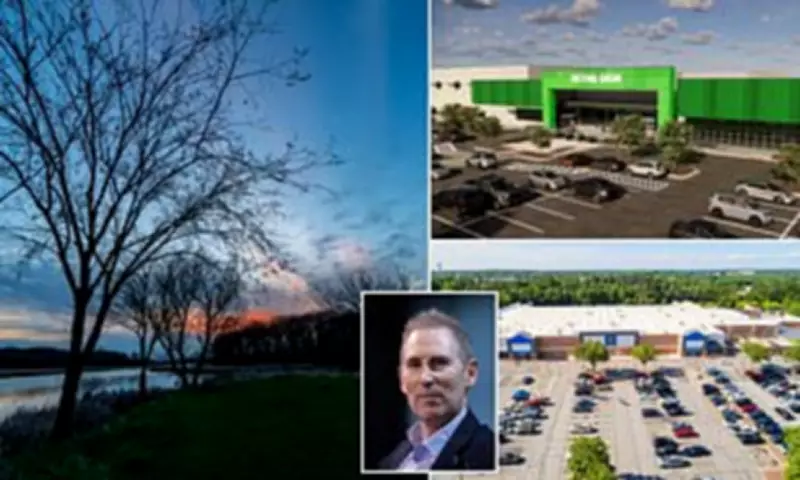
The village of Orland Park, situated approximately an hour's drive from Chicago, granted approval for the proposed 230,000 square-foot, single-storey structure on January 19. Local authorities indicated the store would sell groceries, household essentials, and general merchandise in a format closely resembling a Walmart Supercenter. This Illinois venture is unlikely to be an isolated project, with Amazon understood to be planning additional big-box stores across the United States.
Strategic Refocus on Physical Retail
This development coincides with Amazon's strategic refocusing of its physical store plans. Earlier this week, the company announced it would shutter all its 70-plus smaller format Amazon Fresh and Amazon Go stores, while simultaneously planning to open approximately 100 more Whole Foods locations—the brand it acquired in 2017. This pivot underscores a significant shift in Amazon's approach to physical retail presence.

Economic Impact and Local Debate
In Illinois, Orland Park officials highlighted that the project would generate around 200 construction jobs and 500 permanent positions, while producing millions of dollars in sales and property tax revenue. However, the sheer scale of the store—and its intended operational model—has ignited vigorous debate among local residents.
According to plans presented to officials, roughly half of the building would be designated as back-of-house space for preparing both online and in-store orders. This detail has stoked concerns among some residents that the site might function covertly as a warehouse rather than a conventional retail store. In response, Orland Park officials have emphasised that the permit explicitly prohibits any warehouse use.
'No other uses are permitted, and if Amazon were to use the facility as a fulfilment centre or warehouse the Special Use Permit would be revoked and nullified,' the village stated in a social media communication, adding that no tax breaks or incentives would be provided.
Innovative Shopping Experience
Amazon has informed local leaders that the store would seamlessly integrate digital ordering with traditional in-person shopping. Customers could utilise in-store kiosks to order different sizes or colours of items displayed physically, while bulky purchases—such as large bags of dog food—could be dispatched directly to their vehicles instead of being transported through conventional checkout processes.
The company further explained that online-order customers and third-party delivery drivers would use separate entrances, with grocery orders being assembled behind the scenes rather than being selected from the same aisles as in-store shoppers. This hybrid model represents Amazon's latest attempt to redefine the physical retail experience.
Mixed Community Reactions
Local responses have been decidedly mixed. Some residents have expressed scepticism about the development's impact, with one social media commentator noting: 'So this propaganda basically states the village can't fix the roads without the revenues from Amazon... Yet this Amazon 230,000 sq ft centre and likely thousands of cars delivery vans, Uber drivers etc in and out of this facility are going to magnify the traffic congestion. So we need Amazon $ to fix Amazon created problems. Got it.'
Others have complained about perceived transparency issues, suggesting the development emerged unexpectedly. Conversely, some residents have adopted a more welcoming stance, with one posting: 'Amazon wants and needs this location. This is our town. We welcome and appreciate Amazon retail coming.'

Broader Corporate Context
Amazon is purchasing the 35-acre site and could potentially open the store as early as next year, following the demolition of a closed restaurant currently occupying the property. Despite its overwhelming online dominance, Amazon has encountered challenges in establishing a consistently successful formula in physical retail, leading to this week's surprising announcement regarding store closures.
There has been no official designation for this latest retail experiment from either Orland Park or Amazon. A company spokesperson remarked: 'We regularly test new experiences designed to make customers' lives better and easier every day, including physical stores.'
Simultaneous Corporate Restructuring
Meanwhile, in a parallel development, Amazon informed staff on Wednesday of plans to eliminate approximately 16,000 roles globally—merely three months after cutting roughly 14,000 jobs—as part of efforts to streamline operations and reduce management layers. Chief executive Andy Jassy has characterised this organisational shake-up as designed to make the company more agile and efficient.
'We’ve been working to strengthen our organisation by reducing layers, increasing ownership and removing bureaucracy,' he communicated in a message to employees, highlighting the broader corporate restructuring occurring alongside these ambitious physical retail expansions.