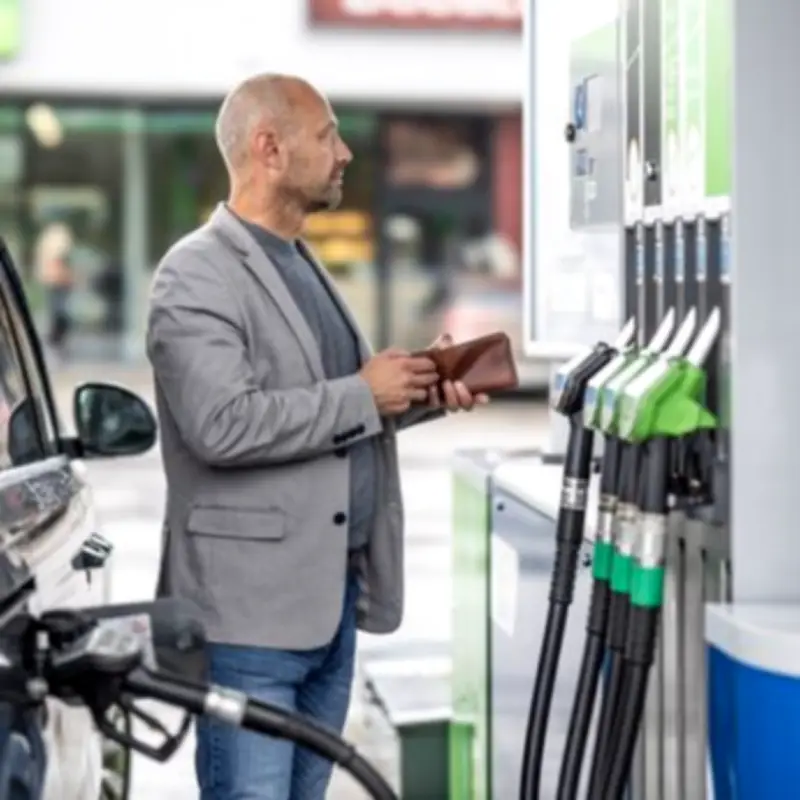
A new poll reveals that 92% of British motorists would support a government-imposed fuel price cap, as concerns over rising petrol costs driven by international tensions continue to mount. The survey of 1,000 drivers found that more than nine in ten (93%) believe getting around is becoming increasingly expensive.
Impact on Driving Habits
To cope with the financial strain, exactly three in ten drivers have postponed non-urgent maintenance and repairs for their vehicle, while 64% have reduced the number of non-essential journeys they take. For 62% of motorists, their car represents the biggest part of their monthly budget.
The study also found that 72% of drivers believe owning a private car has become a luxury, a sentiment particularly strong among younger generations, with 90% of motorists aged 18-24 sharing this view.
Financial Burden and Alternatives
On average, British motorists spend £466 per month financing their car. The burden is heaviest on 15 to 34-year-olds, who spend £789 monthly, while those aged 50 to 64 spend the least at £293. Despite the costs, 85% of drivers said they would not be able to get around as they would like without a car.
However, 57% are exploring more sustainable travel options to combat financial pressures, with 44% using public transport more. This rises to 66% among those aged 18 to 24. Additionally, more than a quarter (26%) have switched to more environmentally friendly engines, such as electric vehicles (EVs).
Industry Response
Matt Barrick, CEO of CarSupermarket.com, which commissioned the research, said: “The cost of simply getting from A to B is becoming too much for many, and the uncertainty in the Middle East is only adding to motorists’ worries. Cars play an important role in helping people get around, particularly those in more rural areas where public transport links aren’t as efficient.”
Barrick also warned against skipping urgent repairs: “While money may be tighter, it is important that you don’t skip urgent repairs, as travelling in an unsafe vehicle isn’t just dangerous for you, but also for those around you.”
Reconditioned Cars as an Alternative
A separate study of 1,000 adults found that just 12% know exactly what a ‘reconditioned’ car means. Among those who do, two in five would consider buying one. The balance of cost and quality was cited by 58% as a key reason for considering a reconditioned used car, while 42% valued the increased thorough inspections and warranty.
Barrick added: “We are seeing more people switch from traditional fuels to more sustainable options like EVs. Many drivers come in asking about reconditioned electric vehicles because the cost of running a petrol or diesel car has become too high. With our reconditioned promise, customers can get cars they can trust, having been checked and with all necessary work carried out to make them roadworthy. And if they do face any issues, they have a minimum 12-month warranty which allows them to bring it back if they spot something that isn’t right.”