
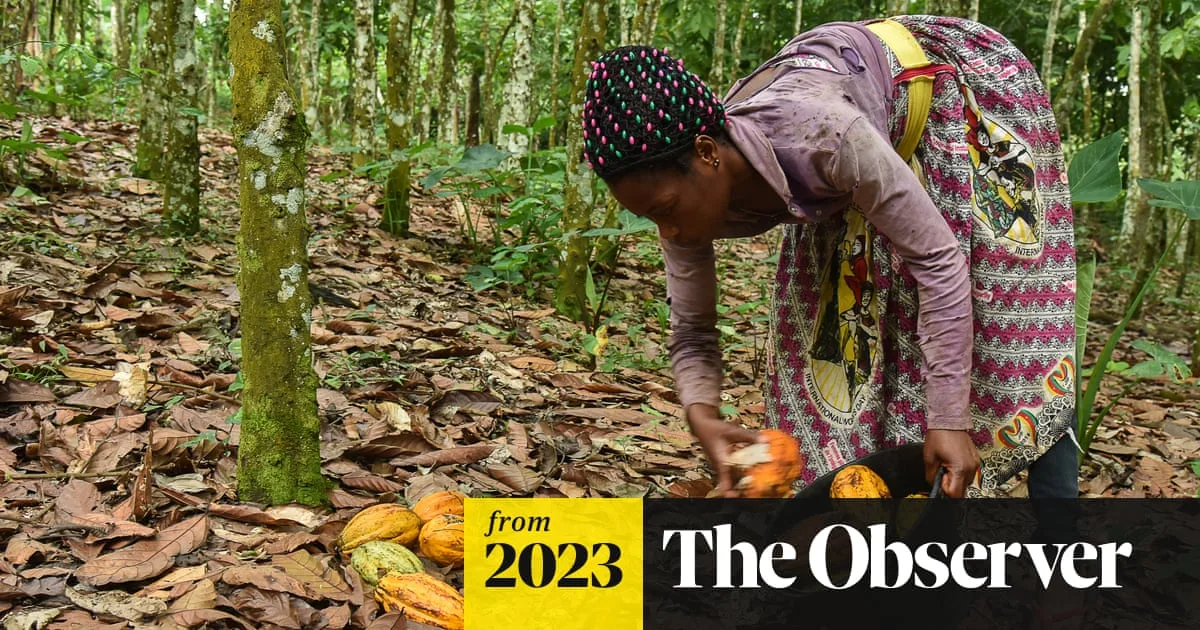
Leading chocolate brands including Mars, Nestlé, and Mondelēz, which owns Cadbury, have been criticised for “inadequate” ethical standards in their cocoa supply chain, according to a report from Ethical Consumer. Only 17 out of 82 companies investigated were found to use suppliers that paid cocoa farmers enough to live on, raising concerns that Christmas treats such as Advent calendars and chocolate Santas may have been produced using child labour.
About 60% of the world’s cocoa comes from west Africa, and an estimated six in 10 cocoa-growing households in Ghana and four in 10 in Ivory Coast use child labour. Ethical Consumer recommended Tony’s Chocolonely, Divine, and Chocolat Madagascar as brands that pay Fairtrade International or Rainforest Alliance rates or higher and use chocolate made in the country of origin, helping local economies rather than European manufacturers.
The report rated Mars, Nestlé, and Mondelēz as “poor” and “brands to avoid”, while Ferrero was also rated poor. Each has a sustainability scheme, but researchers said these “tend to cover just a proportion of the company’s cocoa suppliers”, meaning some farmers do not benefit. Last year, Channel 4’s Dispatches found that 10-year-old children were using machetes to harvest cocoa destined for Mondelēz’s supply chain.
Jasmine Owens at Ethical Consumer said: “The chocolate industry is incredibly unequal, with many cocoa farmers living in poverty while international chocolate companies are raking in billions of pounds.” She noted that European and UK consumers eat most of the chocolate and therefore have “a huge amount of power and responsibility” over conditions in west Africa.
Joke Aerts of Tony’s Open Chain said the company is trying “to put human rights at the core of purchasing practices” by using traceable cocoa beans, paying the living income reference price, and helping farming co-ops become more professional. A 2020 report by the University of Chicago found that 43% of children in cocoa-growing areas in Ghana and Ivory Coast were engaged in hazardous child labour, affecting about 1.56 million children.
Katie Bird of the International Cocoa Initiative said farmer poverty is a significant contributing factor, and there is a role for the cocoa industry, governments, and consumers. Mike Rogerson, a lecturer at Sussex University, noted that cocoa prices are set globally and often disappoint everyone except the four largest companies, meaning parents cannot afford to make a living without child labour.




