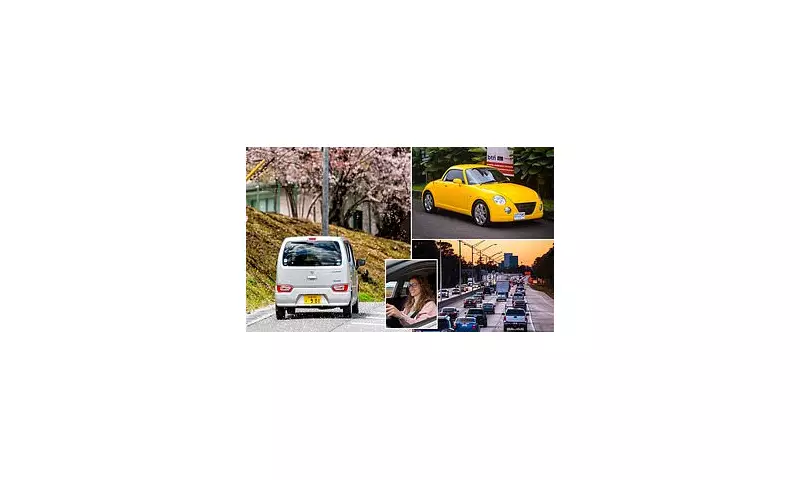
In a surprising policy shift, former President Donald Trump has announced plans to legalise the import and manufacture of Japan's iconic 'kei' cars in the United States. The move, aimed at tackling soaring new car prices, could see the tiny, boxy vehicles buzzing down American streets.
A Presidential Push for Pint-Sized Vehicles
Speaking to reporters outside the White House on Wednesday, Trump revealed his admiration for the compact cars, which he reportedly discovered during a recent trip to Japan. 'They're very small, they're really cute, and I said, "How would that do in this country?"' Trump stated. He confirmed his administration is working to 'approve those cars' and wants US automakers to start building them domestically.
This initiative forms part of a broader push to reduce vehicle costs for American consumers. The average price of a new car has skyrocketed to around $50,000, a 30 percent increase since 2019, while insurance premiums have climbed even faster. Monthly auto payments have ballooned to an average of $750, pushing many drivers into financial difficulty.

Safety Concerns and a Legal Grey Area
Despite their charm, kei cars face significant obstacles. The National Highway Traffic Safety Administration (NHTSA) has long banned new kei car imports on safety grounds. Engineered for Japan's narrow streets, the vehicles feature minimal crash protection, with engines tucked under seats and passengers seated shoulder-to-shoulder. Their small stature is a major concern in a nation where popular vehicles like the Ford F-150 can weigh over 5,500 pounds.
Transportation Secretary Sean Duffy acknowledged the challenges, telling CNBC in a Thursday interview, 'Are they going to work on the freeways? Probably not.' Furthermore, a complex patchwork of state laws creates a legal minefield. Six states—Iowa, Maryland, Nevada, New Mexico, Oregon, and Vermont—currently ban the cars outright, while others, like Alabama, restrict their use to low-speed roads.
An Enthusiast's Loophole and an Uncertain Market
While new kei cars are illegal, a federal loophole allowing the import of foreign vehicles over 25 years old has created a niche enthusiast market. Buyers import 1990s-era kei vans and trucks for a few thousand dollars, often spending more on shipping than the purchase price. This has turned the kei scene into an online treasure hunt for affordable wheels.
However, automotive experts remain sceptical about the vehicles' mass-market appeal in the US. American manufacturers have largely abandoned the small car segment; none of Detroit's 'Big Three' currently produce a mass-market compact. The announcement also comes amidst a major regulatory shift, as Trump simultaneously moves to scrap decades-old federal fuel-efficiency rules, a decision analysts warn could increase long-term fuel costs for drivers.
This potential policy U-turn presents a stark contrast: America may soon roll back efficiency standards while introducing its smallest and most fuel-efficient—yet potentially vulnerable—vehicles to date. The road ahead for kei cars in the United States remains fraught with practical and regulatory speed bumps.