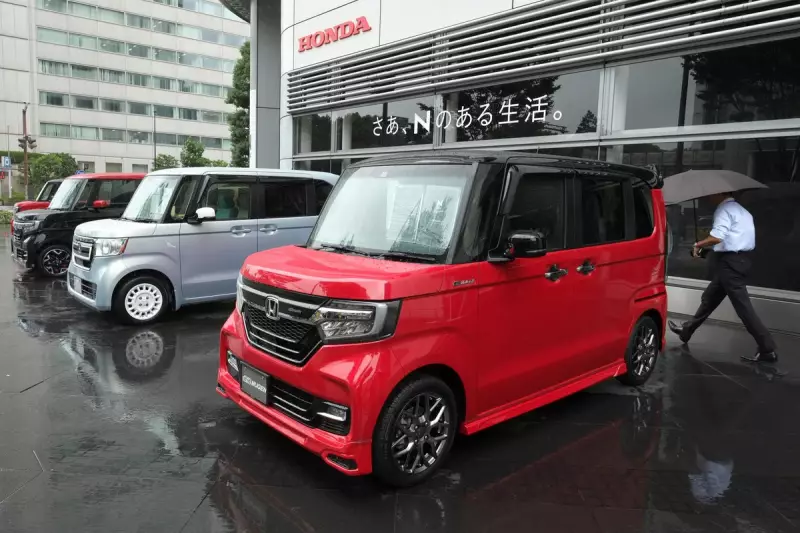
In a significant move for the American automotive industry, President Donald Trump has announced his approval for the domestic production of Japanese-style 'tiny cars'.
Presidential Push for Micro-Vehicles
Taking to his Truth Social platform on Friday 5 December 2025, the president declared, "I have just approved TINY CARS to be built in America." He had previously referred to the vehicles as "very cute" and used his post to enthusiastically promote their potential.
"Manufacturers have long wanted to do this, just like they are so successfully built in other countries," President Trump wrote. "They can be propelled by gasoline, electric, or hybrid. These cars of the very near future are inexpensive, safe, fuel efficient and, quite simply, AMAZING!!! START BUILDING THEM NOW!... ENJOY!!!"

What Are 'Kei' Trucks and Cars?
The vehicles in question, known as 'Kei' cars and trucks, are a mainstay on Japanese roads. According to Japan's Interac Network, they typically measure around 11 feet long, 5 feet wide and 6.5 feet tall. Their compact, easily manoeuvrable size and low cost have made them hugely popular, accounting for roughly a third of Japan's entire car market.
Financial accessibility is a key feature. Data from Car-Kei.com indicates a new Kei truck in Japan costs between $9,000 and $13,000, with used models ranging from $4,000 to $8,000. This stands in stark contrast to the average price of a new vehicle in the United States, which sits at approximately $50,000.
Originally designed to meet stringent Japanese fuel economy rules, these micro-cars are also highly efficient. Reports suggest they can achieve 40 to 50 miles per gallon under normal driving conditions.
Regulatory Hurdles and a Shifting Policy Landscape
President Trump's promotion of tiny cars arrives just two days after his administration, alongside the National Highway Traffic Safety Administration (NHTSA), revealed a major rollback of federal fuel standards. These standards, instituted under the Biden administration, were intended to encourage electric vehicle sales.
The Corporate Average Fuel Economy (CAFE) standards were first established by Congress in 1975 to reduce US reliance on foreign oil. They have been repeatedly modified and tightened to push manufacturers toward more environmentally friendly vehicles. The administration's new plans would ease pressure on major US automakers to phase out petrol-powered vehicles, thereby disincentivising electric vehicle production.
However, manufacturing Kei trucks in the US would not be straightforward. It would require alterations to federal motor vehicle safety standards. As noted by Road and Track, current regulations concerning minimum front-end width, seat cushion dimensions, hood angles, and crash crumple zone integrity mean most Kei models are not compliant for the US market.
"Kei cars can't be sold in the U.S. because they aren't designed for this market and don't meet various safety standards," a spokesperson for the Insurance Institute for Highway Safety confirmed. The spokesperson added that unless an exemption is granted or standards are changed, it would be difficult to allow current global models to be sold domestically.
The Independent has contacted the White House for comment on whether changes to federal safety standards are being considered to facilitate the production of these vehicles.