Senate Committee Intensifies Scrutiny of Ford's Role in Climate Regulation Repeals
In a significant escalation of congressional oversight, the Senate Environment and Public Works Committee has broadened its investigation into potential industry lobbying efforts aimed at dismantling key US climate regulations. The committee, under the leadership of Rhode Island Senator Sheldon Whitehouse, has now formally included Ford Motor Company in its probe. This development follows controversial remarks made by former President Donald Trump during a recent public appearance.
Trump's Live Microphone Comments Spark Congressional Action
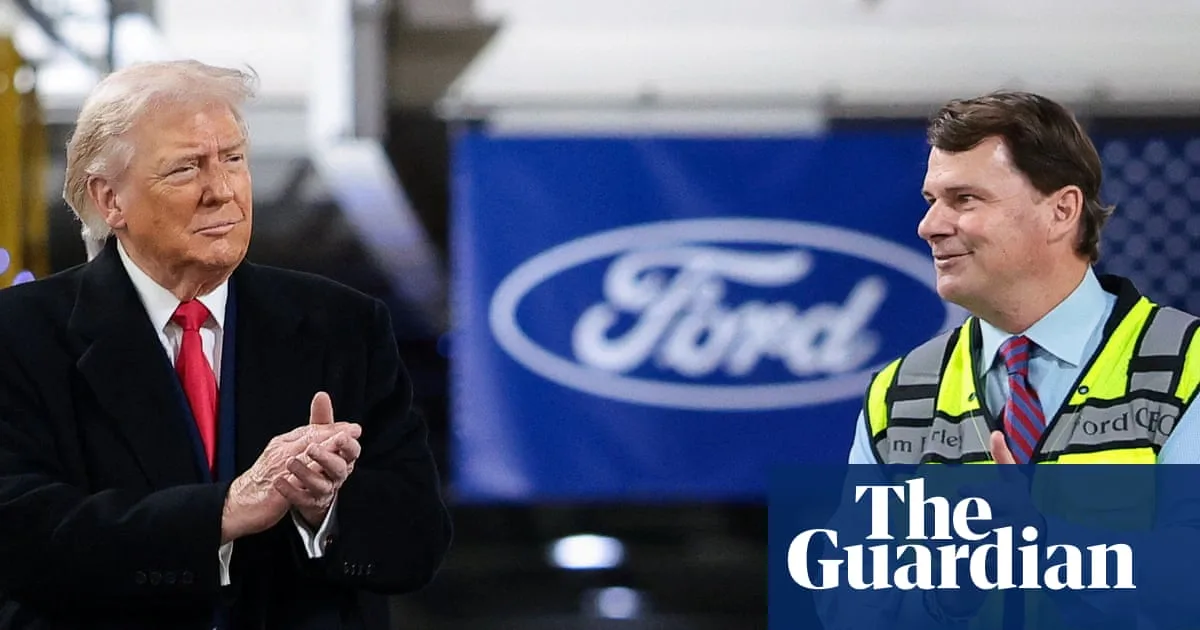
The investigation expansion comes directly in response to comments President Trump made while touring a Ford production facility in Dearborn, Michigan, on January 13, 2026. During the event, which was captured on a live microphone, Trump gestured toward Ford CEO Jim Farley and stated: "He calls me all the time: 'Can we get rid of this environmental piece of garbage?'" While Trump did not specify which particular regulations Farley allegedly sought to rescind, the implication of close collaboration between the automotive executive and the administration was clear.
Senator Whitehouse wasted no time in responding to these revelations. In a letter addressed directly to Jim Farley and sent on Thursday morning, Whitehouse wrote: "I write to seek clarification about comments that President Donald Trump made suggesting that Ford Motor Company – and you, specifically – have played a significant role in advocating for the repeal of long-settled rules and regulations meant to protect human health and the environment."
Endangerment Finding Repeal at Center of Controversy
The investigation focuses specifically on the potential repeal of the 2009 endangerment finding, a foundational Environmental Protection Agency determination that classifies greenhouse gas accumulation as a threat to public health and welfare. This finding serves as the legal basis for virtually all US climate regulations affecting vehicles, power plants, and industrial sources. The Trump administration has indicated plans to rescind this determination in July, a move that has generated substantial concern among scientific communities and environmental advocates.
"Straight from Trump's own mouth, we hear him boasting about working hand in glove with industry to unleash unchecked pollution on our communities," Senator Whitehouse told media outlets. He further emphasized the potential consequences: "The only interests that will benefit from such a corrupt rollback of the endangerment finding, upheld twice by the supreme court, are polluters and their enablers. American families will pay the price with dirtier air, higher health costs, and a climate-change-fueled economic collapse."
Ford's Complex Position on Environmental Regulations
Ford Motor Company presents a somewhat contradictory public stance on climate matters. The automotive giant has publicly committed to eliminating its own carbon emissions and has expressed support for international agreements like the Paris Climate Accord. However, the company has simultaneously advocated against specific regulatory measures. When the Trump administration recently rolled back fuel economy standards, Farley praised the decision, describing it as "President Trump's leadership in aligning fuel economy standards with market realities."
Furthermore, Ford maintains membership in trade organizations like the Alliance of Automobile Manufacturers, which has actively opposed EPA regulations. This dual approach – supporting broad climate goals while resisting specific implementation measures – has drawn increased scrutiny as the Senate investigation progresses.
Broader Investigation Context and Timeline
The Ford inquiry represents an expansion of a broader Senate investigation launched in September targeting approximately two dozen entities, including oil companies, think tanks, law firms, and trade associations. The committee aims to determine whether these organizations influenced White House decisions regarding environmental policy rollbacks.
While the repeal of the endangerment finding is expected to be finalized imminently, the White House review process may introduce delays. The Guardian has contacted Ford Motor Company for comment regarding the Senate investigation, but no response has been published at this time. As congressional scrutiny intensifies, the automotive industry's role in shaping environmental policy remains firmly in the political spotlight.




