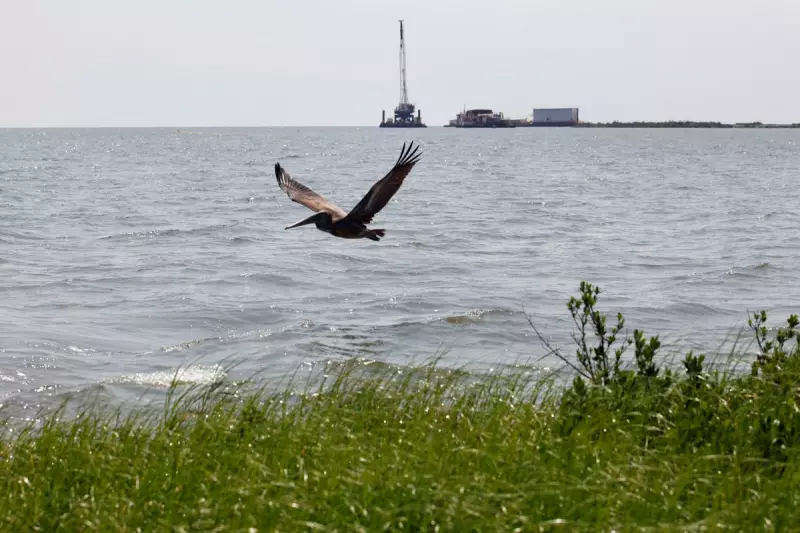
Pipeline safety authorities in the United States have levied their largest-ever financial penalty against the company responsible for a substantial 2023 oil leak in the Gulf of Mexico. The firm, Third Coast Midstream, has been fined $9.6 million for the incident which saw 1.1 million gallons of oil spill into waters off the Louisiana coast.
A Systemic Failure and a Slow Response
The Pipeline and Hazardous Materials Safety Administration (PHMSA) announced the historic fine on Monday, 5 January 2026. The agency concluded that Third Coast failed to establish proper emergency protocols and did not adequately assess risks or maintain the 18-inch Main Pass Oil Gathering pipeline.
This regulatory failure had direct consequences. The National Transportation Safety Board (NTSB) found that control room operators waited nearly 13 hours to shut down the pipeline after their instruments first indicated a problem. The NTSB's final report in June 2025 determined the leak was caused by underwater landslides, a geohazard well-known in the industry and linked to hurricane activity.

"Third Coast missed several opportunities to evaluate how geohazards may threaten the integrity of their pipeline," the NTSB stated, adding that the company failed to act on widely available information about these threats.
A Record Fine That May Lack Bite
While the $9.6 million penalty is unprecedented for PHMSA, experts question its power to deter a major pipeline operator. Bill Caram, Executive Director of the Pipeline Safety Trust, called the fine "appropriate and welcome" given the "company-wide systemic failure."
However, he highlighted a critical flaw in enforcement. "Even record fines often fail to be financially meaningful to pipeline operators. The proposed fine represents less than 3% of Third Coast Midstream’s estimated annual earnings," Caram said. "True deterrence requires penalties that make noncompliance more expensive than compliance."
The scale of the fine is put in context by Third Coast's financial position. The Houston-based company, with a stake in roughly 1,900 miles of pipelines, secured a nearly $1 billion loan in September 2025. Furthermore, this single penalty is close to the $8 million to $10 million PHMSA typically issues in total fines across all operators annually.
Company Disputes Allegations as Spill Impact Assessed
In response to the fine, a Third Coast spokesperson expressed shock, claiming the company "consistently meets or exceeds regulatory requirements across our operations." The spokesperson added that after two years of engagement with PHMSA, they were "surprised to see aspects of the recent allegations that we believe are inaccurate and exceed established precedent."
Although the 2023 spill was far smaller than the 134-million-gallon BP Deepwater Horizon disaster in 2010, the NTSB emphasised it could have been significantly reduced with a faster response. The agency's report underscores a recurring theme in industrial safety: known risks, if not proactively managed, inevitably lead to incidents.
The case now moves forward as Third Coast has indicated it will challenge aspects of the penalty with the agency, setting the stage for a continued debate over the cost of environmental protection versus corporate accountability in the energy sector.