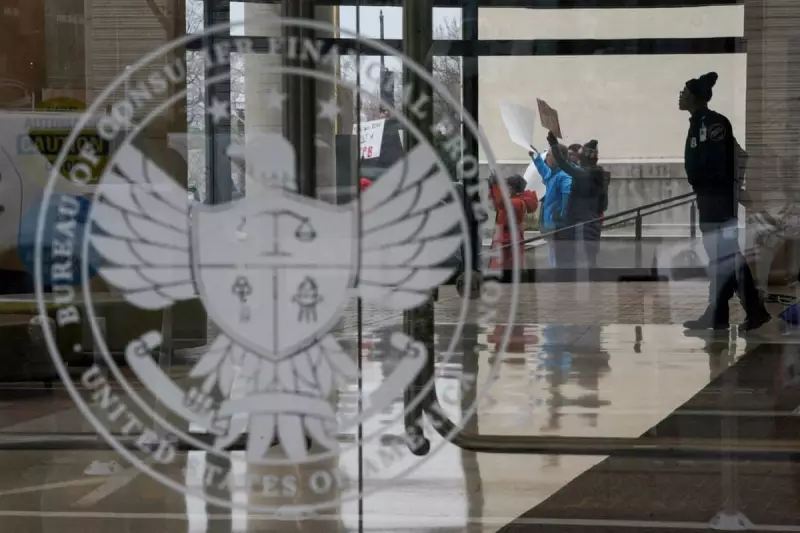
Democratic lawmakers in the United States have initiated a significant legal battle against the administration of former President Donald Trump. They have filed a federal lawsuit aimed at overturning a contentious rule change enacted by the Consumer Financial Protection Bureau (CFPB) during Trump's final days in office.
The Core of the Legal Dispute
The lawsuit, filed on Tuesday, 22 December 2025, directly challenges a rule implemented by the CFPB. This rule fundamentally alters the bureau's leadership structure. It shifts authority from a single director, who can be removed by the President only for cause, to a structure where the director serves at the President's pleasure. The Democrats, led by Senator Sherrod Brown and Representative Maxine Waters, argue this move was a blatant attempt to politicise the agency and undermine its independence.
They contend that the rule, pushed through by then-acting CFPB Director Mick Mulvaney and finalised by his successor Kathleen Kraninger, violates the foundational Dodd-Frank Act of 2010. This act established the CFPB in the wake of the 2008 financial crisis with a specific, insulated leadership model designed to shield it from political pressure. The plaintiffs assert that only Congress has the authority to make such a fundamental change to the agency's governance.

A Strategic Move to Protect Consumer Watchdog
The legal action is seen as a strategic effort to safeguard the CFPB's mission as a robust consumer watchdog. For years, the bureau has been a political flashpoint, with Republicans criticising it as an example of regulatory overreach and Democrats championing its role in protecting ordinary Americans from predatory financial practices. The lawsuit highlights fears that making the director a purely political appointee could lead to the agency's enforcement priorities shifting dramatically with each administration, creating instability and weakening long-term consumer protection efforts.
The rule in question was published in the Federal Register on 11 December 2020, just weeks before President Trump left office. The Democratic lawsuit claims the process was rushed and violated administrative procedure laws. They are asking the court to declare the rule unlawful and to block its implementation permanently.
Implications for Financial Regulation and Politics
This lawsuit carries substantial implications for the future of financial regulation in the United States. A successful challenge would preserve the CFPB's original independent structure, potentially insulating it from immediate political winds. A failure, however, would cement the Trump-era change, giving any sitting president greater direct control over the bureau's agenda, from policing payday lenders and debt collectors to overseeing mortgage and credit card companies.
The case also underscores the ongoing and deeply partisan battles over the shape of the administrative state. It represents a continuation of political warfare by legal means, where control of key regulatory agencies is fiercely contested. The outcome will likely influence how future administrations approach the staffing and direction of not just the CFPB, but other independent agencies as well. The legal process is expected to be lengthy, potentially stretching through multiple court levels.
Ultimately, this lawsuit is more than a technical dispute over administrative law; it is a fight over the vision of a federal agency tasked with protecting consumers from financial harm. The Democrats' case rests on the argument that true consumer protection requires a measure of independence from the political cycle, an principle they believe the Trump administration's rule dangerously abandoned.