
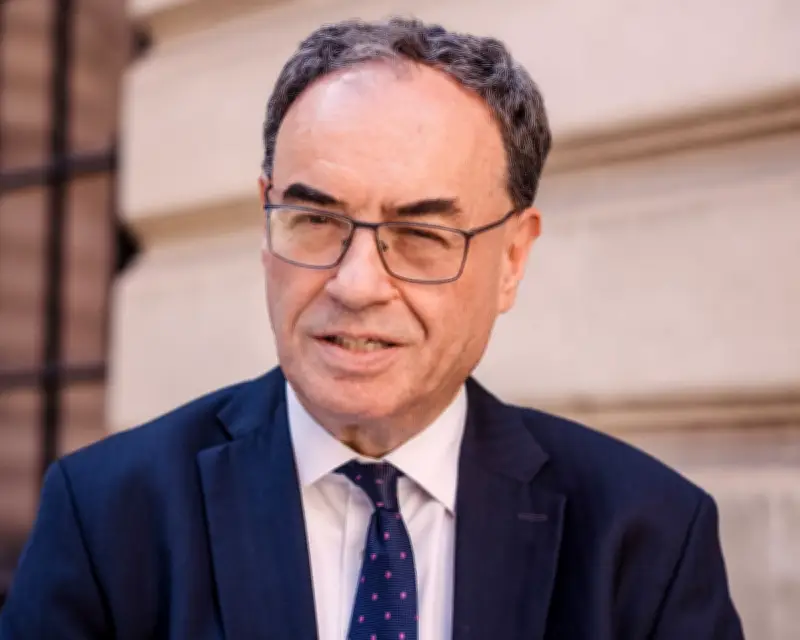
Andrew Bailey, the governor of the Bank of England, has stated that he would have postponed his meeting with Nigel Farage last autumn if the £5m gift from a crypto billionaire to the Reform UK leader had been under investigation at the time. The meeting, which took place in September, was held to discuss the Bank's plans for cryptocurrency regulation, months before the Guardian revealed the controversial donation from Christopher Harborne in April.
Bailey's Stance on the Meeting
Bailey said he does not regret meeting Farage, but acknowledged that the central bank would have considered delaying the meeting had it known about the subsequent parliamentary inquiry into the undisclosed gift. Harborne, a Thailand-based investor, has amassed an estimated £18bn fortune largely from cryptocurrency, and his donation to Farage has sparked scrutiny.
In an interview with the Guardian, Bailey explained: “Whether I would have then said: ‘Well, I think we’d better wait until the investigation is done before we have the meeting’ – I think that would be a judgment we would have taken at the time. It would have been a material fact, certainly, in our judgment.”
Farage's Demands and the Bank's Response
Farage has claimed that during the September meeting, he urged Bailey to abandon plans for a state-issued rival to Tether, a stablecoin in which Harborne holds a significant stake. Harborne appears to earn as much as £1bn annually from his shareholding in Tether, which provides two-thirds of Reform UK's funding. Stablecoins are cryptocurrencies pegged to assets like the US dollar, often used as intermediaries between fiat currency and crypto transactions.
Additionally, Farage pushed for the Bank to drop a proposed cap on the number of stablecoins individuals in the UK could own. The Bank eventually abandoned that cap after a consultation. Bailey defended the decision, stating it was easier to regulate the total supply of stablecoins rather than individual holdings.
The governor described the exchange with Farage as a “perfectly polite exchange of views,” but noted Farage’s clear stance against the Bank. “His argument, as I interpreted it, is that there is ‘an establishment’ and he presumably thinks that we’re part of it,” Bailey said.
No Discussion on Latest Stablecoin Rules
Bailey confirmed that he did not discuss the Bank’s latest rules on stablecoins, such as those concerning Tether, with Farage. “I don’t know where Nigel Farage is on that, or where we have got to now … I haven’t talked to him about it,” he said.
He also commented on the changing perceptions of the Bank’s approach to cryptocurrency: “I’ve been interested, with the release of our proposed rules, that one or two people who are criticising us for being dinosaurs have now sort of come out with rather grand statements the other way around, saying that we’re great at innovation, which is quite amusing. I do actually think we’re encouraging innovation, so I think we are doing the right thing there.”
Lobbying Concerns and Future Meetings
Farage has been reported to the standards commissioner over whether he lobbied the Bank against parliamentary rules. However, Bailey asserted that the controversy would not change how the Bank schedules meetings with political figures, which it does regularly and without “favouritism.”
Bailey emphasized the importance of confidentiality in such meetings: “People come in here and tell me and my colleagues things which are very market-sensitive. And we have a degree of confidentiality around it. So I’m very keen that we preserve the fact that people can come into the Bank of England and tell us things and it doesn’t immediately get on to the public record. I know that can sound difficult to say in the wrong circumstances, but it is important.”
He added: “We do have a responsibility as a public authority to be open to the leaders of parties in the Westminster system. I think that’s fine. I think we must do that.”




