
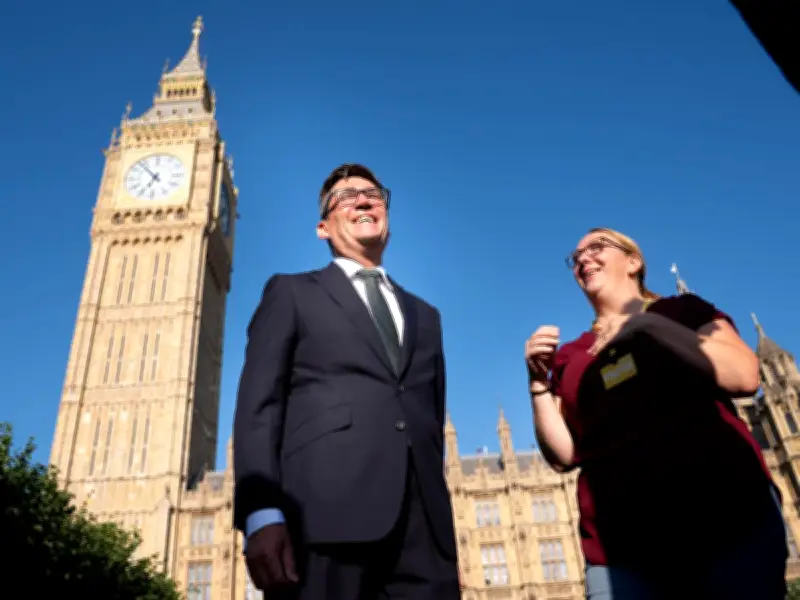
As Andy Burnham prepares to take over as Prime Minister, the UK faces big questions about tax policy and who might end up better or worse off. He succeeds Sir Keir Starmer after the UK economy grew 0.6% in Q1 2024, the fastest among G7 nations, but contracted 0.1% in April before flatlining in May. Government borrowing continues to rise, with public sector debt nearing £3 trillion.
Business Rates Reform
Burnham has signaled he wants to change business rates. In an LBC interview, he proposed increasing property tax on warehouses to fund cuts for pubs and high-street businesses. This was part of his successful by-election campaign for Makerfield. He pledged a 20% cut for pubs, clubs, and music venues, and raising the threshold for small hospitality, leisure, and retail firms for the first time since 2017. The cuts would be funded by higher rates on giant warehouses operated by online firms like Amazon and targeting owners of empty high-street properties.
Income Tax Thresholds
Burnham has ruled out increasing income tax, VAT, or national insurance, which account for two-thirds of tax receipts. However, he may focus on thresholds. The freeze on personal allowance—extended by Rachel Reeves to April 2031—has dragged pensioners into the tax net. On BBC's Question Time (June 4), Burnham said: "On the personal allowance, I've heard on so many doorsteps, and I've said to my team, let's have a proper look at this and let's develop a policy." Extending the freeze to 2032 could raise an extra £5 billion.
Pensions and Triple Lock
The costly "triple lock" pledge—raising state pension by inflation, average earnings, or 2.5%—remains a hot potato. On Reddit, Burnham said: "I appreciate there's a lot of debate about this but it is important that the commitment in the manifesto stands." He may consider limiting tax relief on pension contributions for higher earners.
Capital Gains Tax
CGT generated an estimated £20.3 billion in the last financial year. Basic rate taxpayers pay 18%; higher and additional bands pay 24%. Former health secretary Wes Streeting called for CGT to match income tax rates. Dan Neidle of Tax Policy Associates urged: "Pairing CGT reform with an income tax cut could be extremely shrewd – both politically and economically."
Wealth Tax
Burnham refused to rule out a wealth tax in an interview with Gary Lineker, suggesting his government may "have to ask for a little more" tax. But he added he wanted to focus on "bringing people together" rather than creating "new divisions." How a wealth tax would work remains debated; complexity may delay priority.
Property Tax Overhaul
Council tax is seen as deeply flawed—a £150,000 terraced house in Middlesbrough can attract the same tax as a £250 million home in Westminster. Burnham told The Telegraph in May he had "long been persuaded of the argument" for a land tax to replace council tax and stamp duty. Fairer Share proposes a proportional property tax at 0.48% of value (0.96% for second homes). Any reform would likely hit London and the south east hardest but could take years to implement.
Bank Tax
Britain's big banks face calls for higher taxes after bumper profits. The TUC wants the bank surcharge—cut from 8% to 3% by the Tories in 2023—raised to fund a permanent social tariff cutting energy bills by up to £559 a year for low- and middle-income households. But Dan Neidle warned: "A return to the old 8% surcharge would mean banks paying a 33% headline corporation tax rate on profits. That would create a significant competitiveness problem for London versus other financial centres." Another option: stop the Bank of England paying interest on lenders' reserves.
Closing the Tax Gap
HMRC's tax gap—the difference between tax owed and collected—rose to £59 billion last year, 6.4% of all taxes due. That's nearly as much as the £60 billion defence budget. The wealthiest individuals failed to pay £3.6 billion, more than the shortfall for all other individual taxpayers combined. Small businesses account for over 60% of missing money. Cracking down would be lucrative but complex and time-consuming.




