
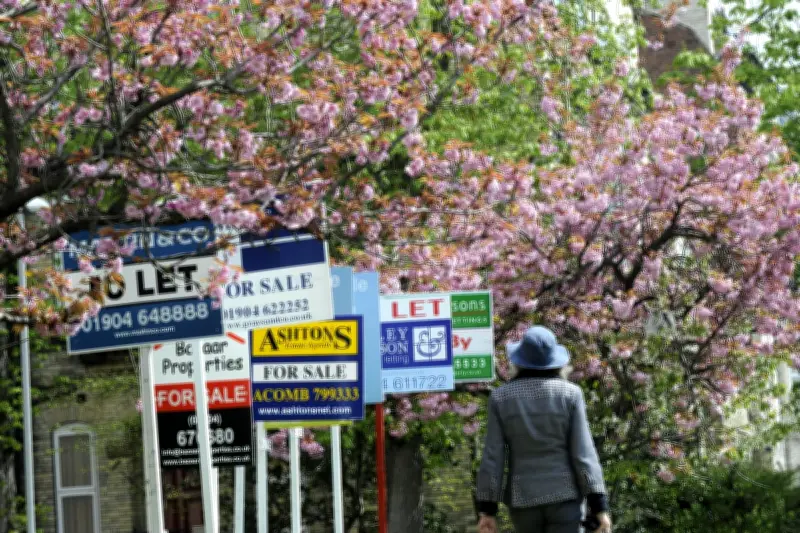
The average UK house price increased sharply in April, with a 3.8% annual rise, according to the Office for National Statistics (ONS). This increase, influenced by stamp duty changes last year, brought the typical property value to £270,000. In March, the average UK house price was flat, showing no annual change.
The 3.8% rise represents the highest annual inflation rate since March 2025, just before stamp duty adjustments took effect on April 1, 2025. Average house prices rose to £291,000 (3.9%) in England, £212,000 (3.5%) in Wales, and £192,000 (2.8%) in Scotland in the 12 months to April 2026. In Northern Ireland, the average price was £198,000 in the first quarter of 2026, marking a 7.4% annual increase.
Within England, the North East recorded the highest annual house price inflation at 9.9% in April. The ONS attributed this sharp rise to a base effect from large monthly price falls a year ago, coinciding with stamp duty changes. In contrast, London experienced the weakest annual inflation, with average prices falling by 2.1% in the 12 months to April, unchanged from March. This marks the ninth consecutive month of annual price declines in the capital.
Expert Analysis
Aimee North, head of housing market indices at the ONS, said: Average UK house price annual inflation rose sharply in April. This month's rise was partly due to figures being compared with an unusually large fall in house prices a year earlier, following stamp duty changes across much of the country in April 2025.
Stamp duty applies in England and Northern Ireland. Last year's changes made discounts less generous, bunching up sales. The ONS noted that the average UK house price saw a modest monthly rise of 0.7% between March and April 2026, compared to a big monthly fall of minus 2.9% in the same period a year ago.
Richard Donnell, executive director of research at Zoopla, commented: The jump in house price inflation in May is artificial and linked to the ending of last year's stamp duty holiday. The sales market is weakening as we enter summer, with buyer demand down 14% on this time last year, yet there are still more homes for sale. He added: It's a buyers' market, and the North-South divide in prices and market activity remains. People want to move, but serious sellers need to price their home carefully.
Inflation and Mortgage Rates
The ONS also reported on Wednesday that Consumer Prices Index (CPI) inflation remained at 2.8% in May, the same rate as in April. This was lower than economists' expectations of a rise to 3%. David Hollingworth, associate director at L&C Mortgages, said: It was expected that there would be an increase in the rate of inflation in May, after the larger than anticipated fall in April's figures, so to hold steady will come as a nice surprise. That should be a boost to mortgage borrowers who would have no doubt been accepting of a small rise but fearing a bigger jump.
Ian Futcher, a financial planner at wealth manager Quilter, noted: Today's inflation figures were unchanged, with CPI holding at 2.8%, while the prospect of a US-Iran peace deal has helped reduce the immediate risk of another energy-driven inflation shock. That should make it less likely that the Bank of England feels forced into raising rates at this week's meeting. Mortgage rates are unlikely to fall sharply overnight, but the direction of travel should improve if geopolitical pressure on energy prices continues to ease and inflation remains contained.
Rental Market
The ONS also reported that the average private rent in the UK was £1,383 per month in May 2026, a £44 (3.3%) annual increase. Jeremy Leaf, a north London estate agent, said: Often we have found on the ground that lettings activity and rents are in inverse proportion to sales. This time around though, while sales are rather subdued, lettings are also still sluggish. He added: If inflation continues to level, then a modest increase in rents is probably unstoppable. Tom Bill, head of UK residential research at Knight Frank, said: Rental value growth remains stubborn.




