

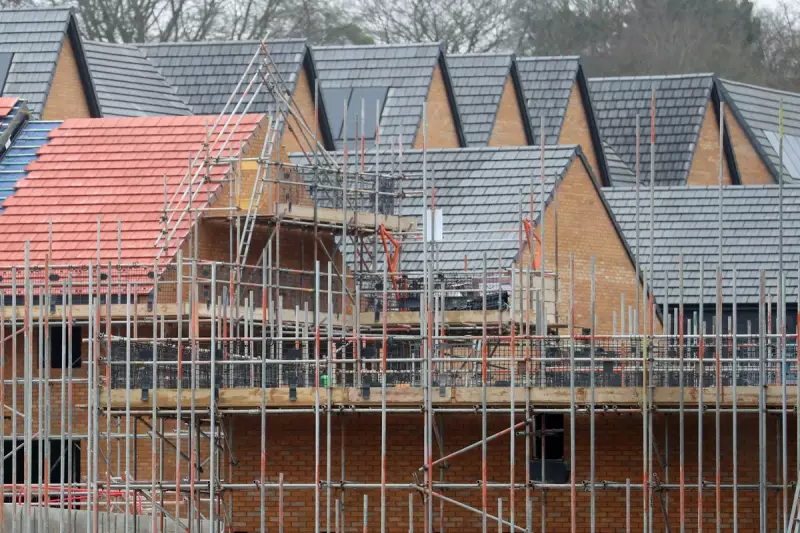
The UK's construction industry contracted at its most rapid rate since the early stages of the coronavirus pandemic last month, as new figures reveal a sector gripped by pre-Budget uncertainty and fragile client confidence.
PMI Plummets to Post-Pandemic Low
The closely watched S&P Global UK Construction Purchasing Managers’ Index (PMI) recorded a reading of 39.4 in November, a steep fall from October's 44.1. This marks the lowest score since May 2020 and remains firmly below the crucial 50-point threshold that separates growth from contraction. The sector has now seen activity shrink for eleven consecutive months.
The November figure was significantly worse than the 44.4 reading forecast by economists, underscoring the severity of the downturn. Tim Moore, Economics Director at S&P Global Market Intelligence, stated the data revealed a "sharp retrenchment" driven by weak confidence and a shortage of new project starts.

Widespread Weakness Across All Sectors
The slowdown was broad-based, affecting all major areas of construction. The data showed that housebuilding, commercial construction, and civil engineering all registered their weakest performance in over five years. A severe drop in new orders was a key driver, with only 17% of surveyed companies reporting an increase compared to 44% noting a decrease.
Aside from the Covid-19 pandemic period, this represented the fastest downturn in new orders since early 2009. Businesses cited client risk aversion, concerns over the economic outlook, and notably, elevated business uncertainty ahead of the autumn Budget as primary reasons for the slump.
Employment and Expert Reaction
The decline in new work also led to an eleventh straight month of falling employment within the sector, compounded by ongoing wage pressures. However, some analysts urged caution in interpreting the stark figures.
Matt Swannell, chief economic advisor to the EY Item Club, suggested the PMI's extreme negativity in November may have been "magnified by expectations of tax rises at the autumn Budget." He noted that the survey has been more pessimistic than official activity estimates for most of the year.
The overall picture is one of an industry in a holding pattern, with investment decisions deferred and market confidence described as fragile until greater fiscal clarity emerges from Westminster.






