

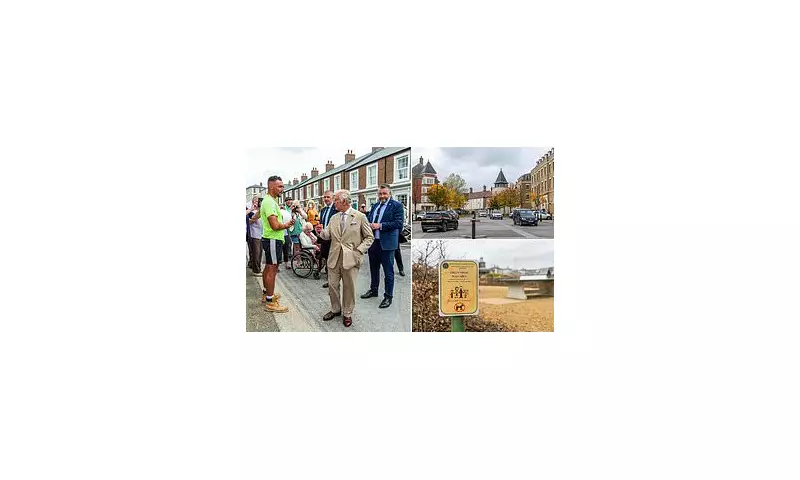
King Charles III's vision of a harmonious, mixed-use community in Dorset is facing a significant crisis of confidence from its own residents. Poundbury, the model town built on Duchy of Cornwall land near Dorchester, was conceived as a utopian blend of private and affordable housing with shops, workplaces, and schools. However, locals now allege the idyllic project has fallen into disrepair and is plagued by poor management since the King ascended the throne.
A Paradise Lost: Claims of Neglect and Disrepair
The project, which King Charles began in the late 1980s, has grown to encompass approximately 2,320 homes, 4,600 residents, and 240 businesses. Yet, for long-term inhabitants like retired couple Margaret and Roy Hendy, the dream has soured. They, along with other disgruntled residents, point the finger squarely at the Duchy of Cornwall – the royal family's private estate – for the town's supposed demise.
"This place is bloody awful now," stated Mrs Hendy, a retired accountant. "This was Charles's baby but he doesn't have time to look after it and William doesn't want to know." Her husband, a retired aircraft engineer, highlighted visible neglect: "The leaves are piling up, the grass isn't cut and the windows are falling apart." Their sentiments echo a broader feeling that the royal oversight has waned.

Rising Tensions and Anti-Social Behaviour
The town's genteel reputation was publicly tarnished in October by a court case revealing a dispute between neighbours. Sekhar Sootarsing, 69, a retired commodities trader, was cleared of assaulting 83-year-old Ingrid Wright-Holmes after a row over exhaust fumes from his Ford Mustang. The incident, which allegedly saw the elderly woman knocked to the ground, highlighted simmering tensions.
Beyond isolated disputes, residents report a worrying increase in anti-social behaviour. Some claim drug use is becoming more visible, with one local stating he could smell cannabis while washing his car and others identifying certain areas as known drug hotspots. There are also anecdotal reports of parcel thefts, further eroding the sense of a secure, close-knit community.
'Feudal' Rules and a Breakdown in Communication
A core complaint from Poundbury's residents centres on the Duchy of Cornwall's management style, described by many as "aloof," "officious," and "feudal." The estate's strict architectural codes have practical, uncomfortable consequences: double-glazed windows are outlawed, leaving some elderly residents, like one anonymous woman, "freezing" in winter with homes that struggle to exceed 17C.
The breakdown in consultation was starkly illustrated earlier this year when the Duchy planted a "curtain" of fast-growing bird cherry trees, obscuring prized rural views for which residents had paid a premium. Locals were furious to discover the plans only via a retrospective planning application. Andrew Cook, who moved to Poundbury on retirement, summarised the frustration: "My main beef is with the Duchy and the way they treat you... There's a real lack of consultation." He described spending two years on an issue that should have been resolved in weeks.
Despite the criticisms, not all residents are unhappy. John Matthews, a resident for eight years, called Poundbury "picturesque and eclectic." However, he noted that the King's dislike of road markings created a traffic "free for all" and expressed concern that high property prices were pricing out locals, making London accents increasingly common.
With the town due for completion in 2026, the future of King Charles's architectural and social experiment hangs in the balance. The central question remains whether the Duchy of Cornwall can address the growing discontent and restore the utopian vision for its 4,600 inhabitants. A spokesperson for the Duchy of Cornwall declined to comment.






