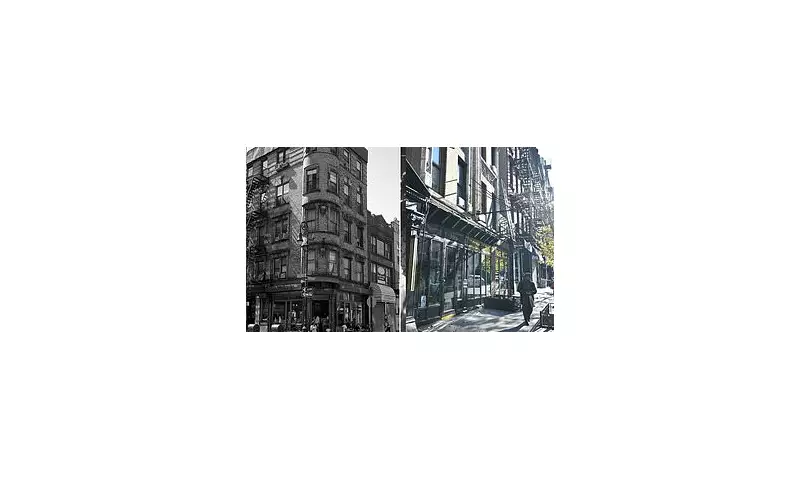
An iconic New York City thoroughfare, once synonymous with crime and a famous unsolved murder, has been named the coolest street in the United States. Orchard Street on Manhattan's Lower East Side has secured the ninth spot on Time Out's global list of the coolest streets, standing as the only American entry in the top ten.
A Charming Stretch with a Gritty Past
Time Out praised the eight-block stretch for its unique blend of fascinating shops, dining destinations, and classic New York grit. Today, the narrow road is lined with trendy new stores and TikTok-famous bars, drawing a crowd of twenty-something residents and visitors against a backdrop of decades-old storefronts.
This vibrant scene is a stark contrast to the street's history. Throughout the 1800s and 1900s, many intentionally avoided Orchard Street due to well-founded fears of crime, gangs, and violence. Historical records from the Tenement Museum detail a past rife with gambling, prostitution, and gang activity. While the working-class Jewish-Americans, refugees, and migrants who settled there were often insulated from the worst, the street's dangerous reputation persisted.

This dark legacy extended into the 21st century. In 2003, young financier Burke O'Brien, visiting from Chicago for a job interview, was shot and killed on the street. His murder remains unsolved, later featuring in an ABC docuseries and podcast.
The Punk Roots of 'Cool'
According to Tenement Museum historian Faron, who has lived on the Lower East Side his entire life, the street's journey to 'cool' began roughly 30 years ago. He credits the punk movement and various subcultures that made the area their home. "So there's all these artists who moved in and a lot of them were white," Faron explained. "They made yuppies and others feel like this place was safer."
While longtime institutions like Altman's Luggage (opened 1920), Cohen Optical (1927), and Moscot Eyewear (1925) have endured, the street's character has radically changed. Dan Bettinger, president of sales at Altman's, attributes his store's century-long survival to adaptability and a loyal clientele. "You have to evolve or you become like the dinosaurs," he stated.
Gentrification and the New Orchard Street
The transformation accelerated in the 1990s and 2000s. Faron suggests policies from former Mayor Rudy Giuliani's administration (1994-2001) enabled widespread gentrification. "I think probably the rich cultural heritage mixed with the readily available, public transit options, and all these different real estate and storefronts made it right for gentrification," he said, describing the new residents as "aesthetically minded rich young white people."
This shift is evident in the demographics and economics. Rent Hop reports the average rent for the Lower East Side is now nearly $5,000 per month. New businesses cater to a wealthy, young crowd, such as the TikTok-viral rooftop lounge Mr Purple at 180 Orchard. Yet, not all welcome the change. Yana Feldman, an employee at Cohen Optical for 15 years, remarked the street used to be "more diverse" and feels it has become dominated by "yuppie people."
Despite the glossy new veneer, the street's history is still a draw. Muhammad Ali, who recently opened a deli on the site of an old market, finds the area's past to be its "coolest aspect." For historian Faron, Orchard Street is a microcosm of New York City's constant evolution. His final verdict on its current status? "It can only be so cool. It is cool, but it's mostly wealthy."