

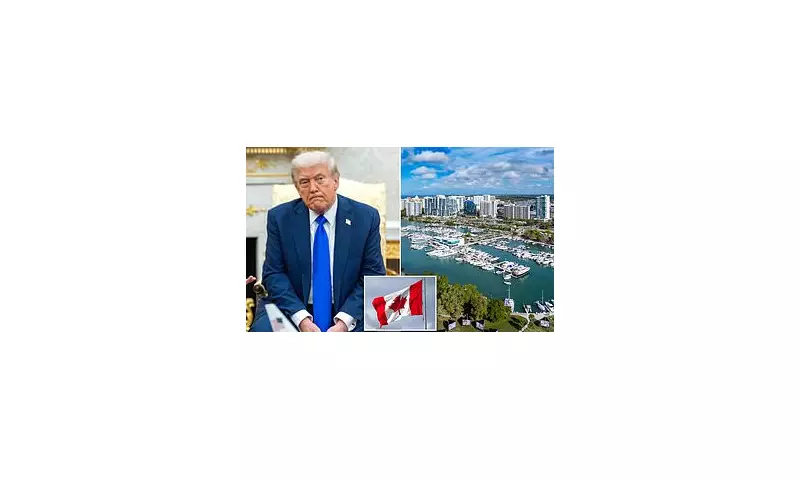
Canadian retirees who traditionally flocked to Florida's sunny shores are now leading an exodus, putting their holiday homes up for sale as political friction with the United States intensifies. A sustained trade war and inflammatory rhetoric from the Trump administration have prompted a significant shift, creating major vacancies in once-bustling beachfront communities.
The Political Climate Driving a Market Shift
According to a survey by the Canadian real estate firm Royal LePage, 54 percent of Canadians who own property in the US are now considering selling. The company's president and CEO, Phil Soper, stated that the polarising political environment is a key factor, causing many to rethink where they spend their time and money. This sentiment follows years during which Canadians have been the most crucial foreign investors in the American residential market, with holdings worth an estimated $60 billion in Florida alone.
The situation escalated during President Trump's second term, beginning with his infamous suggestion that Canada should become the 51st state. He further initiated a trade war, imposing heavy tariffs on Canadian imports like steel, aluminium, timber, and lumber, at one point raising duties by 35 percent. Trump linked these actions to Canada's handling of the fentanyl crisis, and tensions even spilled over into a public disagreement with Canadian Prime Minister Mark Carney regarding the 2025 World Series.

Economic Fallout in the Sunshine State
The economic consequences are now being felt acutely in Florida's property market. Data shows that Canadian ownership shares have declined across all popular markets, with Southwest Florida being particularly hard hit. In areas like Cape Coral and North Port—prime destinations for snowbirds—property prices have fallen by 10 percent and 8 percent respectively.
Realtor.com economist Joel Berner notes that Southwest Florida is currently characterised by an 'exceptionally high' level of inventory. With supply drastically outstripping demand, prices are falling and the time properties spend on the market is increasing. Donna Lockhart, a Canadian snowbird considering selling her Punta Gorda home, told the CBC that the anti-Canadian rhetoric had become too much, echoing a feeling that they are no longer welcome.
A Noticeable Mark on Regional Economies
The potential wave of sales threatens to leave a lasting dent on local economies that have long relied on seasonal Canadian residents. Beyond real estate, Canadians have also boycotted American goods such as wine, spirits, and orange juice in response to the tensions. While Canada remains the number one international buyer of US homes, overall interest has declined by 4.5 percent in the last year.
For now, the market dynamics present a challenging environment for sellers. As Ms. Lockhart observed in her Cape Coral neighbourhood, where ten percent of homes are for sale, the surge in supply has made it a difficult time to secure a profitable sale, illustrating the direct impact of international diplomacy on local property markets.






