

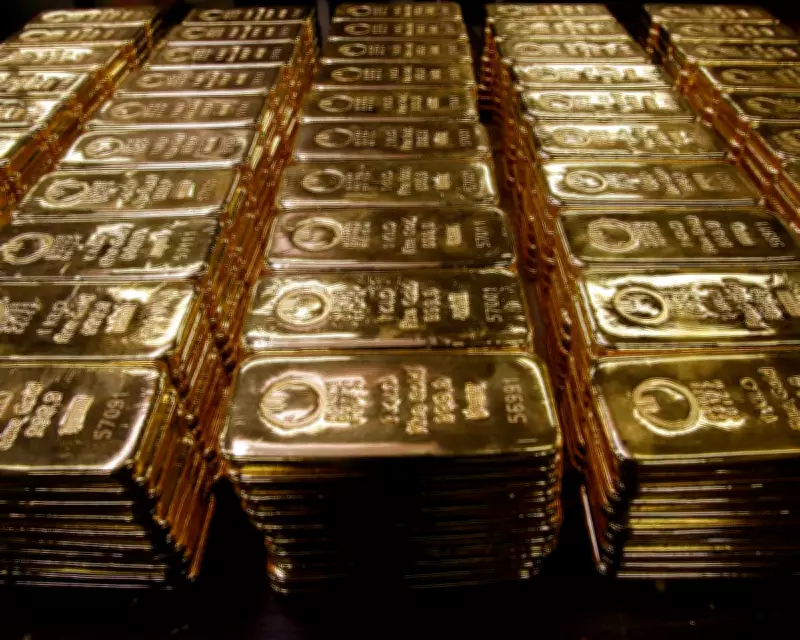
The precious metals market experienced a dramatic reversal on Monday, with gold prices plunging by 8% to settle at $4,465 per ounce. This sharp decline marked a stark contrast to the previous week's performance, where the yellow metal had soared to a historic peak of nearly $5,600 per ounce. Silver followed a similar trajectory, falling by 7% after already suffering a staggering 30% slump on Friday.
Trump's Fed Nomination Acts as Catalyst
The sudden downturn in safe-haven assets was largely triggered by former President Donald Trump's announcement on Friday. Trump revealed his intention to nominate Kevin Warsh, a former Federal Reserve governor widely regarded as a respected central banker, to become the next chair of the US Federal Reserve. This decision is expected to take effect when Jerome Powell's term concludes in May, pending Senate confirmation.
Market analysts interpreted this nomination as a signal that the Federal Reserve would maintain its independence, rather than becoming an institution led by a perceived "Trump cheerleader." Susannah Streeter of Wealth Club noted that Warsh's extensive Fed experience and reputation for not being a "pushover" prompted a significant reversal of safe-haven investment positions.

Global Market Repercussions
The metals sell-off created ripples across global financial markets. In the United States, futures tracking the S&P 500 and Nasdaq indices indicated losses of 0.9% and 1.2%, respectively. The UK's FTSE 100 index slipped by 0.4% during early trading, with precious metal miners like Endeavour Mining, Fresnillo, and Antofagasta all falling more than 5%. Similarly, the pan-European STOXX 600 index declined by 0.4%.
Industrial metals, which had previously benefited from the broader metals rally, also faced substantial declines. Platinum dropped by 10%, while copper fell by 9%. The sell-off extended beyond traditional commodities, with bitcoin experiencing a 9% decline over the weekend, falling below $76,000. This represents a approximately 40% decrease from its peak of $125,000 last year.
Broader Commodity and Currency Movements
Oil prices joined the downward trend, falling by 5% as investors observed signs of easing geopolitical tensions between the United States and Iran. Brent crude traded around $64.80 per barrel, down from recent highs of approximately $71. Meanwhile, the US dollar demonstrated resilience, rising by 0.16% against a basket of rival currencies after slumping in the latter half of January.
Analyst Perspectives and Long-Term Outlook
Michael Brown, a senior research strategist at Pepperstone, characterized Friday's market activity as a "meltdown in the metals space." Mohit Kumar of Jefferies suggested the gold sell-off represented an "unwind" of an excessively "crowded" trade, noting that positioning indices had moved from nearly 8 to just above 4 on a scale of -10 to 10.
Despite the recent sharp declines, analysts maintain a cautiously optimistic long-term view. Deutsche Bank analysts reiterated their expectation that gold could still reach $6,000 per ounce this year. Furthermore, even after the recent corrections, gold remains approximately 65% higher compared to the same period last year, while silver has gained more than 120%.
The dramatic reversal in precious metals underscores how central bank leadership decisions can trigger significant market volatility, particularly when they influence perceptions of monetary policy independence and economic stability.






