
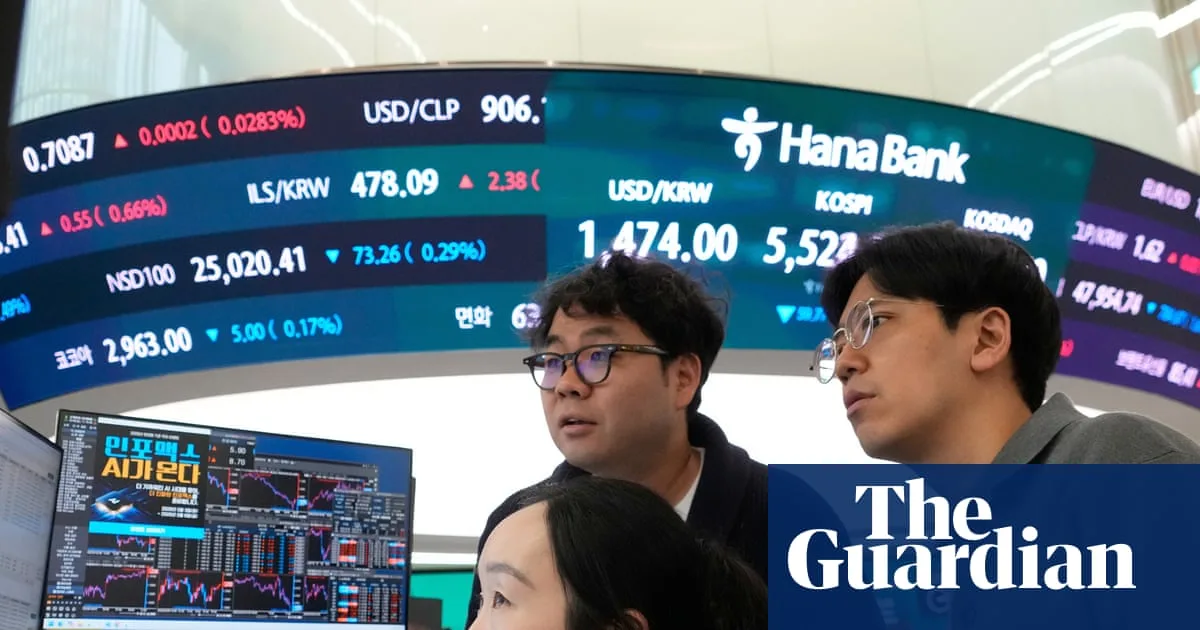
Global stock markets rose and oil prices fell on Wednesday amid reports that the United States has proposed a 15-point peace framework to Iran, fuelling hopes of a ceasefire in the Middle East. Positive sentiment was also boosted by Iran’s announcement that it would allow ‘non-hostile’ vessels to pass safely through the Strait of Hormuz, potentially reopening the vital waterway.
Brent crude dipped below $100 a barrel in early trading before recovering to hover around that level for most of the day. Asian markets led the rally, with Japan’s Nikkei closing 2.9% higher and Hong Kong’s Hang Seng adding just over 1%. In Europe, the FTSE 100 rose 1.4%, Germany’s Dax gained 1.3% and France’s Cac 40 climbed about 1.3%. US stocks also extended gains, with the Nasdaq up 0.7% and both the S&P 500 and Dow Jones rising around 0.6%.
Amelie Derambure, a senior multi-asset manager at Amundi, said: “The mood is on the positive side. [The] market is trading now the idea that peace talks or a ceasefire could be on the way.” However, Tehran denied that any negotiations had taken place since the start of the war.
The Strait of Hormuz, through which 20% of global oil normally transits, has been effectively closed by Iran, causing what the International Energy Agency called the largest ever disruption to oil supply. Just four vessels were recorded passing through on Tuesday, less than 3% of the historical daily average of 138. More than 30 countries, including the UK, have signed a joint statement to safeguard the channel.
Disruption to the strait also threatens global food security, as a third of the world’s fertilisers pass through it. The WTO’s deputy director general, Jean-Marie Paugam, warned that reduced fertiliser supplies would lead to smaller harvests and higher prices. Meanwhile, gold has fallen about 13% from its January high of $5,000 an ounce to around $4,550, undermining its traditional safe-haven status.
Larry Fink, chief executive of BlackRock, warned that a prolonged conflict could push oil prices to $150 a barrel, triggering a global recession. “If Iran remained a threat and oil prices remained elevated, there would be profound implications for the global economy,” he told the BBC.




