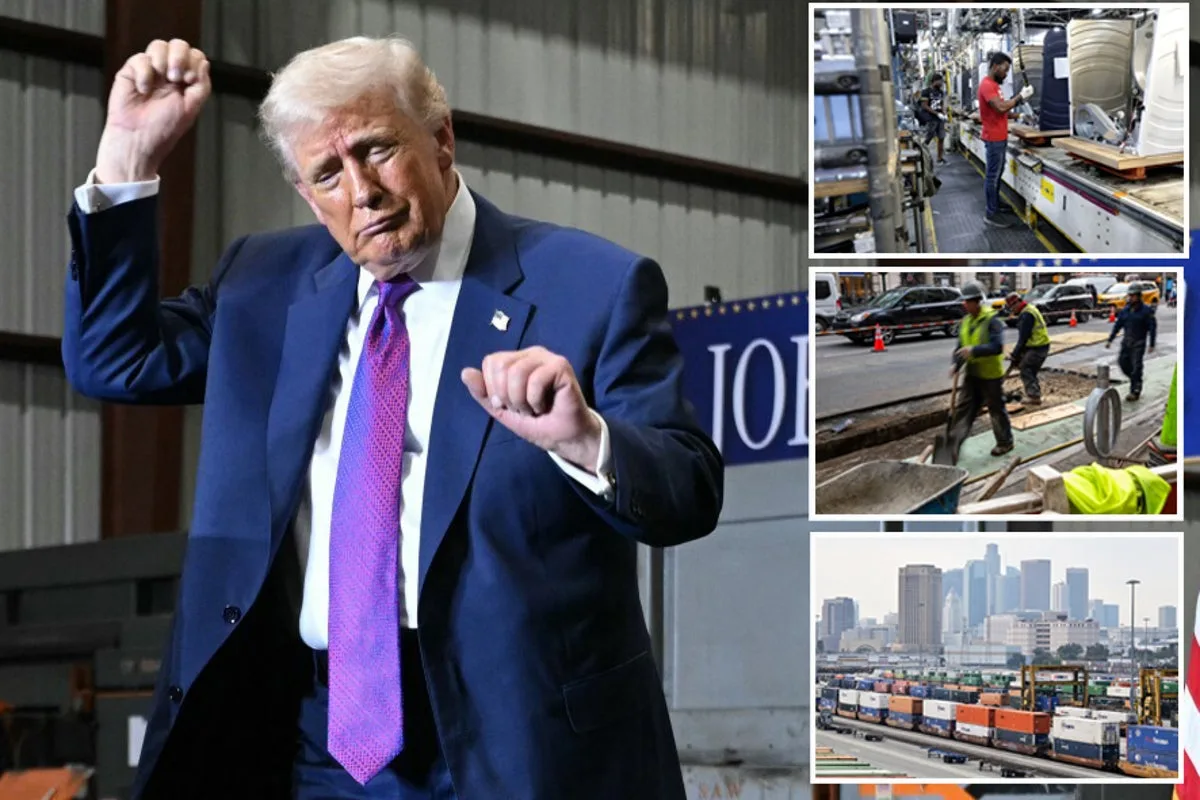
Trump's 'Made in America' Manufacturing Boom Exposed as Fantasy by Experts
President Donald Trump's vision of a "Made in America" manufacturing renaissance has been exposed as a fantasy by economists and lawmakers, with evidence showing his policies have led to job losses and economic uncertainty rather than the promised boom.
The Reality Behind the Rhetoric
Despite Trump's promises to usher in a "golden age" for American manufacturing, tapping into nostalgia for midcentury factory towns, experts tell The Independent that the reality is starkly different. Thousands of workers have lost their jobs after the administration pulled federal funding for clean energy projects, while uncertainty over volatile global tariffs has scared away investments.
"It's just fantasy," says Dean Baker, senior fellow and co-founder of the Center for Economic and Policy Research. "There's literally nothing that would support his claims of a renaissance."
Job Losses Tell the True Story
In the nine months following Trump's declaration of "Liberation Day" with sweeping tariffs designed to rebalance global trade and revive American manufacturing, tens of thousands of factory jobs have disappeared. While Trump claimed manufacturing would come "roaring" back and "supercharge" domestic production, the numbers tell a different story.
According to a congressional analysis, the U.S. lost more than 100,000 manufacturing jobs during Trump's first year back in office. Bureau of Labor Statistics data shows only 5,000 manufacturing jobs added in January 2026, representing a decline of 83,000 jobs compared to the same period last year.
"While President Trump promised us a manufacturing boom, the reality of his first year has been a bust," said Senator Maggie Hassan, top Democrat on the Senate Joint Economic Committee.
Tariffs Backfire on Manufacturing
Trump's sweeping tariff agenda, which he claimed would save American manufacturing, has instead created significant challenges for the industry. The Supreme Court recently struck down the bulk of these tariffs, finding the president unlawfully invoked federal law to unilaterally levy tariffs and taxes.
"The classic story you might tell about tariffs is that they help manufacturing, but they hurt the rest of the economy, because they're pulling money out of people's pockets," Baker explained. "But when you put tariffs on intermediate goods, which most of our imports actually are, then you make manufacturing more expensive here."
Steel Tariffs: A Case Study in Unintended Consequences
Trump's steel tariffs provide a clear example of how protectionist measures can backfire. While some domestic steel producers have benefited, the tariffs have raised prices for manufacturers who use steel as an input material, ultimately increasing costs throughout the supply chain.
Erica York, vice president of federal tax policy at the Tax Foundation, noted that protected firms can now profitably sell higher-priced goods due to tariffs, but "it does so at the expense of all the downstream users who now have to pay those higher prices."
Clean Energy Projects Sacrificed
While promoting a manufacturing revival, the Trump administration has simultaneously pulled the plug on dozens of clean energy manufacturing projects that were already in development. According to climate advocacy group Climate Power, more than 350 clean energy projects or companies have canceled new projects, delayed investments, or laid off workers since Trump's election, resulting in the loss or delay of nearly 173,000 jobs.
This stands in stark contrast to the job creation under Biden's Inflation Reduction Act, which saw companies announce 385,000 new jobs in the three years following its passage.
Tech Sector Struggles
Trump has repeatedly centered domestic manufacturing in semiconductors and technology as key to his economic agenda, touting billions in investments from major chip makers. However, many of these projects rely on subsidies from the 2022 CHIPS and Science Act passed under Biden, and job growth has not yet materialized as promised.
Semiconductor manufacturers have shed more than 13,000 jobs since April, according to Federal Reserve data, while growing costs for materials have particularly impacted makers of technologically complex goods.
The AI Data Center Illusion
Even the much-hyped AI data center boom may not deliver significant manufacturing employment. Baker notes that most construction materials for these centers come from overseas, and the facilities themselves employ relatively few people.
"I don't think that's going to be quite the huge story that I think a lot of people are banking on," he said. "Even in the most optimistic scenario, you're not gonna talk about major manufacturing employment there."
A Historical Perspective
The era of American factory jobs peaked in 1979, when 19.5 million people—nearly one-quarter of the workforce—worked in manufacturing. That number has been declining ever since, with brief increases during Trump's first term followed by pandemic-related plunges.
Modern-era manufacturing construction spending peaked in August 2024 and has been steadily declining since, according to Federal Reserve data, painting a picture far removed from Trump's promised renaissance.