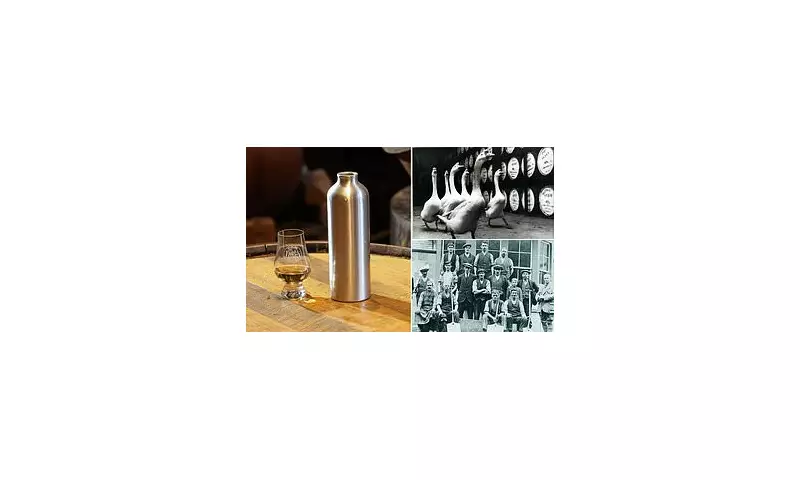
A bold move by a Scottish distillery is challenging centuries of tradition and marketing mystique surrounding Scotch whisky. Stirling Distillery has announced plans to sell its spirit in aluminium bottles instead of the customary heavy glass, a decision that has stirred both nostalgia and scientific scrutiny.
The Clash of Tradition and Innovation
For generations, the story of Scotch has been woven from potent imagery: the 'angels' share' evaporating from oak casks, the legendary 'Sixteen Men of Tain' at Glenmorangie, and the raucous geese that guarded Ballantine's bonds in Dumbarton until 2012. The craft of the cooper, the unique peat, and the peerless Highland water have all been part of a carefully curated narrative.
Stirling Distillery's proposal cuts directly against this grain. The company argues that aluminium is better for the environment, being far lighter and less bulky to transport, which reduces freight emissions. They also highlight its superior recyclability. Of the 2.3 million tons of waste glass discarded in Britain annually, only about 750,000 tons are recycled into new bottles.

Supporting this shift, British gin maker Penrhos has demonstrated that switching to aluminium allows them to ship more than twice as many bottles within the same volume.
Scientific Scrutiny and the Reactivity Question
The distillery has engaged scientists from Heriot-Watt University to investigate a critical issue: the reactivity between high-alcohol spirits and aluminium. Early studies suggest testers noticed no difference in aroma between whisky from glass and aluminium containers.
However, the research has identified a significant downside. Over time, whisky can react with aluminium, altering its chemical profile and causing the metal to leach into the spirit. Some samples contained aluminium levels "well above what would be acceptable in drinking water."
Professor Annie Hill of Heriot-Watt notes the next challenge is finding a protective liner that can withstand high alcohol levels without degrading. This issue resonates beyond whisky, touching on culinary wisdom that warns against using aluminium pans for cooking acidic foods due to metallic taste transfer and long-debated health concerns.
Environmental Impact and Market Acceptance
The environmental claim of aluminium bottles is not without its complexities. While glass production requires significant heat, smelting raw alumina ore into aluminium demands enormous amounts of electricity. This was feasible in places like Lochaber, home to the historic Ben Nevis distillery and a British Aluminium plant powered by clean hydro-electricity, but is a major consideration elsewhere.
Ultimately, Stirling Distillery faces the formidable power of Scotch whisky's perceived "magic." The ritual of the heavy glass bottle, the drop of water, and the satisfying clink are integral to the experience. As the distillery's own marketing director, Kathryn Holm, acknowledges, convincing someone to pay £100 for a whisky that arrives in an aluminium bottle is "quite difficult."
The venture represents a fundamental tension between modern sustainability goals and the deep-seated traditions that define a globally revered spirit. Whether science can perfect the packaging and consumers can adapt their perceptions remains to be seen.