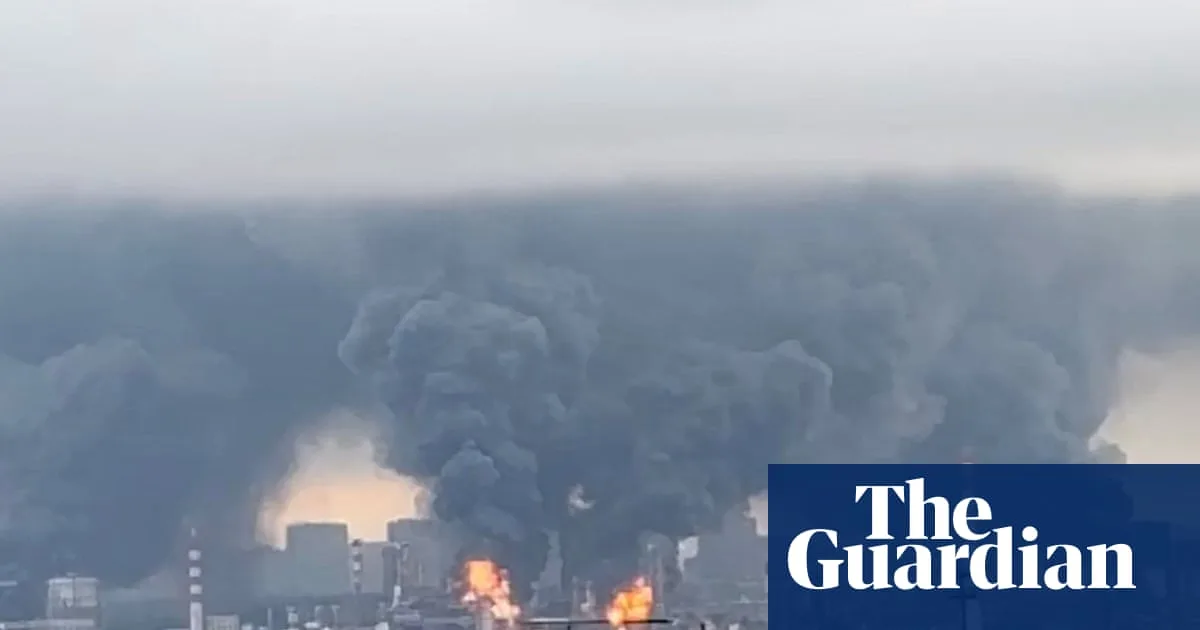
Ukrainian drones struck multiple locations across Moscow in Kyiv's biggest air raid on the Russian capital since the start of the full-scale invasion, setting a major oil refinery ablaze and forcing evacuations at the country's largest airport, according to Ukrainian officials.
The attack targeted the Kapotnya refinery, which supplies up to 40% of Moscow's petrol and about 50% of its diesel fuel. Footage showed three plumes of smoke rising from the facility, which local authorities said injured at least 17 people, including two children. This was the second strike on the refinery in two days.
Ukrainian President Volodymyr Zelenskyy described the attack as a response to Russia's earlier strike on a historic Kyiv monastery complex. 'We do not want this war and never did,' he said. 'But if Ukraine is going to burn, your Moscow will burn too.' Russia's foreign minister announced it would launch huge 'group strikes' on Ukraine regularly in retaliation.

Russia claimed its air defence systems intercepted and destroyed 555 Ukrainian drones overnight, though the number could not be independently confirmed. Many Moscow residents reported learning of the attack only through social media, as no air raid sirens were sounded.
The attack came as President Vladimir Putin hosted leaders from the Association of Southeast Asian Nations in Kazan. Meanwhile, European leaders expressed optimism about Ukraine's prospects, with European Commission President Ursula von der Leyen stating that Ukraine is 'holding the line, even partially regaining territory'.
In a separate development, the UK announced it would provide £750m to supply Ukraine with 150,000 drones and over 350 air defence missiles, funded by a loan against interest from frozen Russian central bank assets.