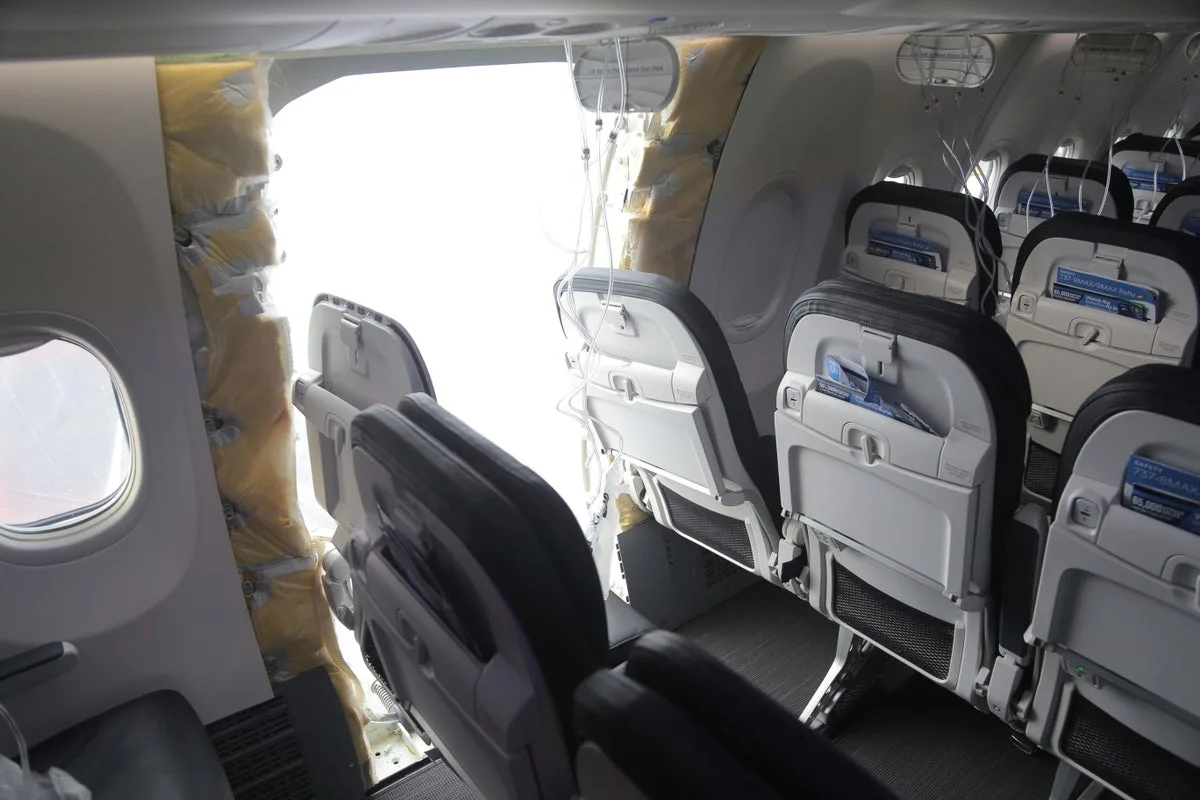
Brandon Fisher, the pilot of the Alaska Airlines Boeing 737 Max that experienced a door plug blowout mid-flight on 5 January 2024, has filed a lawsuit against Boeing for $10m. The incident occurred near the 26th row, causing rapid depressurisation and a 2-by-4 foot hole in the aircraft.
Fisher and first officer Emily Wiprud safely returned the plane to Portland International Airport without fatalities or serious injuries. However, Fisher’s complaint alleges that Boeing attempted to shift blame onto him and his co-pilot rather than accepting responsibility.
The lawsuit references earlier legal arguments from Boeing that claimed the 737 Max had been “improperly maintained or misused by persons and/or entities other than Boeing”. Fisher says the company aimed to “paint him as the scapegoat for Boeing's numerous failures”.
According to the filing, Boeing’s comments “dramatically exacerbated the life-changing impacts” of the incident, and Fisher now faces scrutiny and has been named as a defendant in two related lawsuits. The complaint asserts that Boeing employees forgot to reattach bolts securing the door plug.
The National Transportation Safety Board investigated and found Boeing at fault, with failures in ensuring proper plug installation. Fisher claims emotional distress and a worsened quality of life as a result. Three passengers from the same flight had previously sued for $1bn but settled out of court in July.