Nissan Sunderland Plant Confronts Existential Threat Over EU Subsidy Exclusion
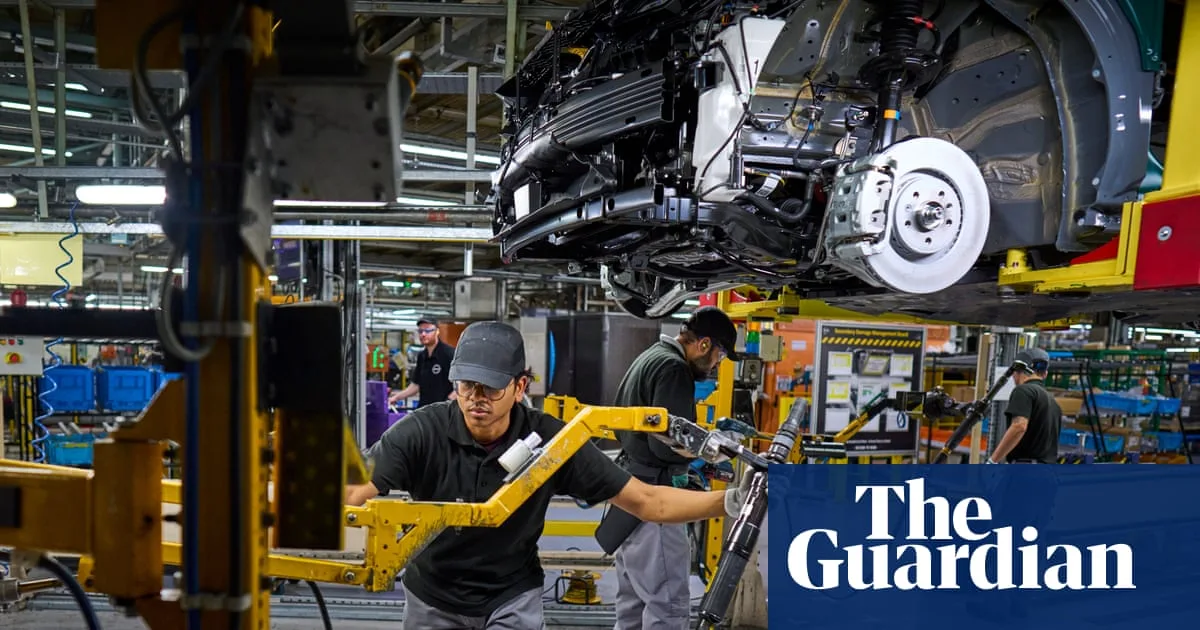
The future of Britain's largest car manufacturing facility, the Nissan plant in Sunderland, is under severe threat due to potential exclusion from new European Union subsidy regulations. Industry insiders have described the situation as presenting "an existential threat" to the operation, which directly employs 6,000 people and has been a cornerstone of UK manufacturing since production commenced in 1986.
EU 'Made in Europe' Rules Create Major Uncertainty
The European Union is currently developing the Industrial Accelerator Act, a set of proposals spearheaded by Competition Commissioner Stephane Sejourne. These rules would grant public subsidies specifically for electric vehicles manufactured within European plants, a measure designed to protect the EU automotive sector from cheaper imports, particularly from China.
According to reports from the Financial Times, the current draft of these proposals explicitly excludes Nissan and other major car manufacturers with substantial UK production bases, such as Jaguar Land Rover and Toyota. This exclusion has sent shockwaves through the British automotive industry.
Industry Leaders Voice Grave Concerns
Mike Hawes, Chief Executive of the Society of Motor Manufacturers and Traders (SMMT), has issued a stark warning. "As drafted, it would discriminate against UK-made vehicles and components, damaging a trading relationship worth almost £70bn annually," he stated. Hawes emphasized that the UK and EU are each other's largest customers and suppliers, making the proposed exclusion particularly damaging.
He further argued that the strict EU assembly rules and eligibility criteria currently proposed would systematically disadvantage UK manufacturers in the crucial EU market. This situation, he contends, may also violate the terms of the EU-UK Trade Cooperation Agreement—the foundational Brexit deal governing post-separation trade.
Hawes is urgently calling on the UK government to collaborate with European counterparts to resolve the impasse, highlighting that the outcome affects not only consumer choice for zero-emission vehicles but also broader economic growth and security.
Nissan's Stance and Government Response
While sources close to Nissan have attempted to downplay immediate fears of plant closure—noting the billions of pounds invested in the Sunderland facility—an industry executive told the FT that being "frozen out of access to EU incentives" could indeed pose that existential threat. Nissan has long praised the productivity and industrial relations at Sunderland, countering earlier fears about potential disruptions.
The UK government has responded with a statement affirming its role as a "close and trusted European partner." A spokesperson stressed the importance of working together to boost growth, resilience, and economic security. In a diplomatic move, Business Secretary Peter Kyle recently visited Brussels to advocate for the UK's inclusion in the 'Made in Europe' initiative, although reports indicate he did not meet directly with Commissioner Sejourne.
Potential Compromise and Lingering Complexities
There are indications that the European Commission has adjusted its position somewhat, easing some of the most significant concerns. Nissan itself has acknowledged a positive development, noting the Commission's move to allow "content equivalent to Union origin" to count under the Act. This change could permit vehicles built in locations like Sunderland—which often incorporate many EU-made parts—to qualify for certain government purchasing schemes and national electric vehicle incentives.
However, Nissan has pointed out a critical flaw: the application of different definitions for corporate fleets and the small car super credit creates confusion and unnecessary complexity for the industry. The company advocates for a simple solution: applying the 'equivalent to Union origin' rules uniformly across all types of EV support. This, they argue, would align with the EU's stated goal of creating clearer, more easily applicable regulations.
The coming weeks will be crucial as negotiations continue, with the livelihoods of thousands of workers and the stability of a £70bn annual trading relationship hanging in the balance.