

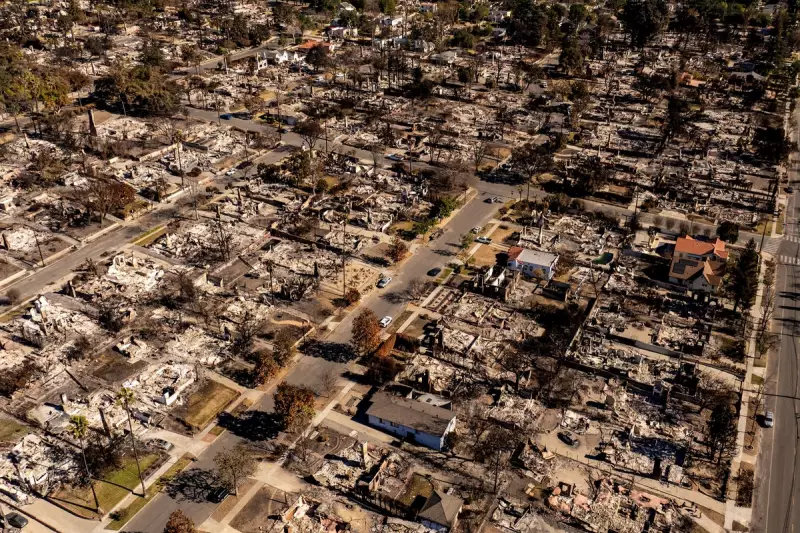
A year after the most destructive wildfires in Los Angeles history, a new and insidious crisis has emerged for residents whose homes survived the flames. They are now battling a lingering 'toxic soup' of hazardous materials left behind by the blazes, with many forced to live amid dangerous contamination.
The Invisible Threat Inside Surviving Homes
In the Altadena area of Los Angeles County, the scars of the Eaton Fire are not just charred landscapes. On homes still standing, warning signs on front doors read: “DANGER: Lead Work Area. May damage fertility or the unborn child. Causes damage to the central nervous system.” The scene is one of an ongoing cleanup, with workers and homeowners in masks, respirators, and hazmat suits power-washing and vacuuming properties that were not burnt to ash.
The twin wind-whipped fires that ignited on 7 January 2025 killed at least 31 people and destroyed nearly 17,000 structures, including homes, schools, and businesses. While rebuilding the lost properties will take years, those with standing homes face a different kind of devastation. The ash is a complex mixture of incinerated cars, electronics, paints, plastics, and personal belongings, potentially containing lead, asbestos, pesticides, and heavy metals.

Scientists warn that the long-term health impacts of exposure to such massive urban fires remain understudied. However, known chemicals released are linked to heart and lung disease, and minerals like magnetite have been associated with Alzheimer's.
Families Forced Back into Contaminated Spaces
Nina and Billy Malone, who lived in their Altadena home for 20 years, considered it a safe haven. After smoke and soot seeped in, professional cleaning failed to remove all hazards. Recent testing found dangerous levels of lead persist on their wooden floors. Forced to move back in August when their insurance stopped rental assistance, they now suffer daily health issues.
“I wake up almost daily with a sore throat and headaches,” said Nina Malone. Billy requires an inhaler for worsening wheezing. Their bedroom, Nina says, smells “like an ashtray has been sitting around for a long time.” Their greatest fear is exposure to unregulated contaminants that insurers are not required to test for. “I don’t feel comfortable in the space,” she admitted.
Data from a November report by the volunteer group Eaton Fire Residents United paints a grim picture. Based on self-submitted data from 50 homeowners:
- Six out of ten smoke-damaged homes still have dangerous levels of cancer-causing asbestos, brain-damaging lead, or both.
- 63% of the 50 homes have lead levels above the Environmental Protection Agency’s standard, with average levels nearly 60 times higher than the limit.
- 78% of those residents had hired professional cleaners, indicating the scale of the challenge.
Zoe Gonzalez Izquierdo, a mother of two young children, faces a similar fight. Her home tested positive for dangerous lead levels, but her insurance company refuses to pay for an adequate, certified cleanup. “They can’t just send a company that’s not certified to just wipe things down so that then we can go back to a still contaminated home,” she said.
A Gruelling Battle with Insurance and Lasting Scars
The crisis has left residents at the mercy of insurance providers, sparking a gruelling battle over what is covered. Homeowners are urging state agencies to enforce rules requiring insurers to return a property to its pre-fire condition. The state’s insurer of last resort, the California FAIR Plan, has faced years of scrutiny over its handling of fire claims.
Julie Lawson’s family paid $7,000 out of pocket for soil testing, despite their insurer agreeing to replace their front lawn. They plan further tests and will pay for remediation themselves if needed. “We have to live in the scar,” Lawson said. “We're all still really struggling... This isn't over for us.”

The mental health toll is severe. Annie Barbour of the non-profit United Policyholders, a survivor of the 2017 Tubbs Fire, sees the trauma firsthand. Many who were initially joyful their house stood are now in “their own special kind of hell,” she said.
Residents like the Malones now meticulously inspect every belonging, fearing toxin absorption. Their house is filled with bags and boxes of items being assessed. Their insurance won't pay the $10,000 to retest the home, and even if contamination is found, the company will only cover cleanup of federally regulated toxins like lead and asbestos.
“I don't know how you fight that,” said Nina Malone, who is considering therapy for her anxiety. “How do you find that argument to compel an insurance company to pay for something to make yourself safe?” For thousands in Los Angeles, the fire disaster is far from over; it has simply entered a new, more invisible phase.





