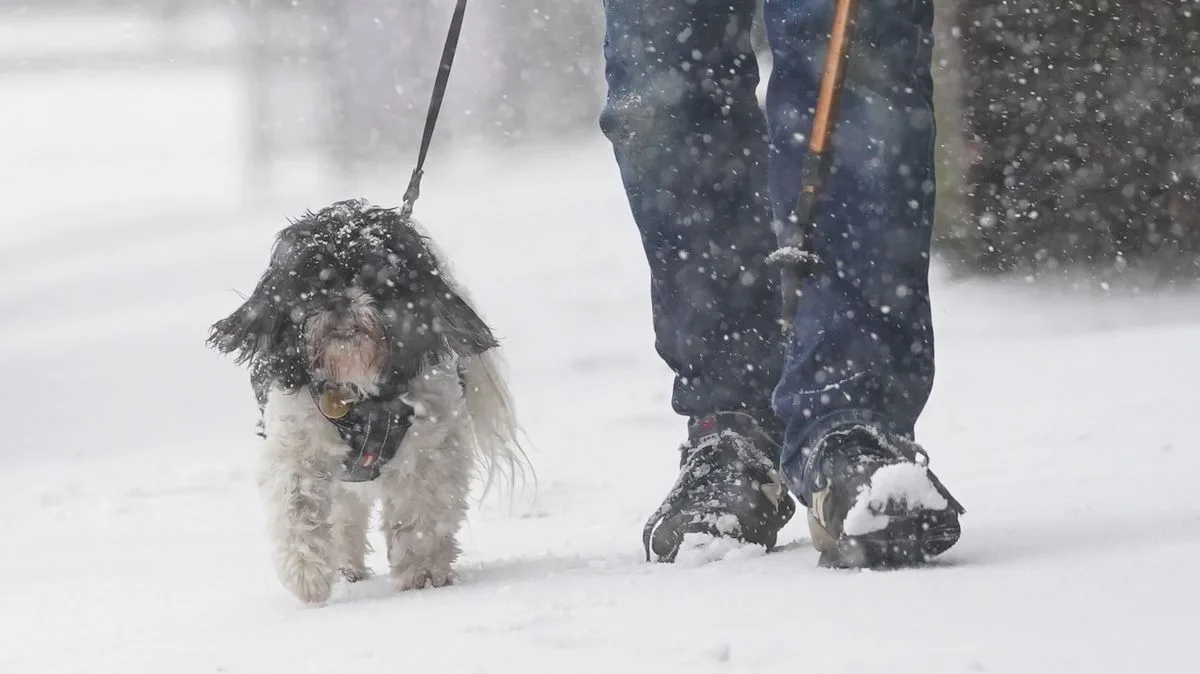
Dog owners are being warned about the risk of hypothermia in pets as temperatures plunge across the UK. Many parts of the country, including the North East, have seen snowfall and ice over recent days, with the mercury dropping below zero in many areas.
Ross Hallifax, from pet insurance specialist Purely Pets, said: 'Many owners assume that because dogs have fur, they’re naturally protected from the cold, but that’s not true. Just like us, dogs can suffer from hypothermia and even chemical burns from winter road salt and grit.' A prolonged exposure to cold, especially in wet or windy conditions, is a primary cause of hypothermia in dogs.
Hallifax encourages owners to avoid walking their pets at the coldest times and to head out towards midday when temperatures are likely to have risen slightly. Small, short-haired and older dogs lose heat quickly and require extra care, such as a weatherproof, fleece-lined coat.
Salt, grit and ice-melt chemicals can irritate paw pads, leading to painful cracks. In some cases, salt may even burn the pads and become toxic if licked off. Wiping paws with warm water after walks and considering dog booties can help prevent injury.
Antifreeze containing ethylene glycol is highly toxic to animals. Even small amounts can cause poisoning, with symptoms including nausea, vomiting, loss of coordination, seizures, and, in severe cases, coma. Hallifax advises storing antifreeze out of pets' reach, cleaning up spills promptly, and protecting paws with booties.