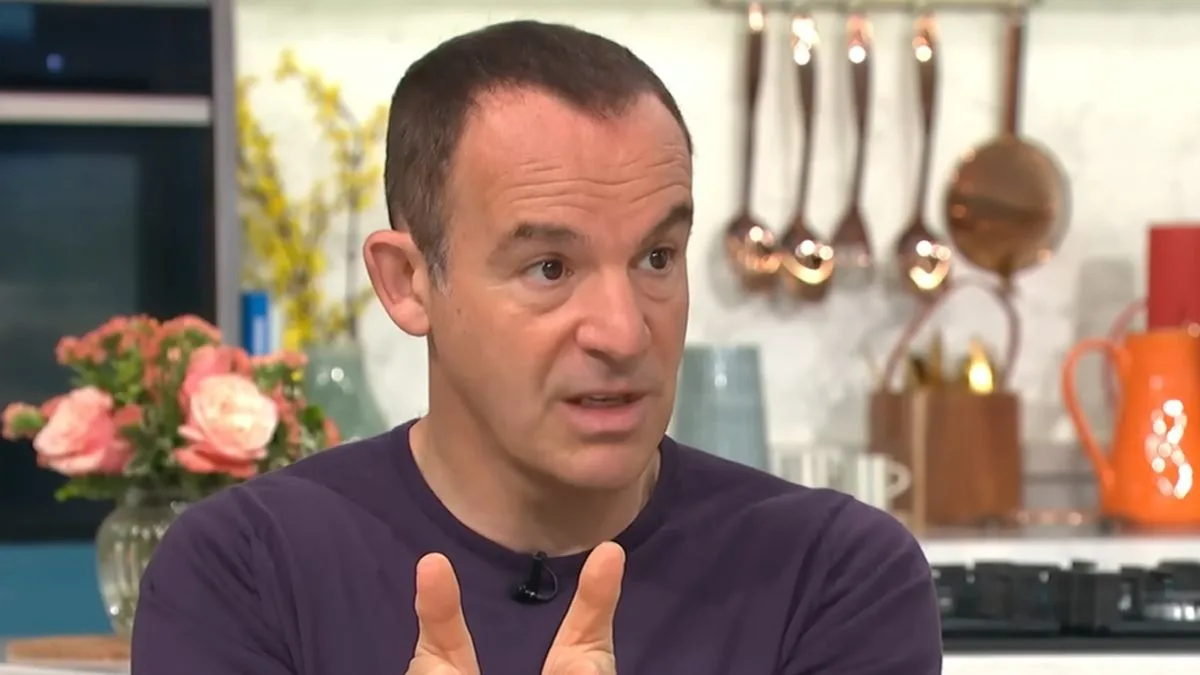
Martin Lewis explains 5,000 savings rule to avoid 'huge risk'
Martin Lewis: 5,000 savings rule to avoid huge risk

Martin Lewis has shared some important advice for savers on how to secure stronger returns. The consumer advocate offered guidance on his BBC podcast regarding ISAs and the most effective ways to grow savings over the long term.

Investing vs cash savings

Lewis dished out advice on investing versus cash savings, focusing on building savings for children, but noted the same principles apply to anyone looking to increase their savings pot over the long term. The founder of the Money Saving Expert website pointed to a concerning pattern: the overwhelming majority of queries on the site about junior ISAs relate to the best cash rates, rather than stocks and shares.

A major advantage of ISAs is that these accounts are tax-free, with no HMRC charges on any investment growth or interest earned within an ISA wrapper. You can contribute up to £9,000 annually into a junior ISA for a child under 18. Each adult also receives a separate ISA allowance, enabling them to deposit up to £20,000 a year into ISAs, which they can split as they wish between cash ISAs and stocks and shares ISAs.

Wide Pickt banner — collaborative shopping lists app for Telegram, phone mockup with grocery list

Doing a disservice

Mr Lewis was determined to encourage people to consider investing if they are saving over the long term. He stressed: "I need to be really strong. So many of you are so desperate to protect your children and build a nest egg for them for the future. But by putting it all in savings, if you're locking it away for 10, 15, 18 years, I think you're probably doing a disservice. I think there is an element of risk that you need to take in the hopes of greater growth. Some of it is probably worth putting, or all of it if you choose to, in a shares junior ISA over that period."

Huge risk

Yet Mr Lewis cautioned against one crucial error when selecting which company to back. He warned: "But not in one share. Let's remember, put it in one share is a huge risk, you could lose all your money. Put it in 5,000 different companies by using a tracker fund that maps 5,000 different companies' returns, then you are spreading the risk, you are smoothing it all out. You are hoping that the world economy grows, as it usually tends to do, and if it does grow, I'll benefit from that growth."

This strategy of investing across 5,000 companies was recommended by a financial planner who had previously featured on the podcast. Ed Marshall, from Deans Wealth Management, told Mr Lewis: "You want to be more than just the FTSE 100 or the S&P 500. If you look at the MSCI world index, you've got the world's largest 2,500 companies. But then you can buy global tracker funds, that will buy even more than those 2,500 shares. So instead of just 200 different companies, try and aim for 5,000 plus different companies and try and buy the world, and that diversification will help to take risk off the table."

Much better returns

Mr Lewis also shared some figures to show how significantly the stock market has outperformed savings accounts historically. Looking at the decade up to the end of 2025, he explained that £1,000 placed in the best savings account at the outset, with interest reinvested, would have grown by £270. This failed to match inflation, as you would have needed earnings of £390 to maintain your purchasing power against rising living costs. However, the same £1,000 invested in a global tracker fund, with dividends reinvested, would have generated returns of £1,980. Had that £1,000 been placed in the S&P 500, it would have delivered a remarkable £3,790 over the ten-year period.

Pickt after-article banner — collaborative shopping lists app with family illustration




