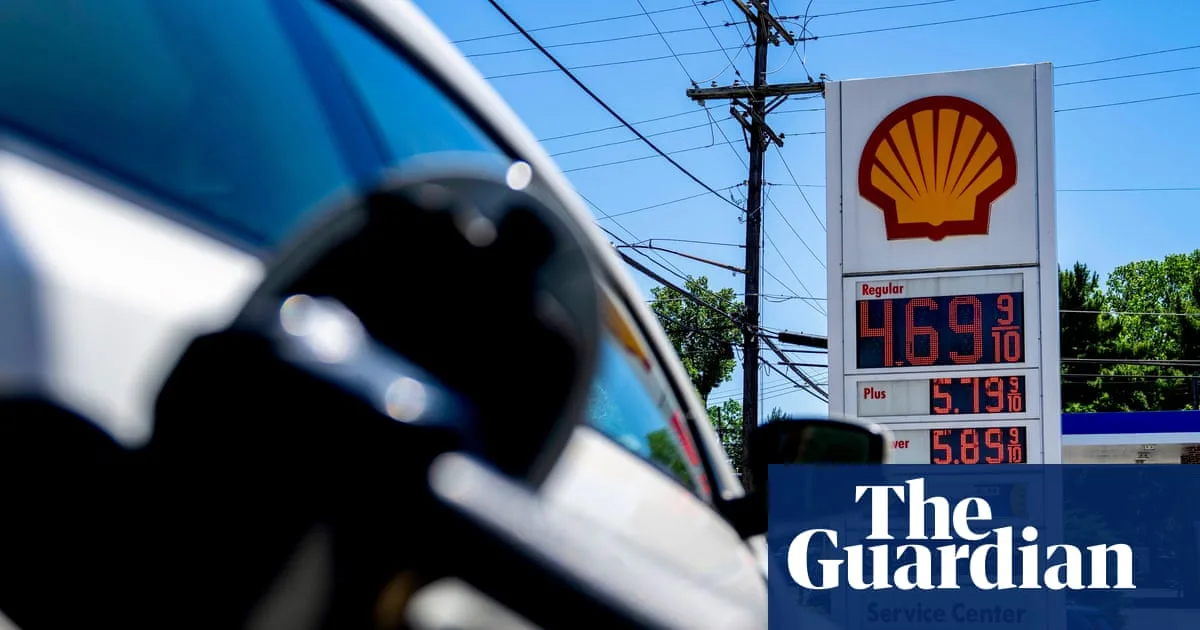
Donald Trump has claimed US fuel prices are “not very high, relatively speaking” as his administration grapples with affordability concerns after the surge in costs sparked by his war on Iran. The national average gas price stood at about $4.16 per gallon on Tuesday, according to AAA – $0.37 lower than a month ago, but still about $1 more expensive than the same time last year.
The US president has faced sustained frustration over the sharp rise in fuel costs since the start of the US-Israel war on Iran in late February. While he has repeatedly sought to downplay the increase in prices, it comes as voters prepare to cast their votes in November’s crucial US midterm elections.
Addressing reporters on Tuesday morning, Trump said the administration was releasing “a lot of oil coming out of the Hormuz strait”, one of the most crucial passageways for global trade through which about 20% of the world’s oil passes. The strait has been all but closed since the start of the war.

The president spoke from New York after attending Game 3 of the NBA finals, where he was loudly booed when shown on Madison Square Garden’s jumbotrons. Prices still remain far higher than what they were before the Iran war started. Oil and gas prices jumped sharply after the strait of Hormuz effectively closed earlier this year, as Iran threatened ships in the area and maritime insurers cancelled war risk cover.
Trump also pointed out that gas prices remain lower than during the Biden administration, “and he wasn’t stopping the country from having a nuclear weapon”. Record-high gas prices in 2022 were exacerbated by the war in Ukraine, which tightened the world’s oil supply. The sharp uptick in energy prices largely drove inflation to 3.8% last month, the highest increase the country had recorded since 2023. Americans have started to feel the effects of high energy costs on many other aspects of everyday life, such as the price of groceries and air travel. Moody’s Analytics has estimated that the war and its resulting high energy prices have cost American households about $100bn.
The Bureau of Labor Statistics is scheduled to release May inflation estimates on Wednesday morning, which economists expect to show that inflation remained high. The closely watched report will probably shape the outcome of the US Federal Reserve meeting scheduled for next week, where Kevin Warsh, the central bank’s new chair, and the rest of the central bank’s board of governors will decide whether to change rates, amid elevated inflation and a relatively strong labor market.