Former President Donald Trump is turning to a billionaire Republican donor with deep ties to Venezuela's oil industry to help craft a strategy for reintroducing American energy companies to the country, according to sources familiar with the matter.
The Oil Magnate's Influence
Harry Sargeant III, a Florida-based energy entrepreneur, and his team are advising officials on how to navigate the complex landscape of Venezuela's oil sector following the capture of President Nicolás Maduro. Four sources confirmed Sargeant's advisory role, highlighting the administration's reliance on private sector expertise.
While Sargeant's business interests in Venezuela are smaller than those of the oil giant Chevron—the sole U.S. firm with federal authorisation to export oil from the country—his history there is extensive. He has operated in Venezuela since the 1980s, dealing in asphalt derived from the nation's heavy crude and investing in several oil fields.
In an interview, Sargeant confirmed that members of his team, including his son Harry IV and executive Ali Rahman, have held discussions with U.S. officials, though he stated he is not formally advising the administration.
Forging a Path with Caracas
Sargeant possesses long-standing connections to senior Venezuelan officials, including Maduro and the current interim President, Delcy Rodriguez. He told Reuters he has a history of dealing with both figures. This access has proven valuable to Washington.
According to sources, Sargeant and other oil executives close to the administration have advised that Rodriguez is a more pragmatic interim leader for U.S. interests than opposition figure Maria Machado, arguing she can better control the oil sector and guarantee access for American companies.
"I think Delcy will, when the time is right, be willing to transition the country to democracy and, you know, and see free and fair elections," Sargeant said.
Secretary of State Marco Rubio outlined a plan where the U.S. would refine and sell up to 50 million barrels of Venezuelan crude. "That money will then be handled in such a way that we will control how it is disbursed in a way that benefits the Venezuelan people," Rubio stated.
A History of High-Stakes Dealings
Sargeant's relationship with Trump is a key factor in his influence. Two sources said the billionaire frequently golfs with the former president at Mar-a-Lago. However, Sargeant told Reuters he has "never talked to the president about Venezuelan oil."
His involvement in Venezuela policy is not new. In February 2025, he helped broker a meeting between U.S. envoy Richard Grenell and Maduro, which discussed migrant deportations, prisoner releases, and Chevron's operating license.
Sargeant's commercial activities have not been without controversy. In 2009, a Congressional Oversight Committee accused him of overcharging the Pentagon for fuel contracts during the Iraq War. He denied the allegations, and a 2018 Defense Department investigation found "no fraud vulnerabilities," leading to a $40 million payment to his company.
The White House declined to comment on Sargeant specifically. A senior administration official said Trump is "exerting maximum leverage" to ensure cooperation on migration, drug flows, and revitalising oil infrastructure for the benefit of the Venezuelan people.
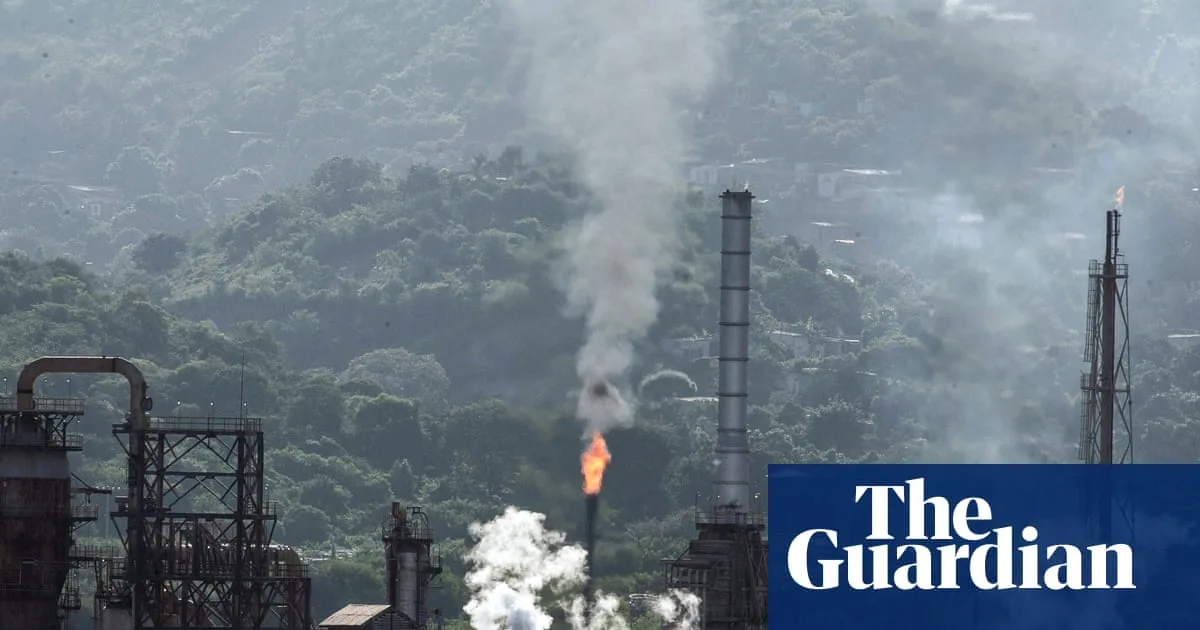
The broader goal, as explained by two sources, is a series of projects to revive Venezuela's crippled oil and gas industry, aiming to increase supplies to global markets and attract foreign investment for critical infrastructure upgrades.