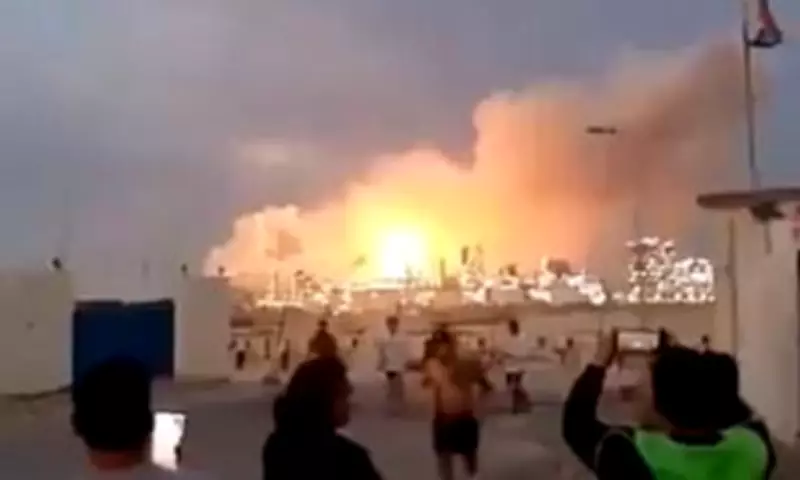
Explosions described as fireballs have rocked a critical oil facility in Bahrain after Iranian drones targeted key energy production infrastructure. The Bahraini government confirmed this afternoon that a facility within its oil infrastructure area had been attacked, with later reports revealing damage to a unit of BAPCO Energies' refinery.
Government Response and Visual Evidence
A government spokesperson stated: 'One facility in Maameer was targeted, and the relevant authorities are handling the incident.' Footage from the region showed at least two large towers of smoke rising through the air, with a huge fire raging at the base of one smoke plume. The fire was seen rapidly growing, though authorities claim it has now been brought under control.
Refinery Capacity and Strategic Importance
The affected refinery possesses a maximum production capacity of 267,000 barrels of oil per day and storage space for up to 14 million barrels. This attack represents a significant blow to Bahrain's energy sector and regional stability.

Broader Regional Conflict Escalation
Iran has intensified attacks across the Gulf in retaliation for US and Israeli strikes that killed its supreme leader. Earlier today, Bahrain's defence ministry reported intercepting 75 Iranian ballistic missiles, destroying 65 while 10 fell inside its territory. Additionally, they intercepted 124 drones, downing 88 with 36 landing within the country.
Sirens sounded across the tiny Gulf nation as Bahrain joined neighbours and the EU in calling for Iran to end 'indiscriminate' attacks across the region. Foreign ministers from Gulf Cooperation Council countries - Bahrain, Saudi Arabia, Qatar, the United Arab Emirates, Kuwait and Oman - met by video link as all have now been targeted.
International Diplomatic Response
'The ministers strongly condemned the unjustifiable Iranian attacks against the GCC countries which threaten regional and global security and called on Iran to cease immediately its attacks,' stated a joint declaration. They affirmed the right of GCC states to take all necessary defensive measures while reaffirming commitment to dialogue and diplomacy.
EU foreign policy chief Kaja Kallas, who chaired the talks, warned that production of drone interceptors would struggle to keep up with high demand from both Ukraine and the Middle East. 'Everybody has the need for air defence... So there is really a problem with production,' she told journalists in Brussels.
Maritime Security Crisis
The conflict has created a severe maritime security crisis in the Gulf. A Bahamas-flagged crude oil tanker was targeted by an Iranian remote-controlled boat laden with explosives near Iraq's Khor al Zubair port, while a second tanker off Kuwait was taking on water and spilling oil after a large explosion. Nine vessels have come under attack since the conflict began on Saturday.
Shipping Disruption and Economic Impact
Approximately 200 ships, including oil and liquefied natural gas tankers, remained at anchor in open waters off major Gulf producers, with hundreds more unable to transit the Strait of Hormuz - a key artery for around one-fifth of global oil and LNG supply. President Donald Trump offered US Navy escorts and insurance to restart shipping flows.
Regional Production Disruptions
The conflict has caused significant production disruptions across the region. BP evacuated foreign staff from Iraq's Rumaila oil field after drone incursions, while Iraq has cut oil production by nearly 1.5 million barrels daily due to storage and loading issues. Refineries in Kuwait and Bahrain have also reduced operations.
As Iranian missiles and drones continue to target Gulf states' cities and infrastructure, regional relations with Tehran have deteriorated dramatically, setting the stage for potential greater confrontation. The crisis emerges as the son of Iran's slain supreme leader has emerged as a frontrunner to succeed him, suggesting Tehran remains defiant despite mounting pressure.